
Happy New Year to all our supporters!
- Happy New Year! and anyone got a spare drop tank? (Or a model – quite a big one – of a Spitfire?)
- Super-sleuths needed!
- Super-sleuths needed again!
- History revealed – but not exactly what we expected!

Posted on Facebook by Alan Matlock – 8th January 2026
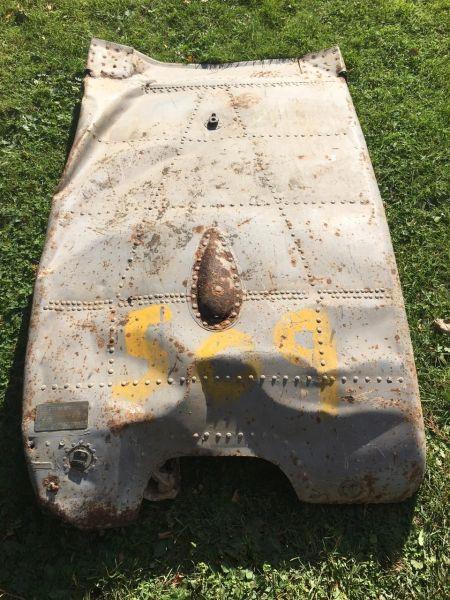
Happy New Year! and anyone got a spare drop tank? (Or a model – quite a big one – of a Spitfire?)
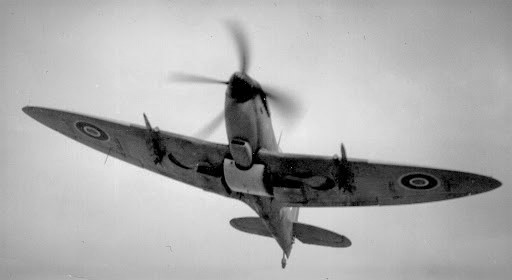
We’ve posted before about the huge number of jettison fuel tanks that were made to extend the range of Spitfires as its role progressed from a defensive to an offensive one.
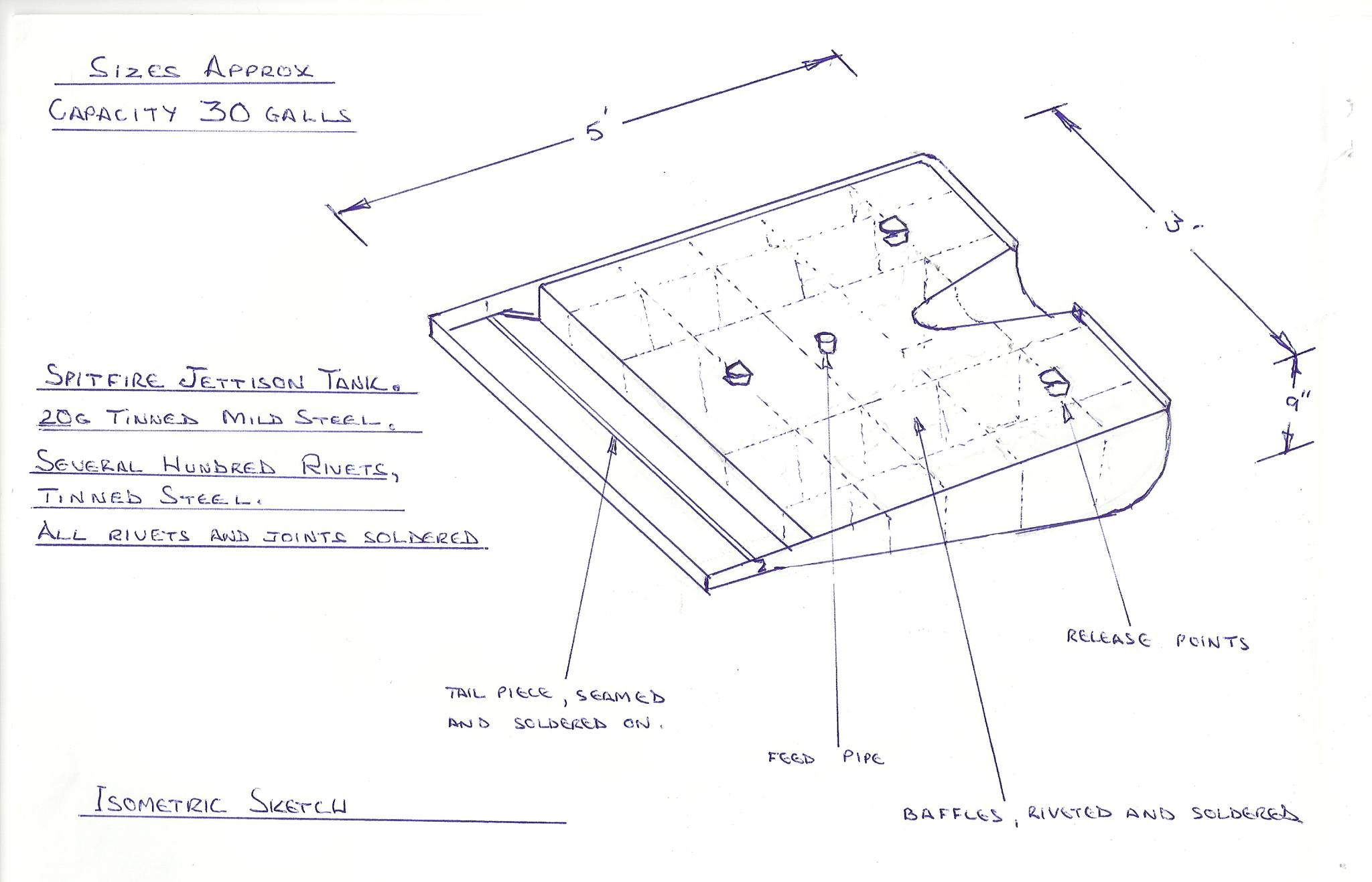
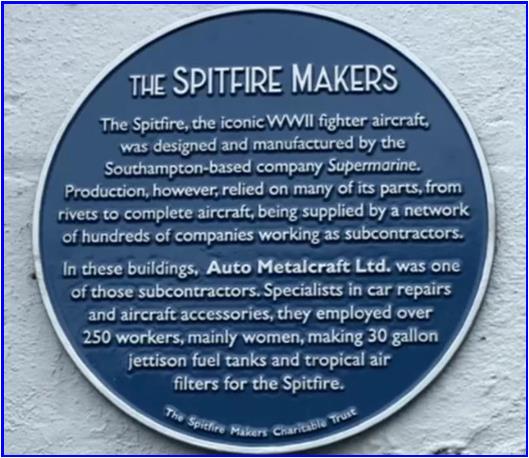
Several of the sites we have marked with blue plaques, or where we are planning to install one, were making these vital components – anything from the ‘standard’ 30 gallon size to much bigger ones for even longer sorties (eg flying in to Malta).
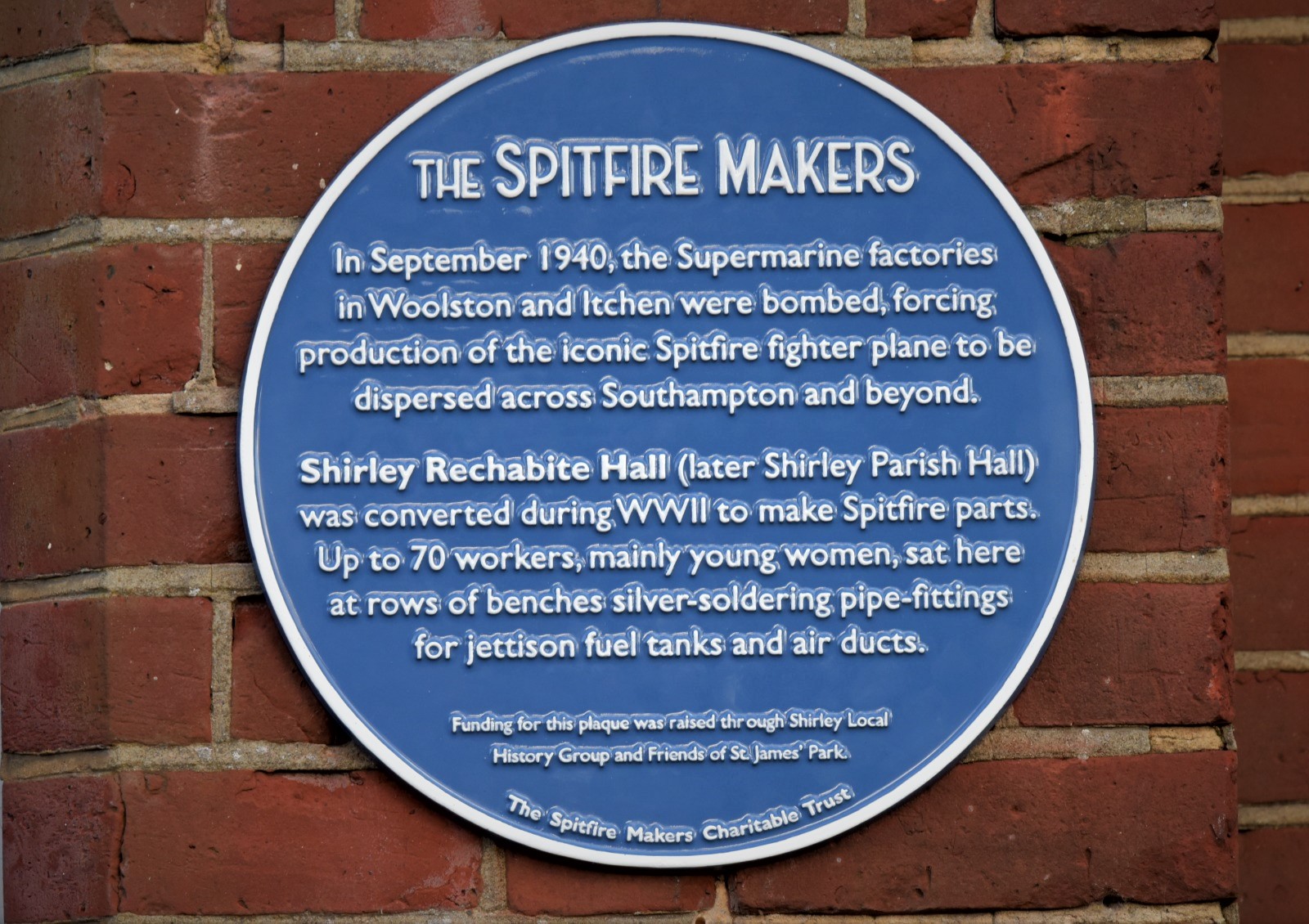
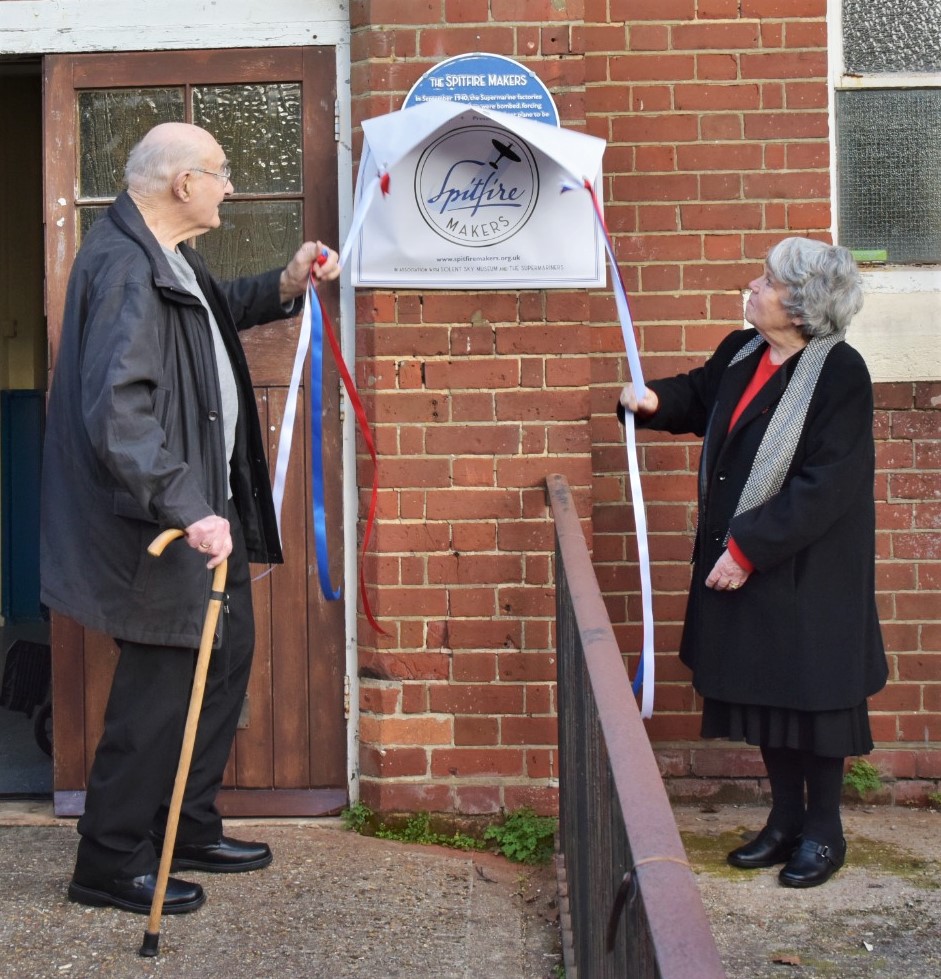
Our first plaque, unveiled nearly 4 years ago in March 2022 was one such site – the requisitioned parish hall in Shirley where drop tanks and air filters were made.
Around that time someone wrote to say he had a used drop tank he’d be happy to donate to us. Unfortunately, we don’t have contact details, but we’re now in a position to take up that kind offer, and/or a similar one from someone else.
The parish hall is being refurbished and, we’re pleased that the main room is going to be renamed “Spitfire Hall”. We’ve been asked to help illustrate the history of the hall with information boards and artefacts. A drop tank (30 gallon preferred ) displayed in the building where they were once produced would be amazing!
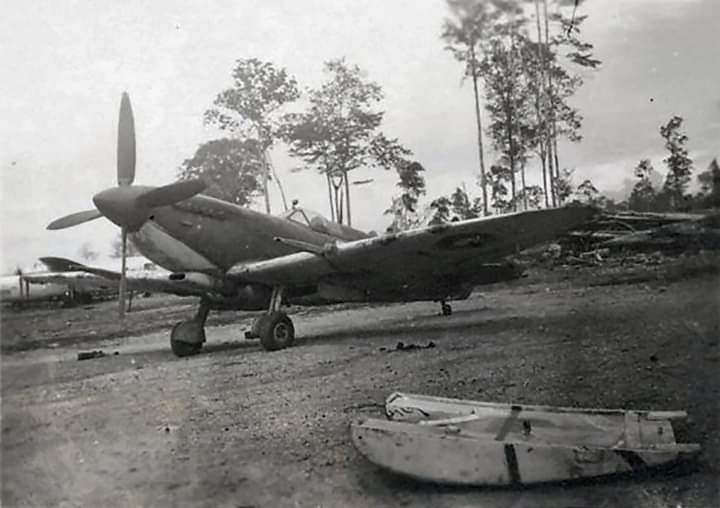
They are also hoping to find a large (ie not an Airfix kit!) model Spitfire that could be hung in the vaulted ceiling space where it would ‘fly’ from the original gas pipes that were fitted to enable the brazing and soldering of the Spitfire parts that were being made there.
Please get in touch if you, or someone you know could help with either of these.
Images by the Spitfire Makers Charitable Trust and also unknown sources
Posted on Facebook by Alan Matlock – 14th January 2026
Super-sleuths needed!
Mystery 1 – the Missing Drill…Where is it now?
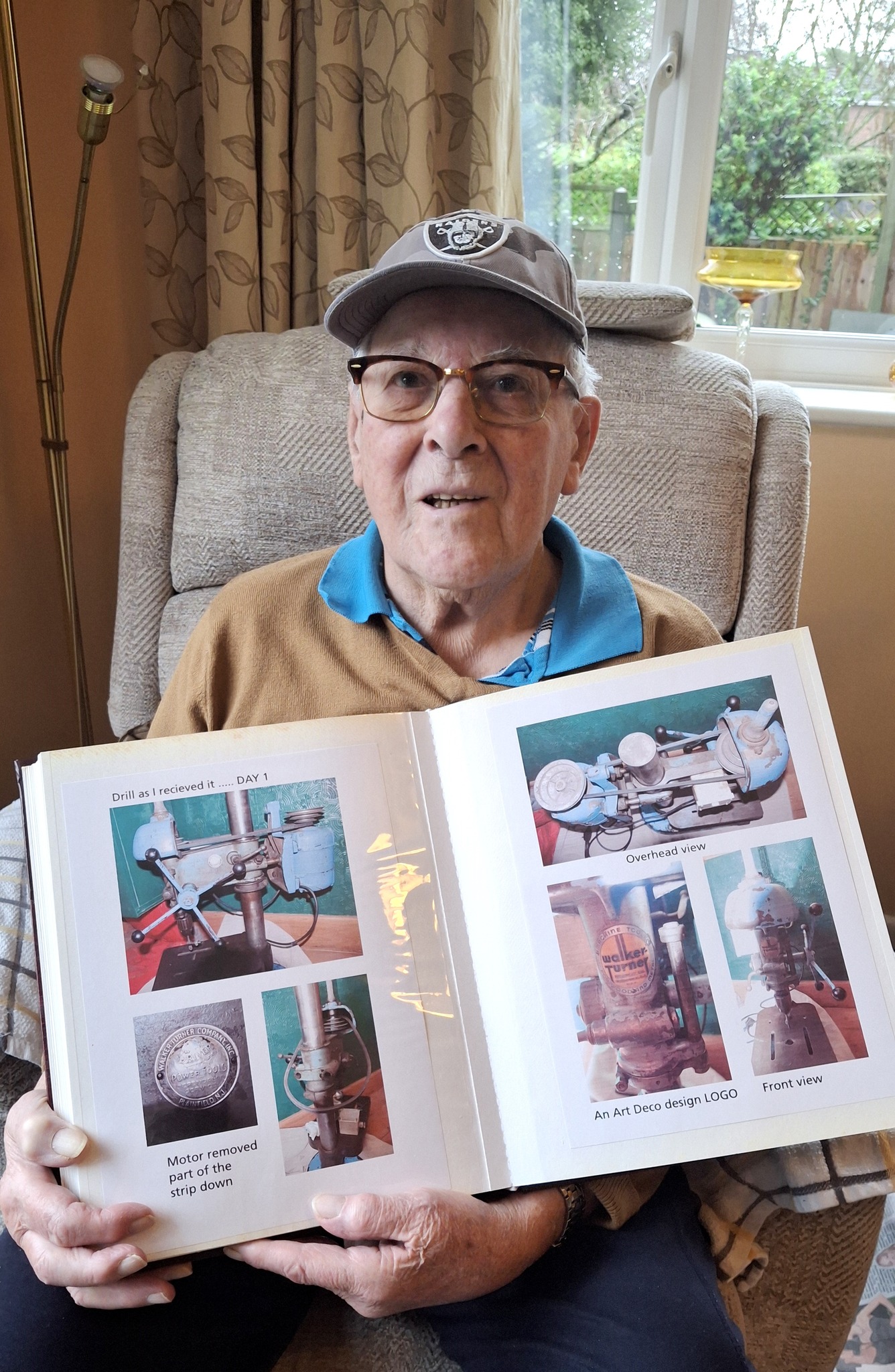
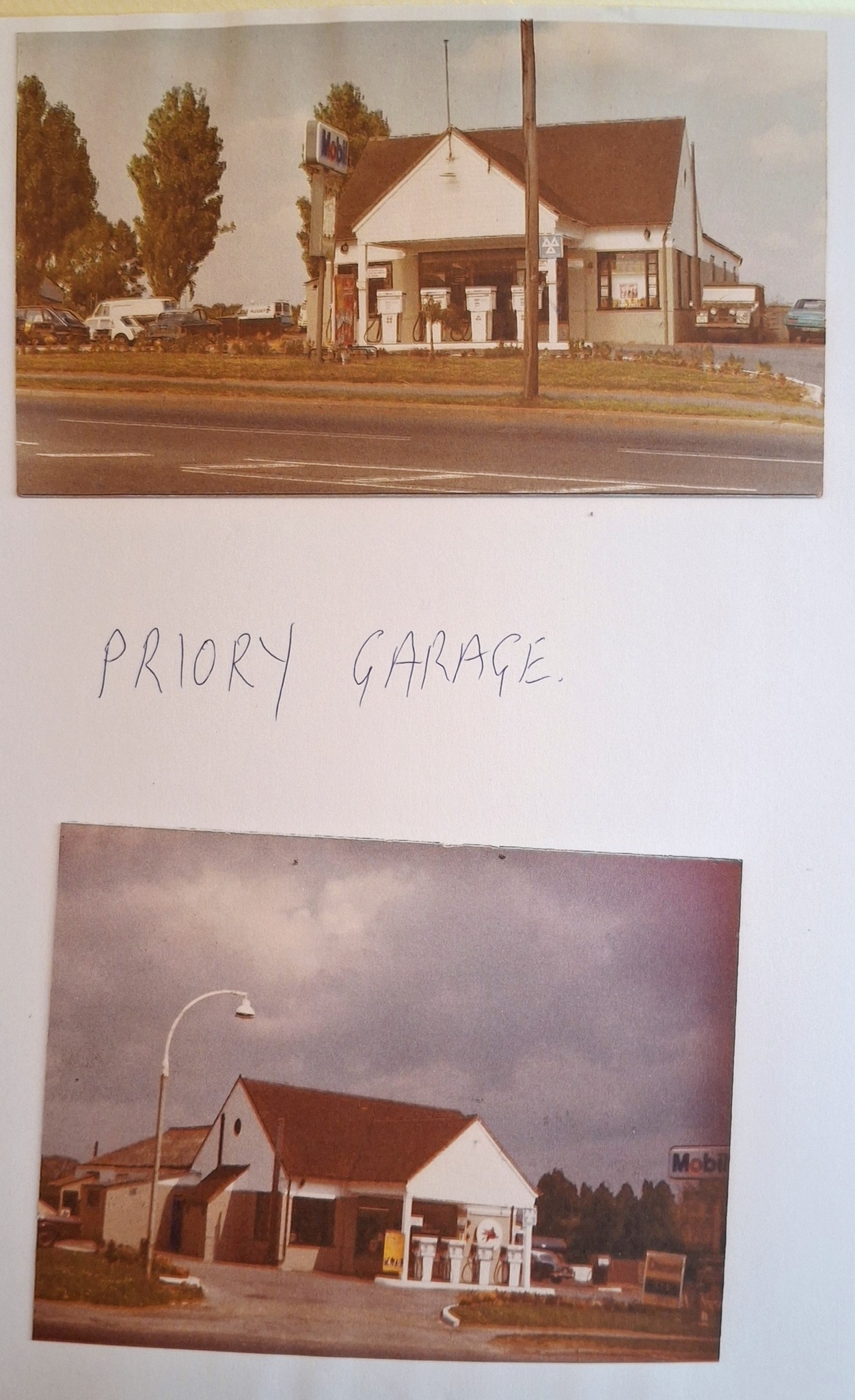
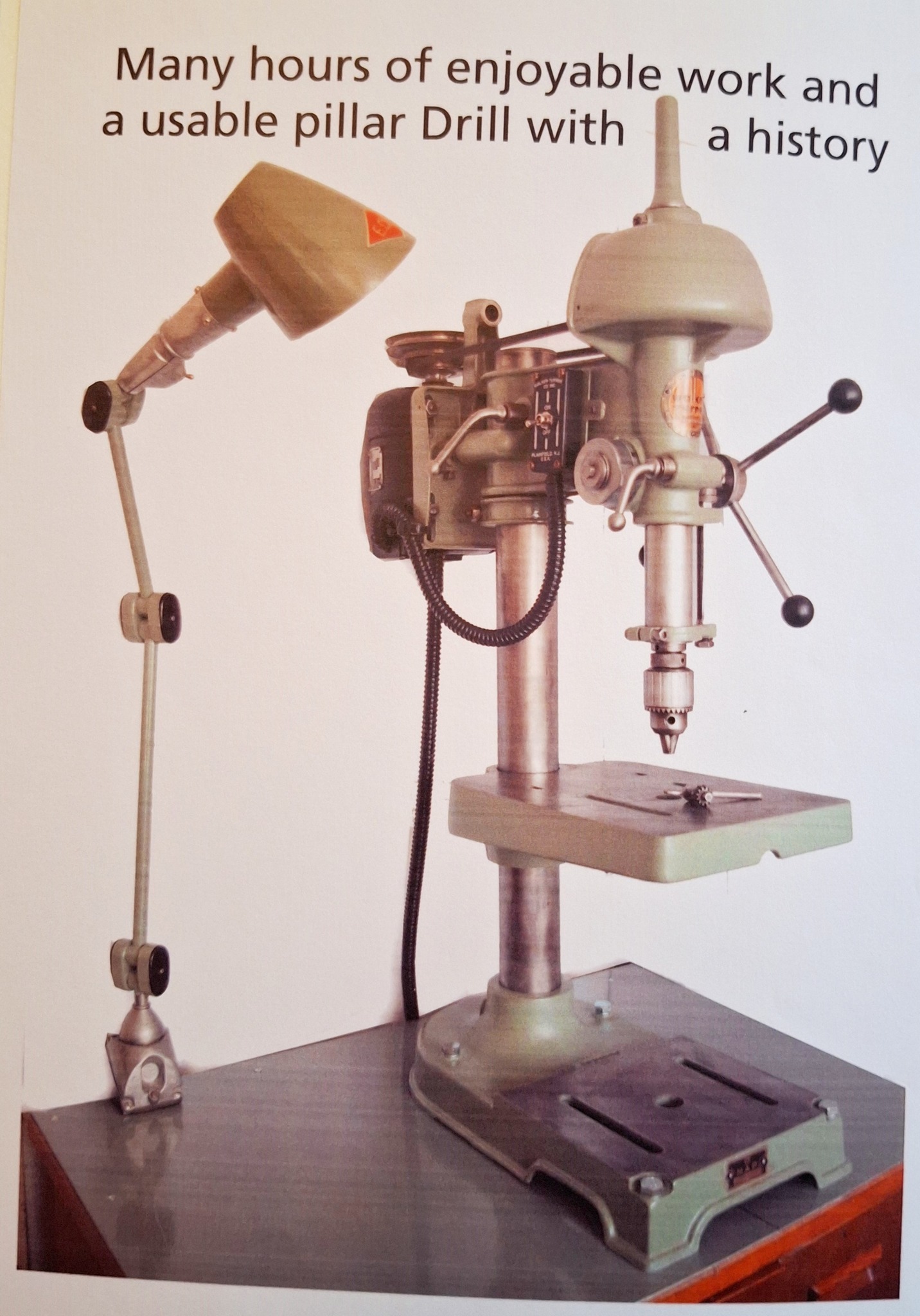
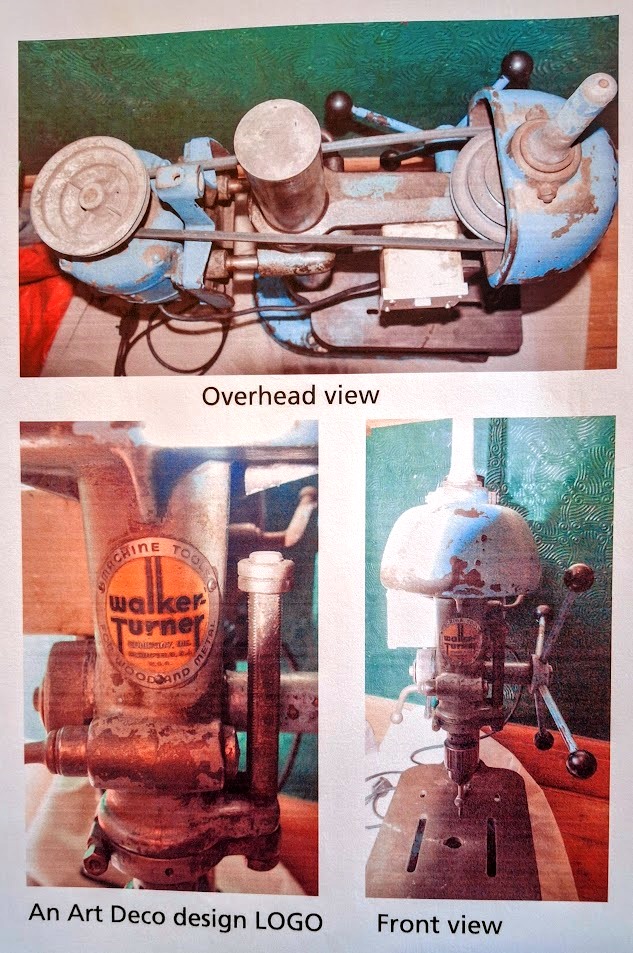
I visited a very lively 90+ year old George Childs today as he had got in touch to say he had some photos, in an album left to him by his brother John, which showed a pillar drill with an “MAP” (Ministry of Aircraft Production) badge and “AST / 5” punched onto it.
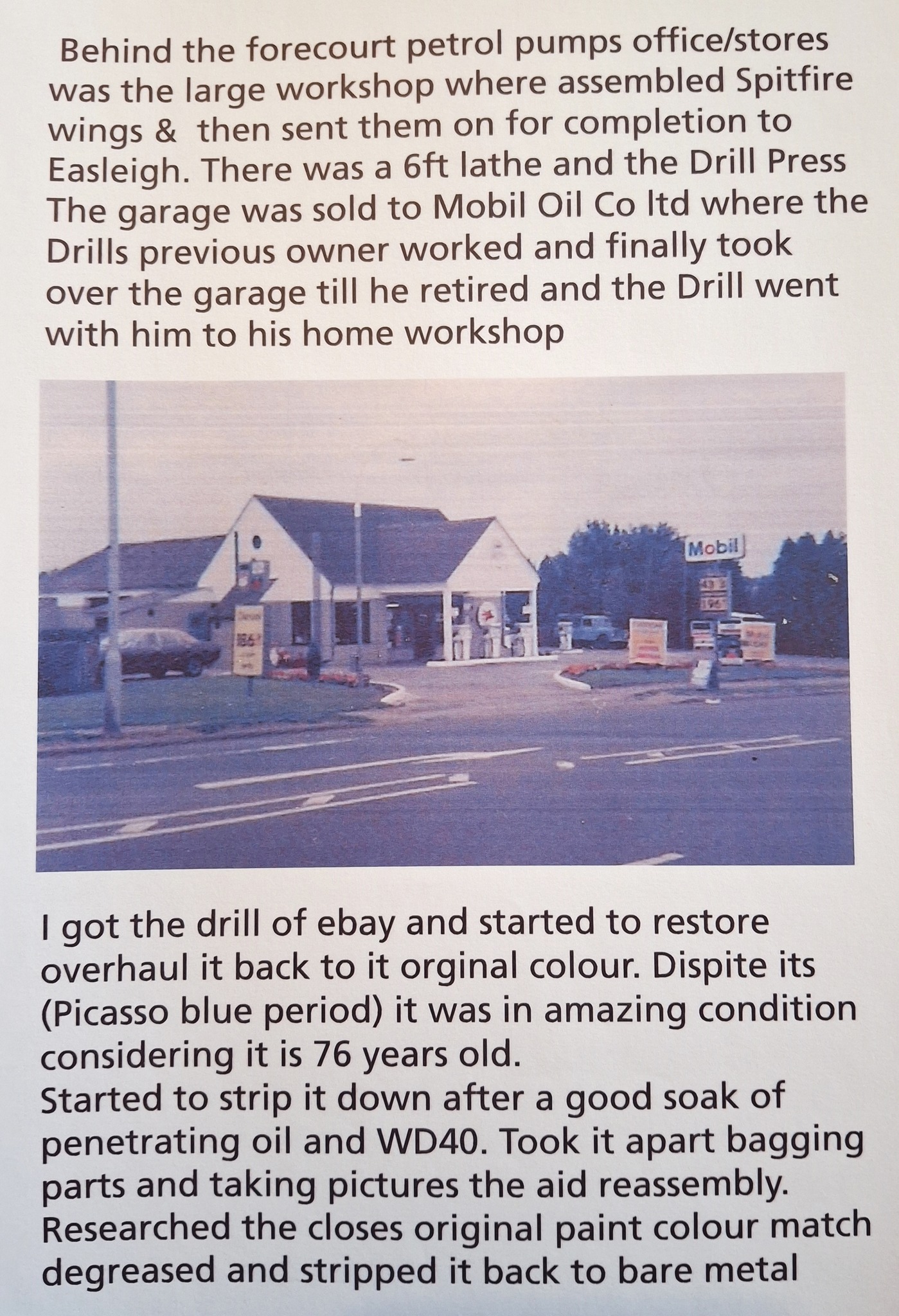
Evidently, an American pillar drill issued by the for use by Air Services Training, Hamble, was used in the Priory Garage on Titchfield Hill when it was commandeered to make parts for aircraft, including Spitfires.
John had taken over running the garage in about 1970 (possibly from a Mr Maltby or perhaps Bob Chase?) In the workshop, there was an American pillar drill, made by the Walker – Turner Co Inc, Plainfield N.J. John gave the drill to someone called Martyn who did a complete strip down, refurb and rebuild job on the machine and sent John photos of the process with the attached note, saying he had it in his workshop and it was “good for another 76 years”.
One of AST’s wartime workers at Priory Garage was Clarence ‘Ben’ Bennett whose 2020 interview for the Nuffield Theatre’s “Out of the Shadows” project, with other info related to the garage, can be found here:
Ben told us that he helped making seats for Spitfires at the garage, others have mentioned wings and tail units being produced at the garage. It was also pointed out in a local history book “Titchfield Remembers”, that the extension at the side of the garage was added during WWII, to provide the women workers their own toilet facilities!
Another contributor, Kate Scott, added some gruesome details, “Gran’s sister had small hands and had to pick out human remains when they were repairing the Spitfires. ” She added, “At Brownwich and Chilling beaches they loaded the tanks for the D-Day invasion. Gran and the other girls worked in the Spitfire factory – now BA Systems (Follands?). They were picked up from the ferry.”
So, does anyone know who Martyn was and if the drill still exists? Or can you add to the history of the garage during WWII?
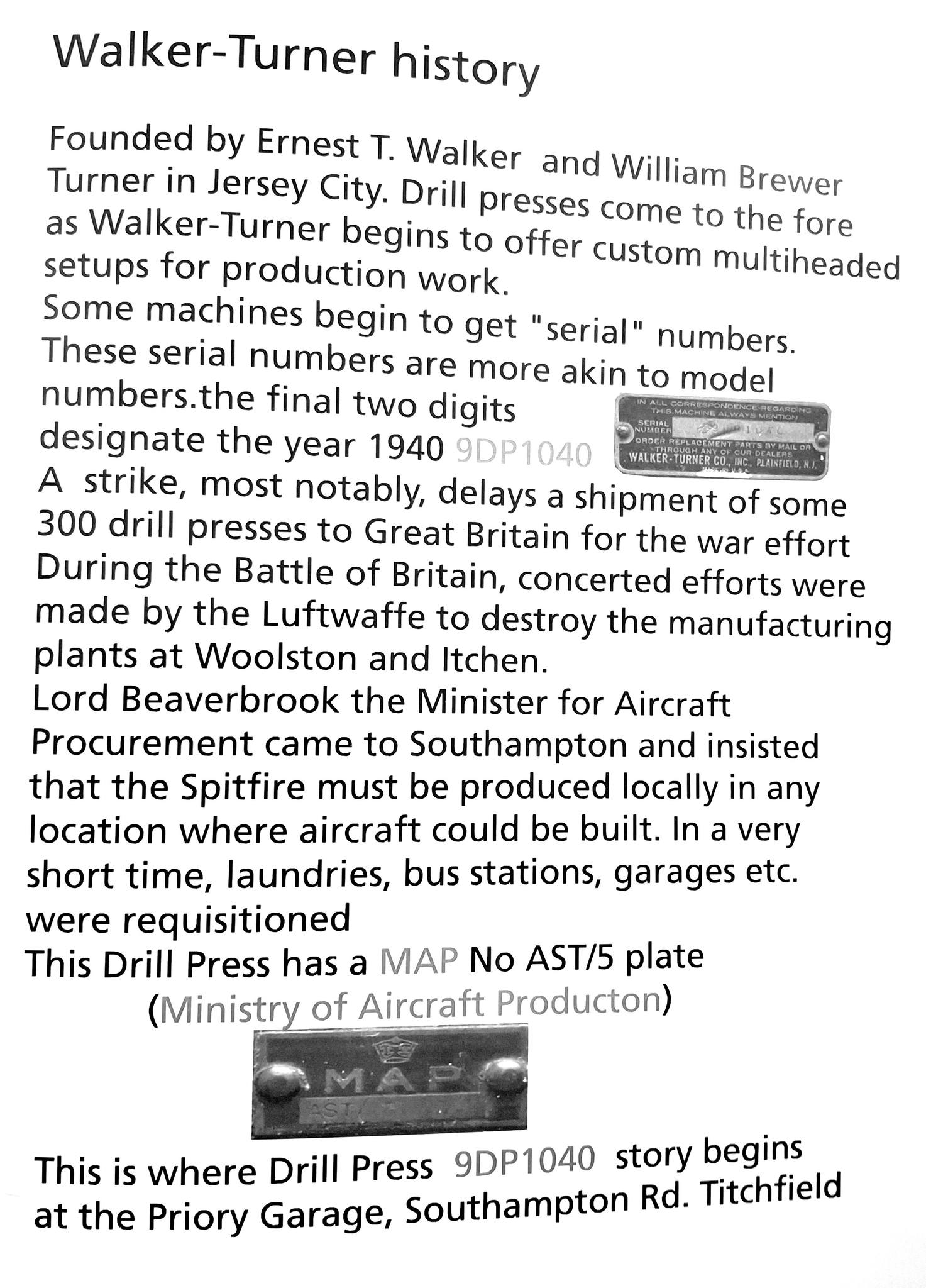
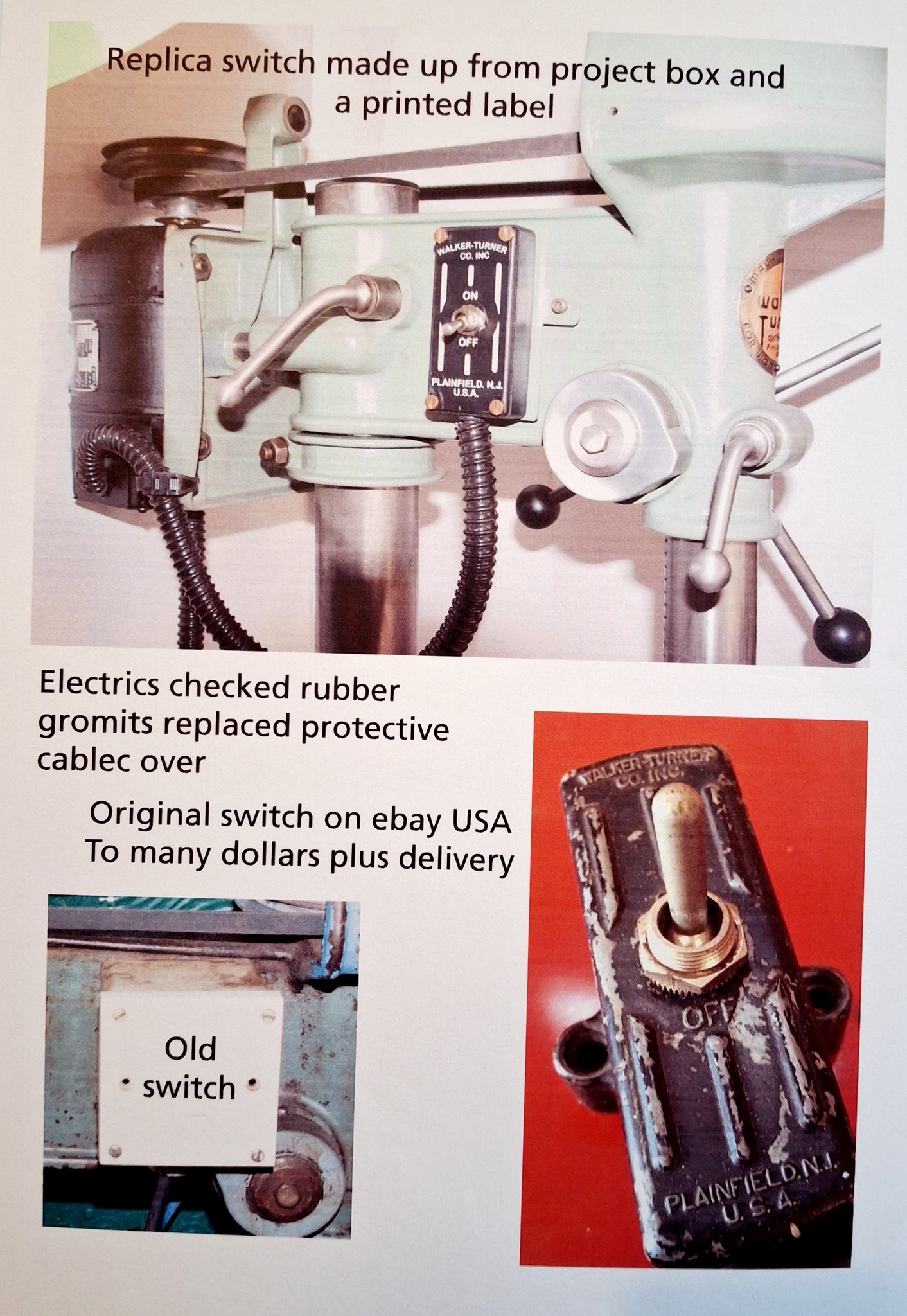
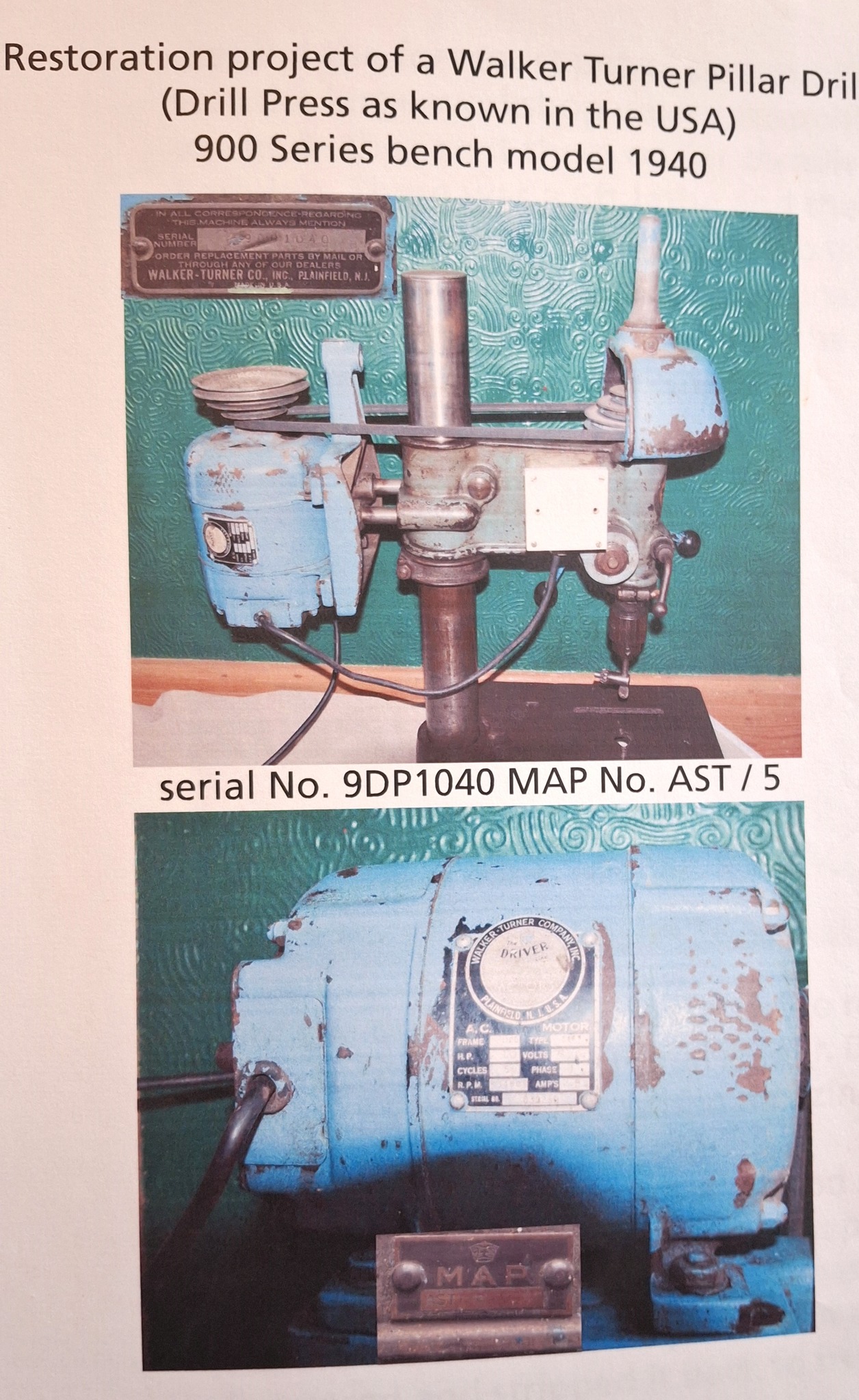
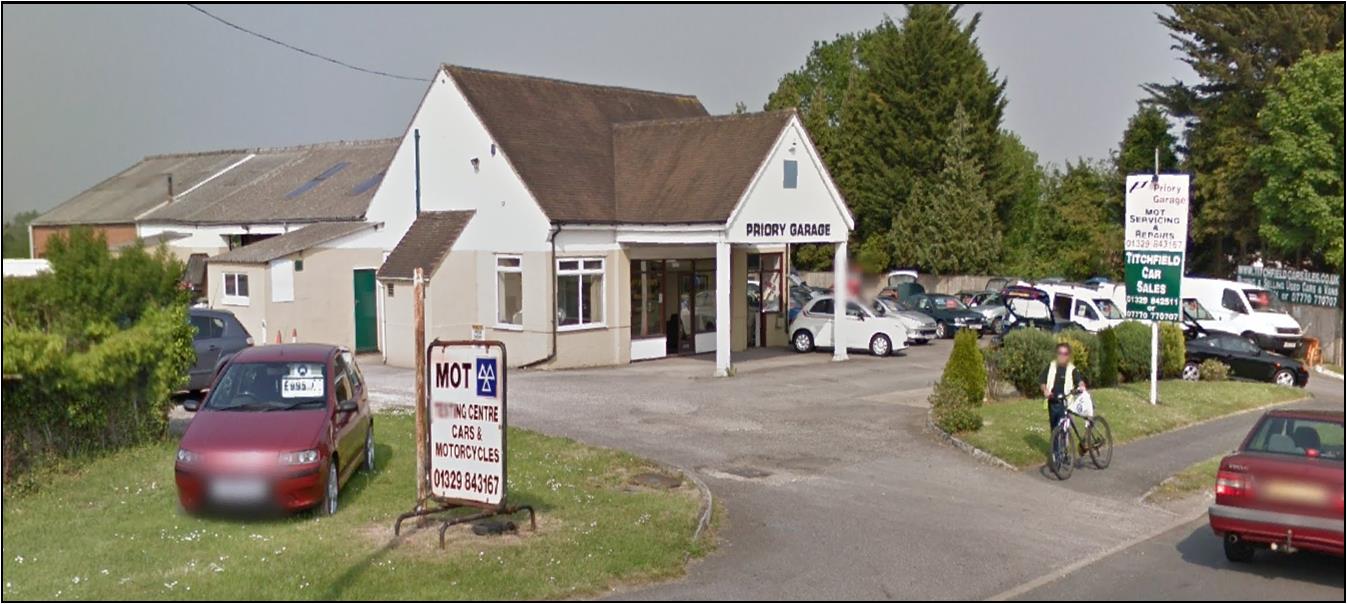
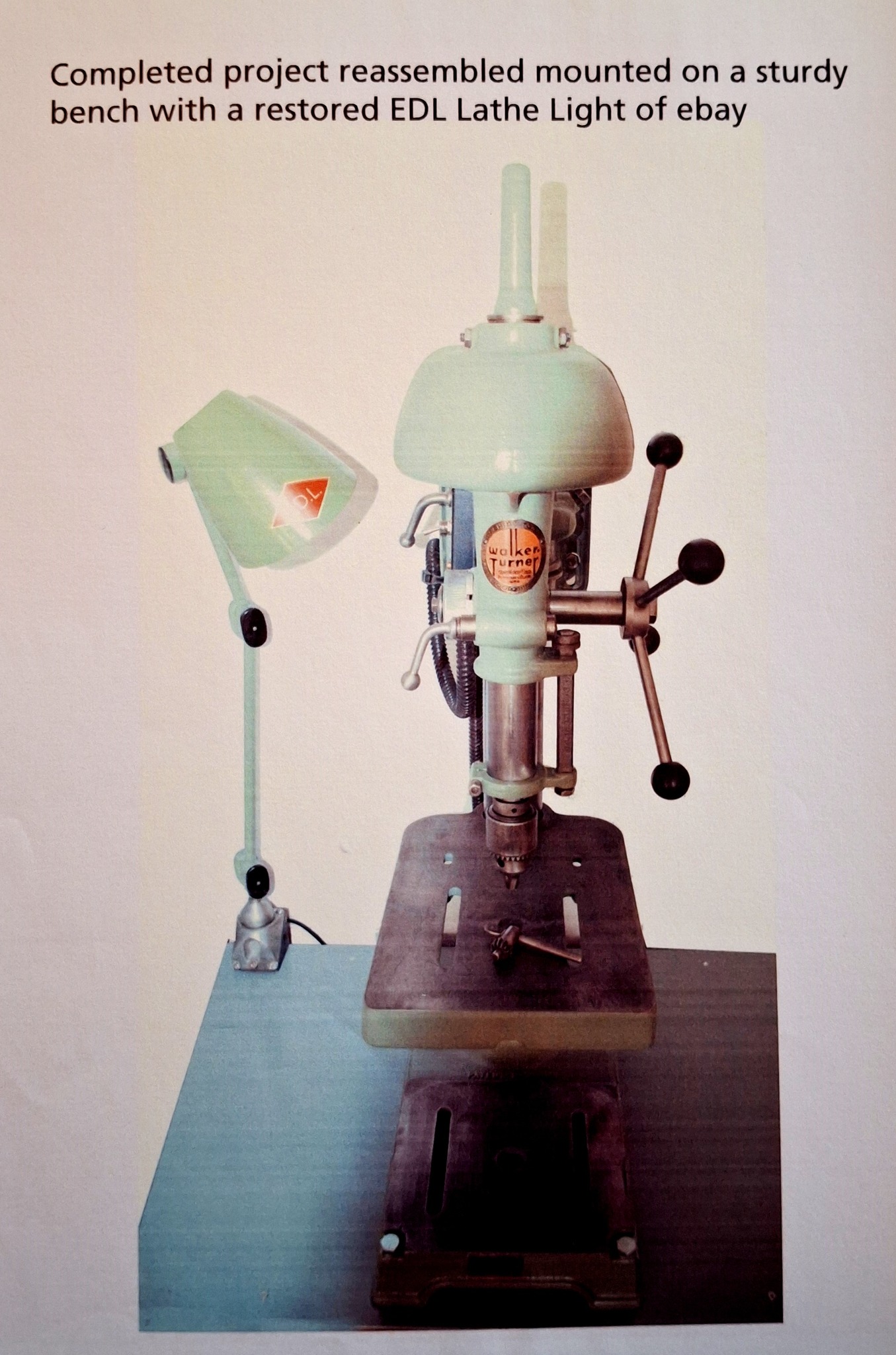
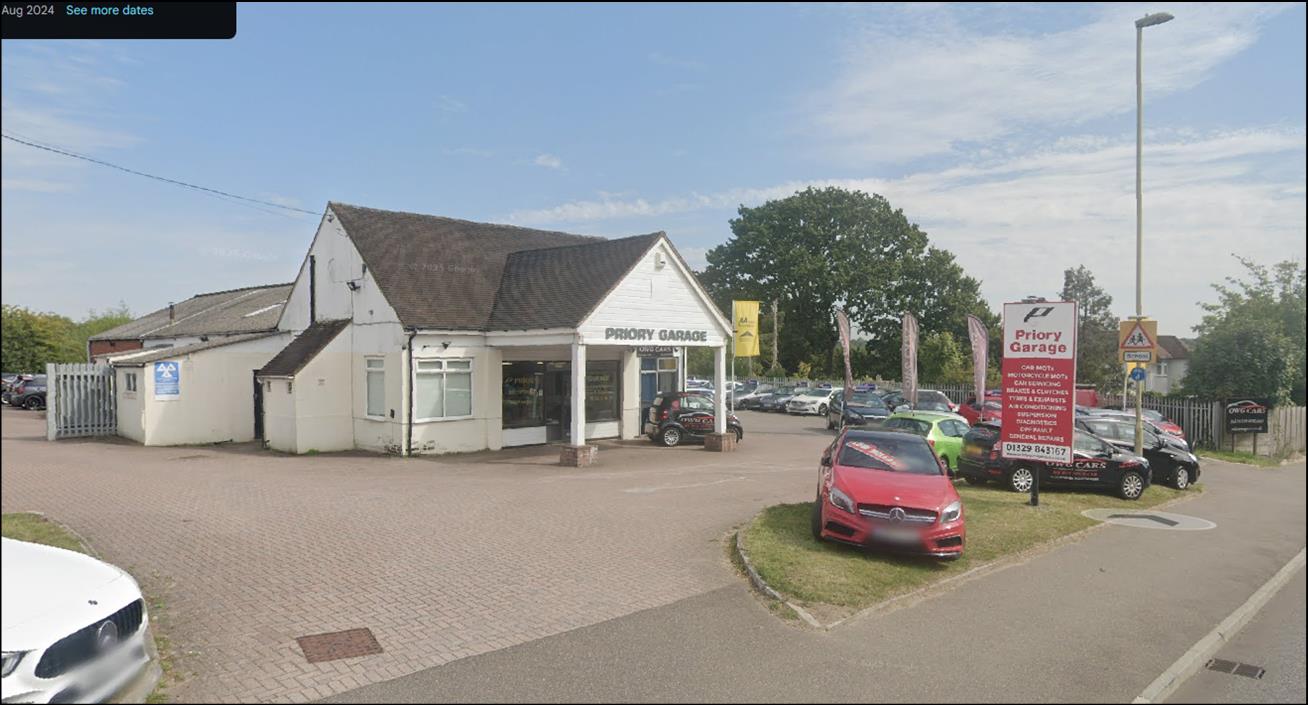
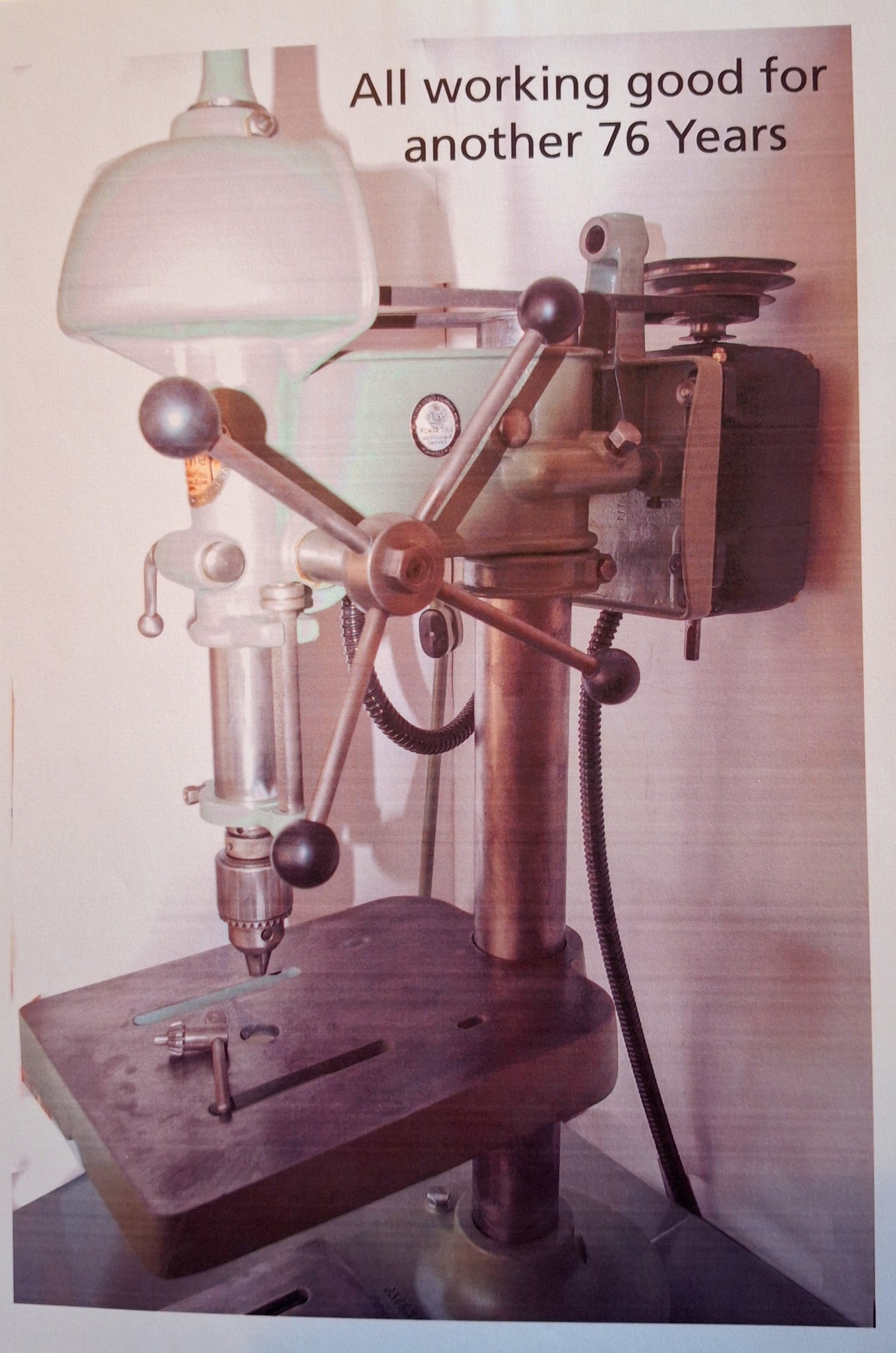
Images courtesy of George Childs
Posted on Facebook by Alan Matlock – 14th January 2026
Super-sleuths needed again!
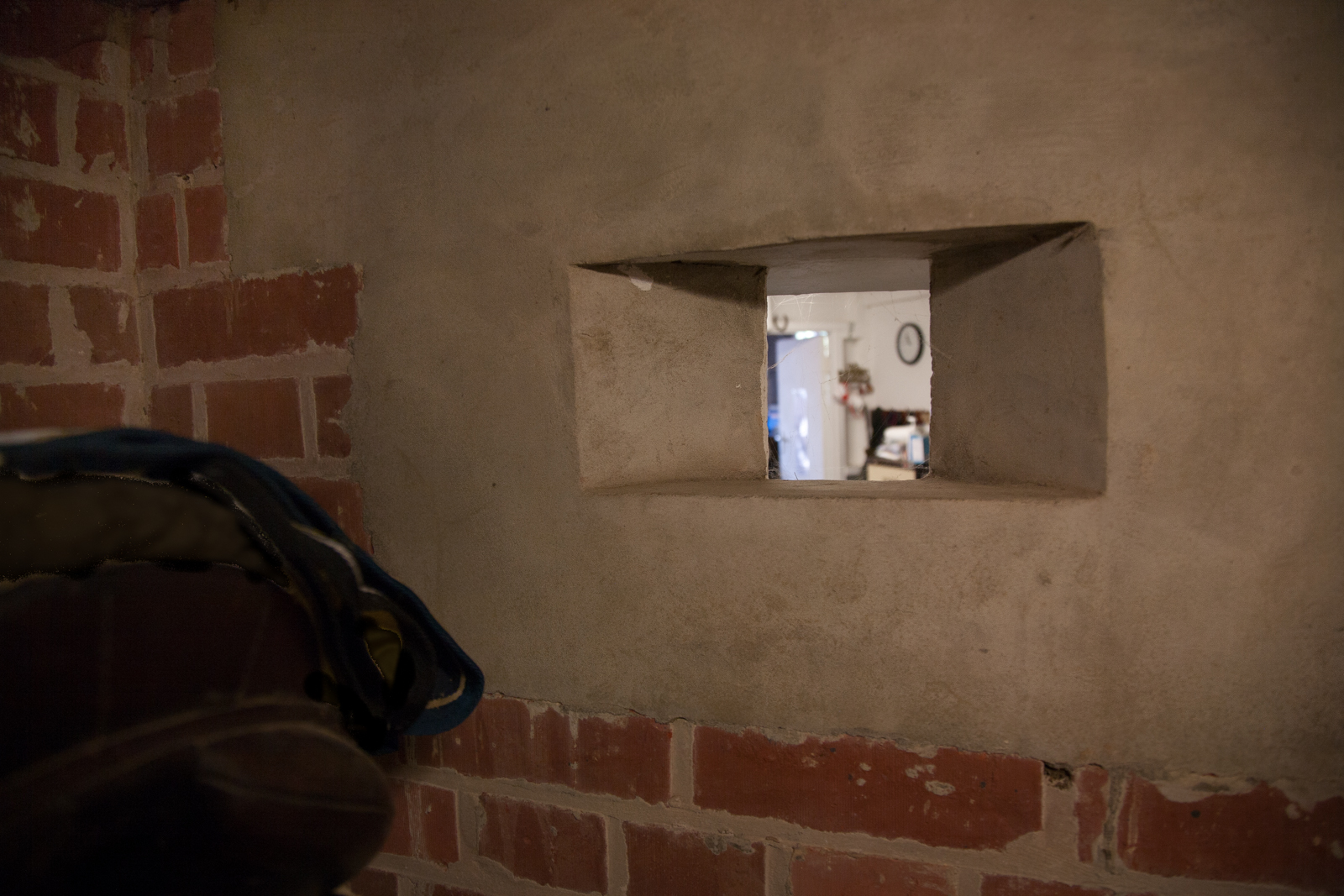
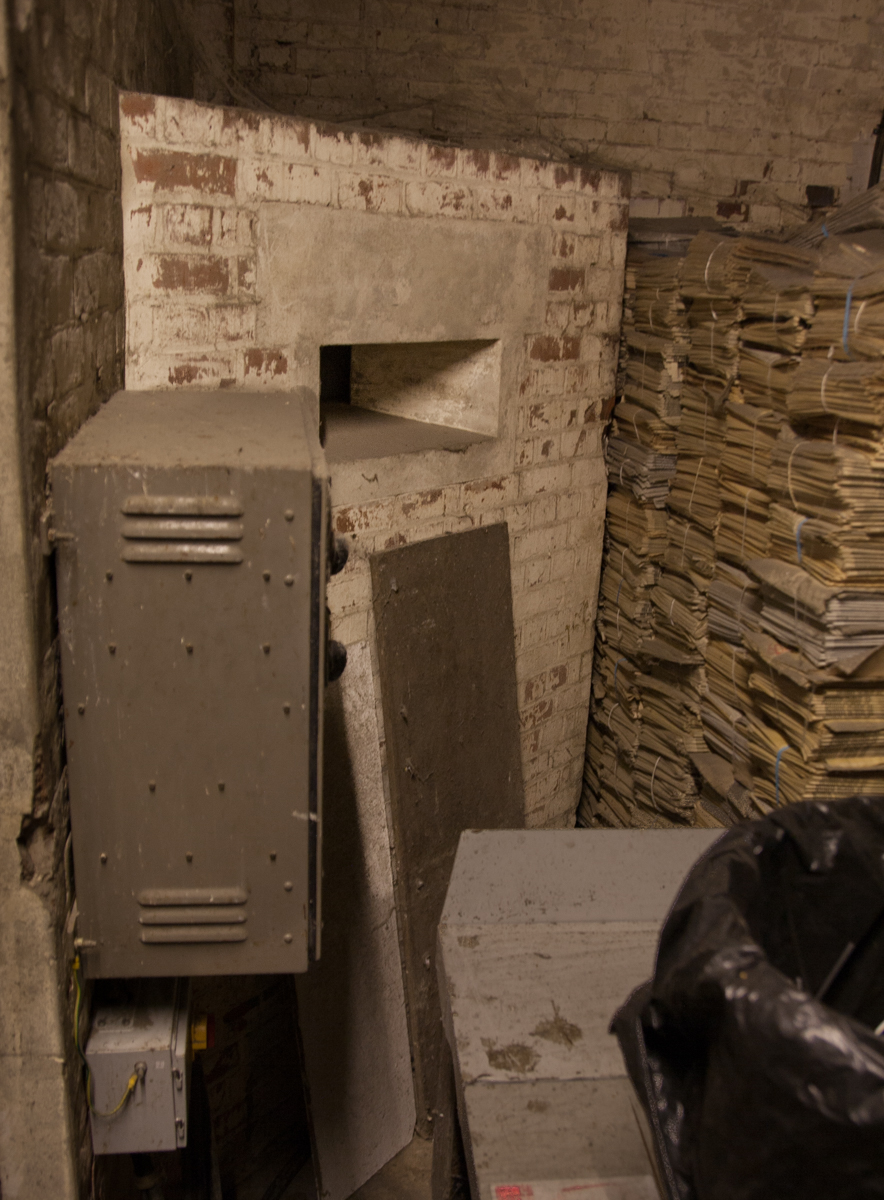
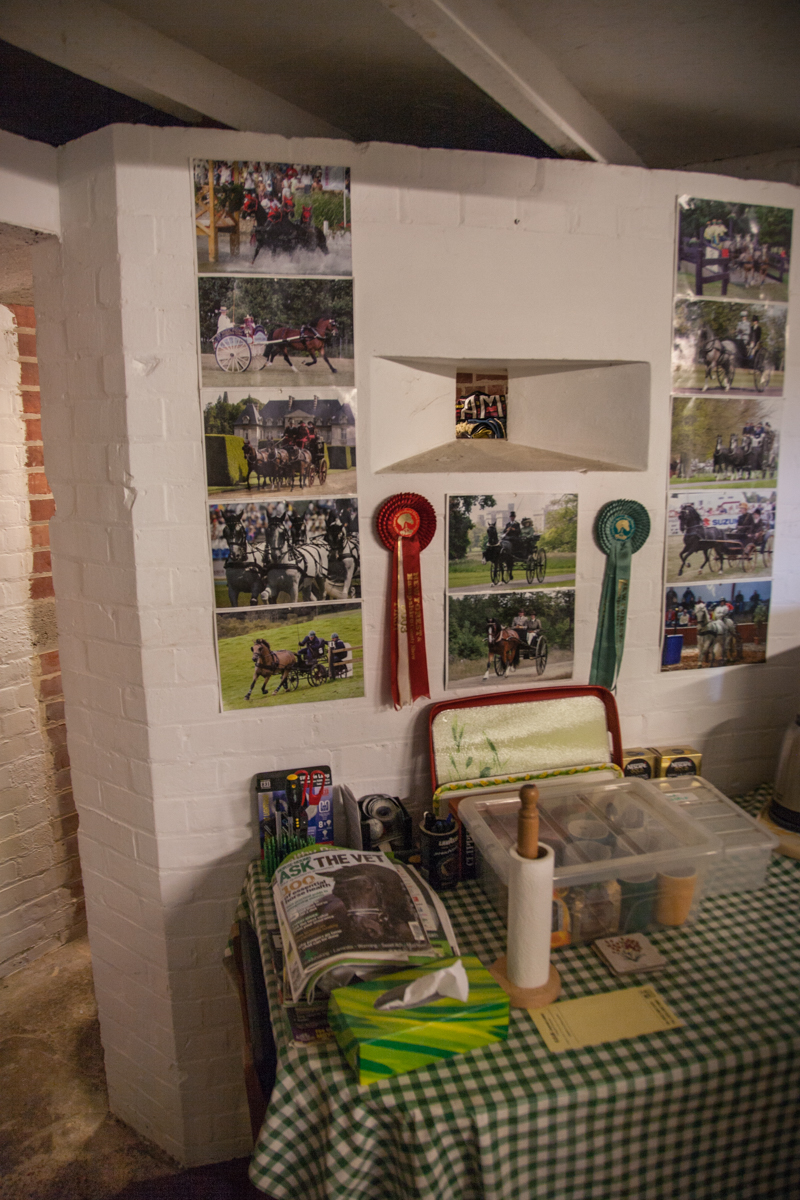
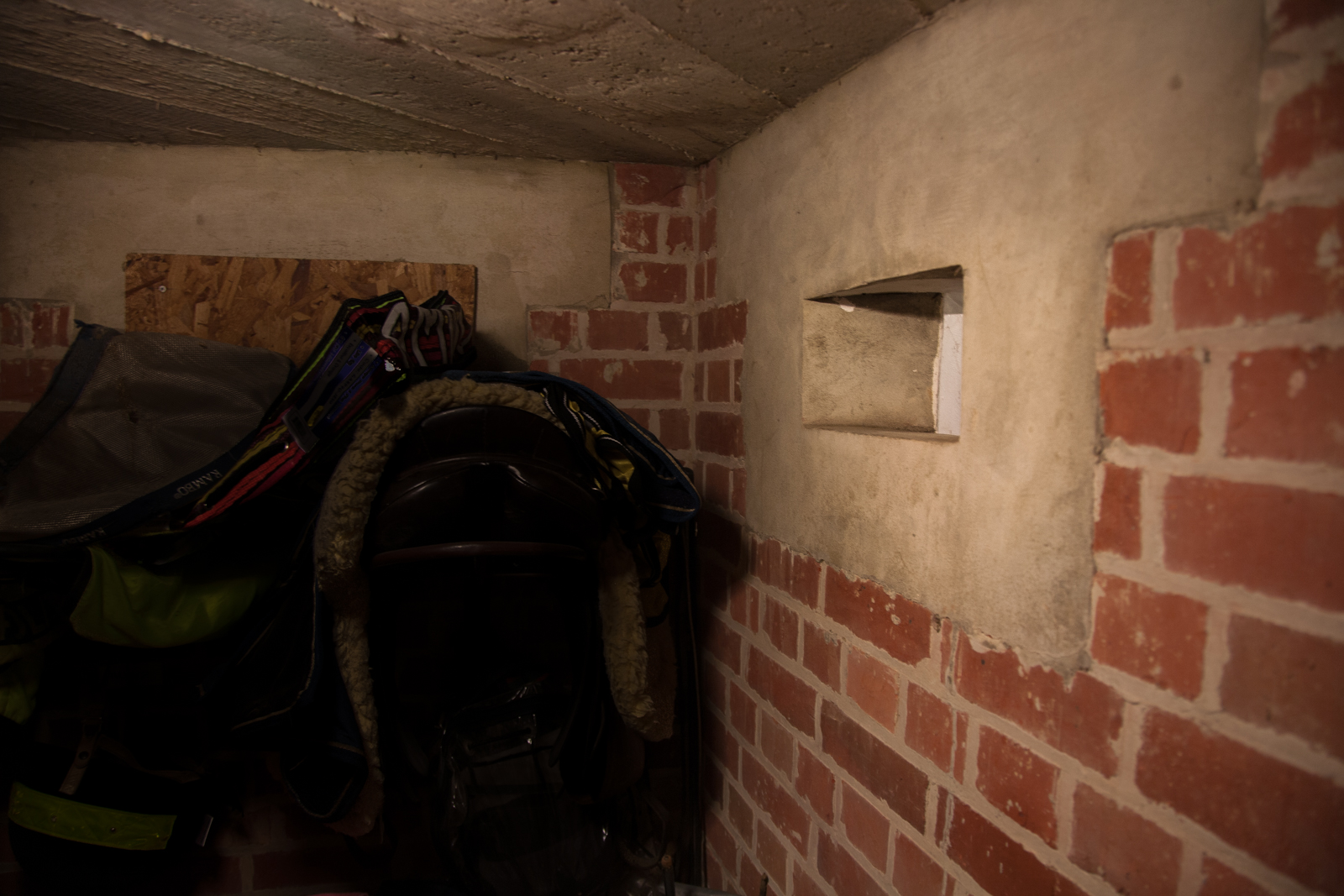
Mystery 2 – Pillboxes in Spitfire dispersal premises where the gun ports pointed INTO the workshop!
Two pill boxes, at different dispersed Spitfire production/repair premises, with the gun ports facing INWARDS, not out into the surrounding fields.
When I visited Priory Garage on the A27 a few years back, the then owner, John Taplin, was keen to learn more about the war work that was evidently being done there. He told me that, at the back of the main workshop, there had been a brick-built pillbox with concrete gun ports. It was demolished to make more room, but it was noticed that instead of pointing outwards, the gun ports faced into the workshop.
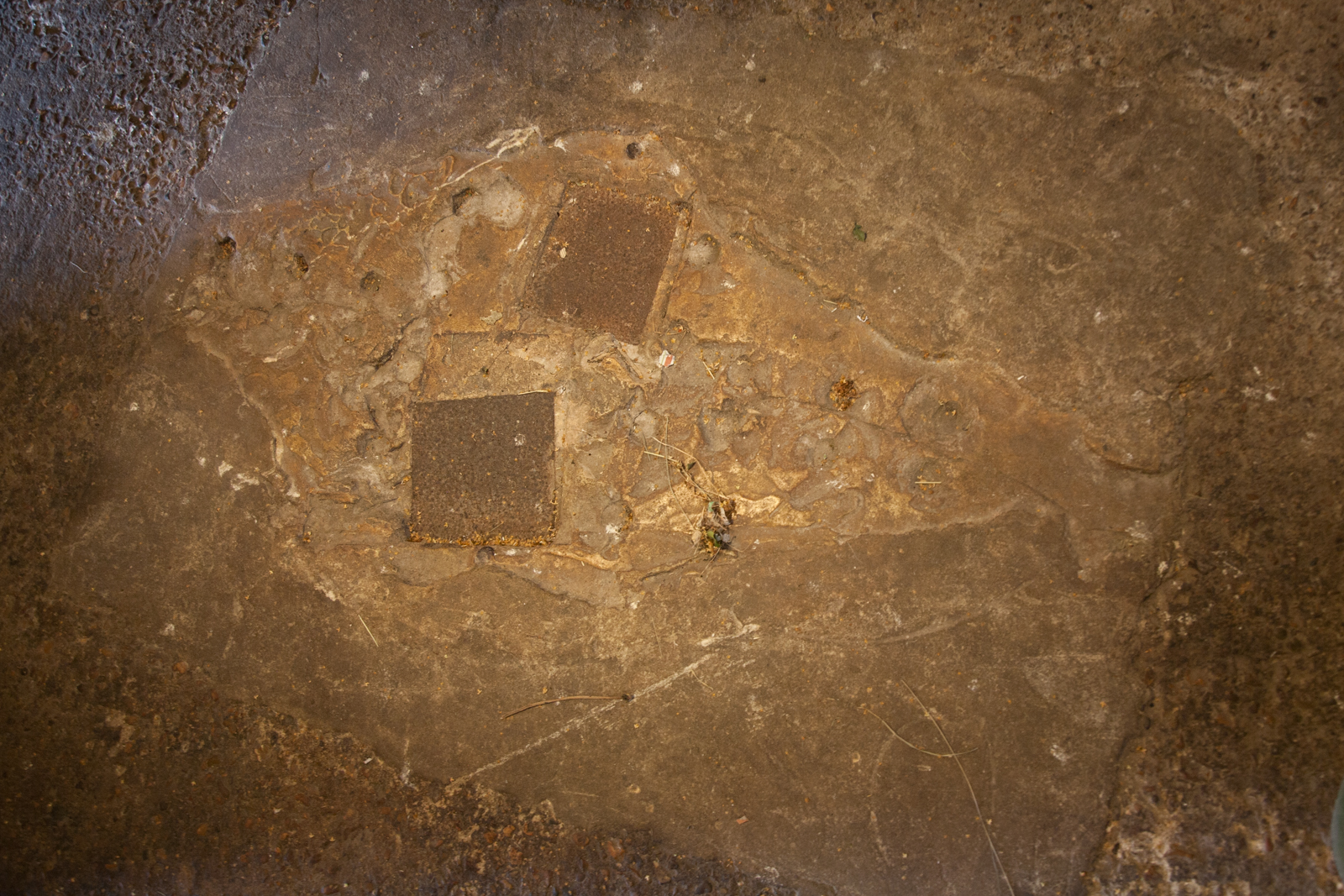
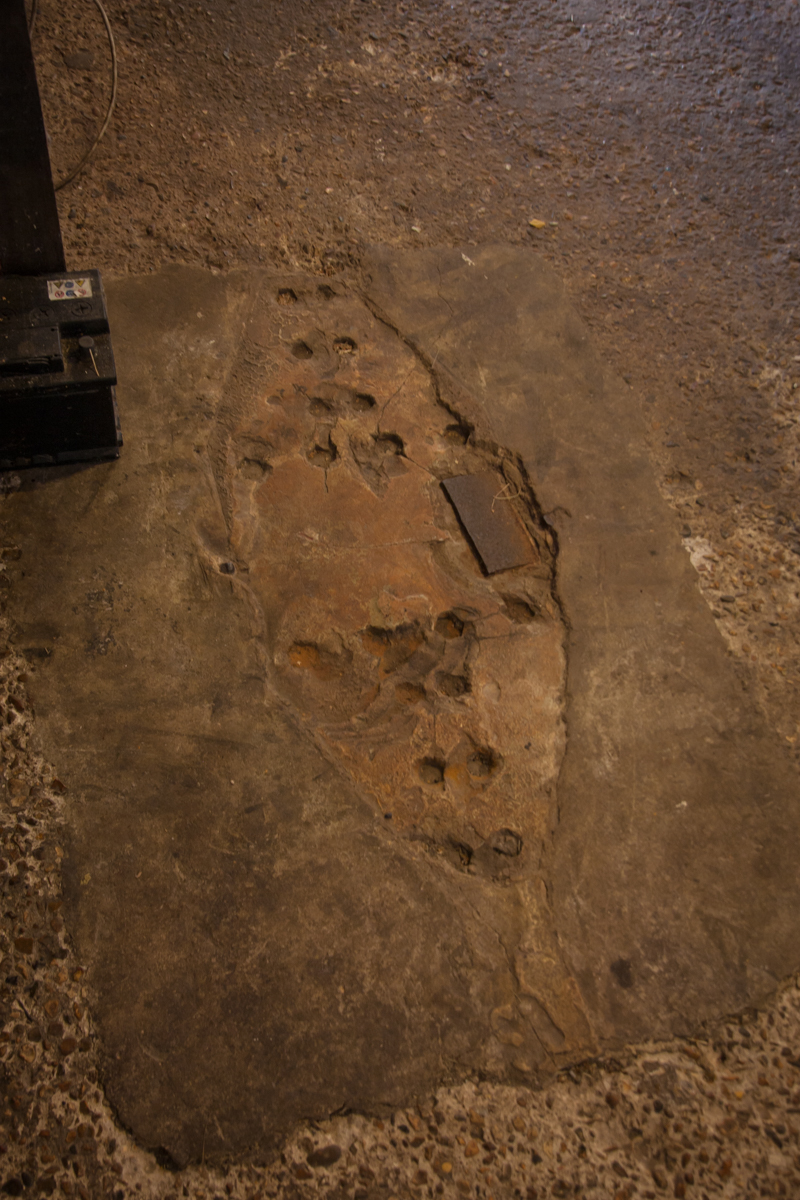
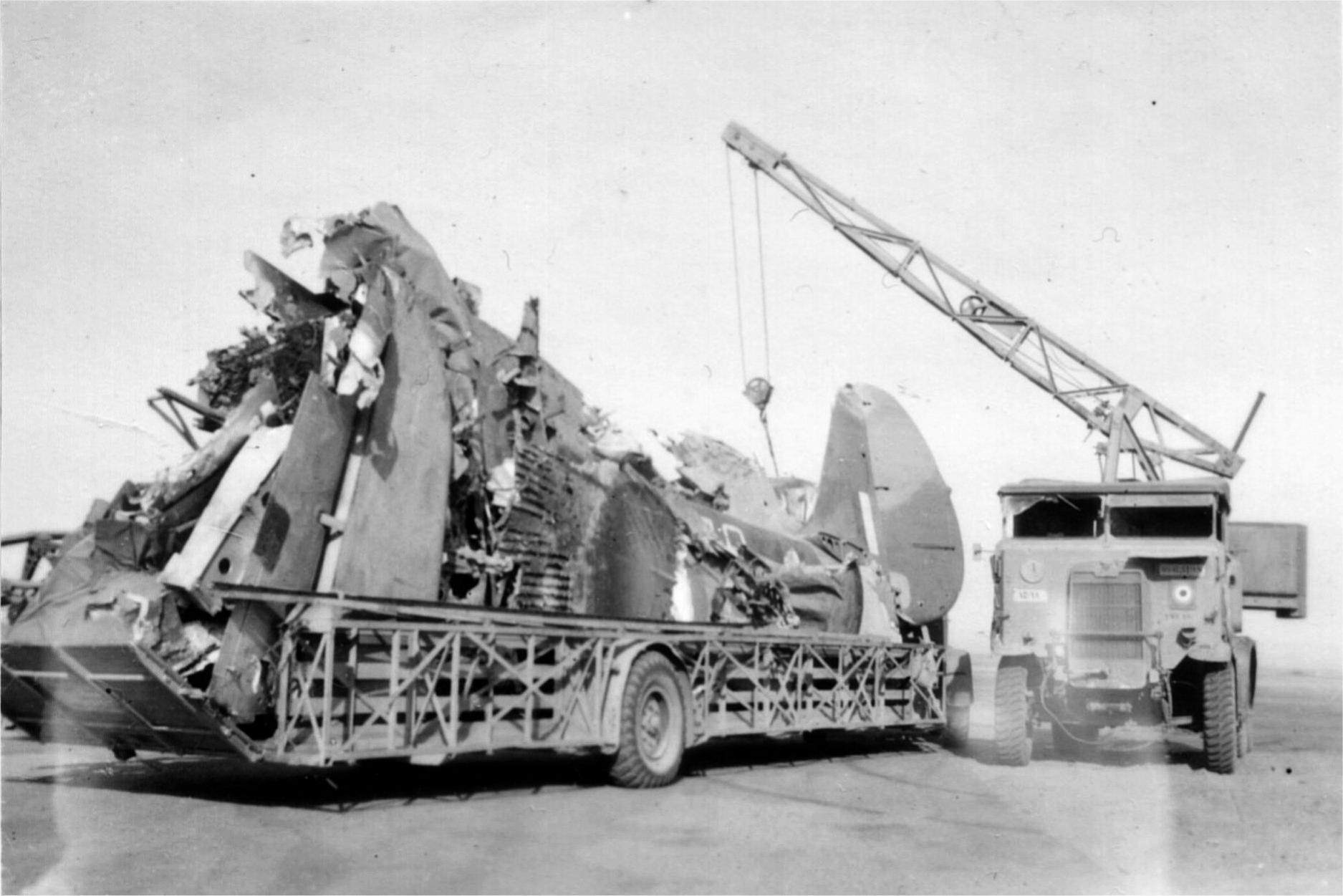
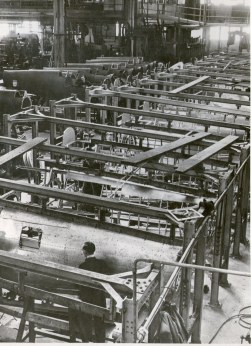
This immediately put me in mind of a similar structure I had seen in the corner of the L-shaped Solent Court Barns, less than three miles away on Chilling Lane, Hook. There the barns had been used, again under AST direction, for the repair of Spitfire wings. The concrete floor still shows signs of the jigs for repairing the wings being bolted into it and there are photos of the workers outside the distinctive barns.
Can anyone suggest a plausible reason for this seemingly odd arrangement of the pill boxes?
(A young lad, George Fuller, who was known to all the workers, was allowed into the barns to pick up all the discarded bolts, rivets etc off the floor. His story is told here…
When I visited George, not long before he died in 2020, he kindly gave me a jarful of his scavenged rivets .)
.)
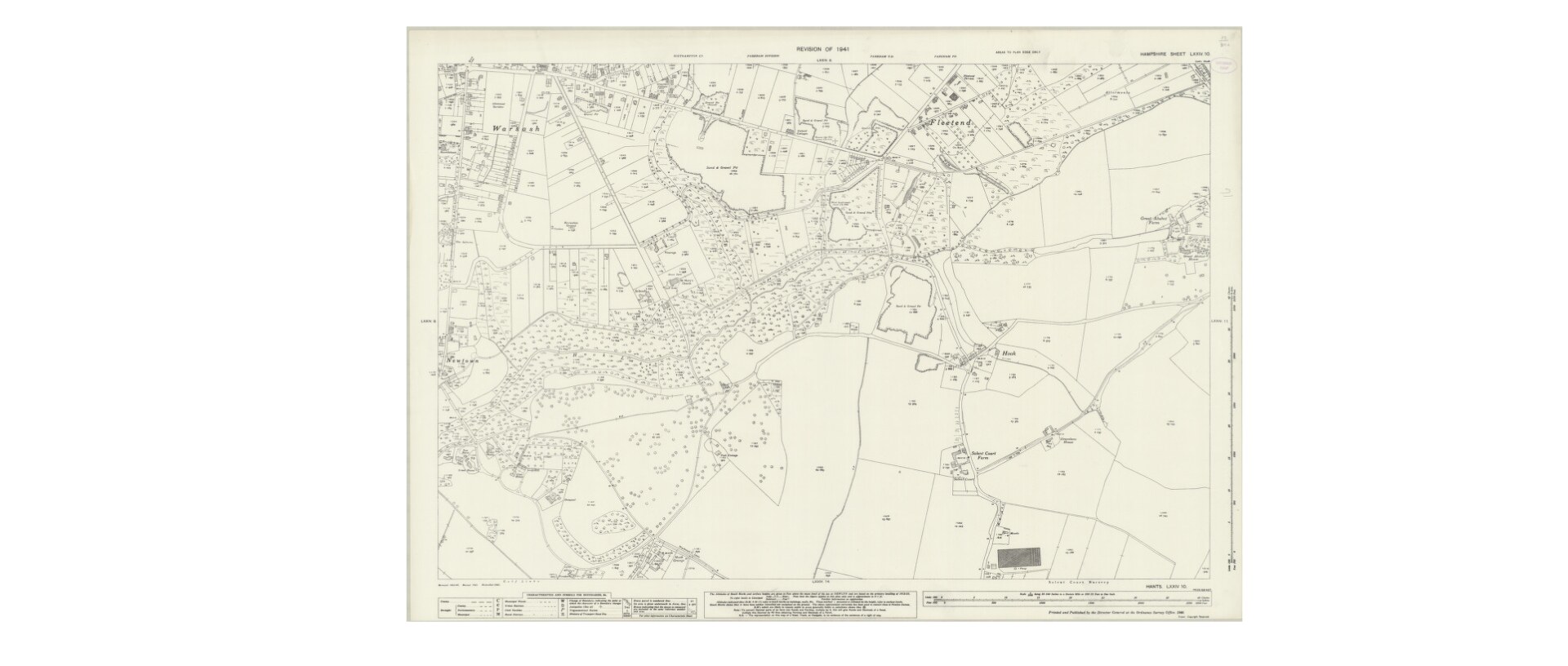
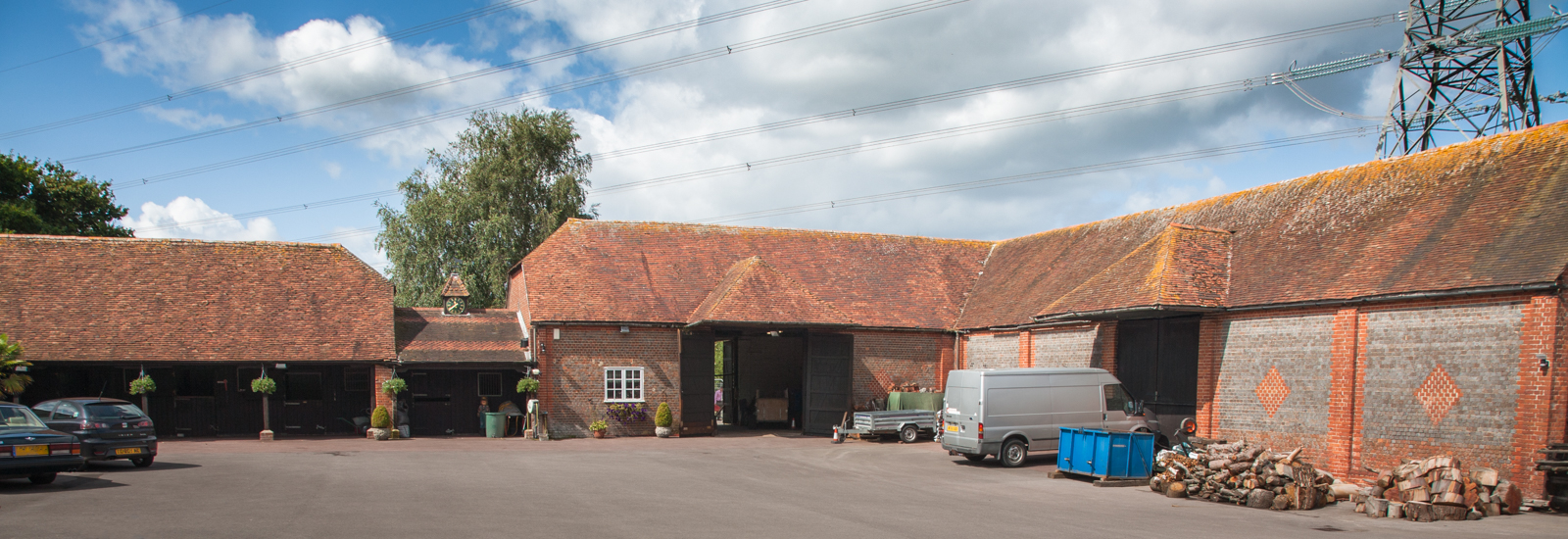
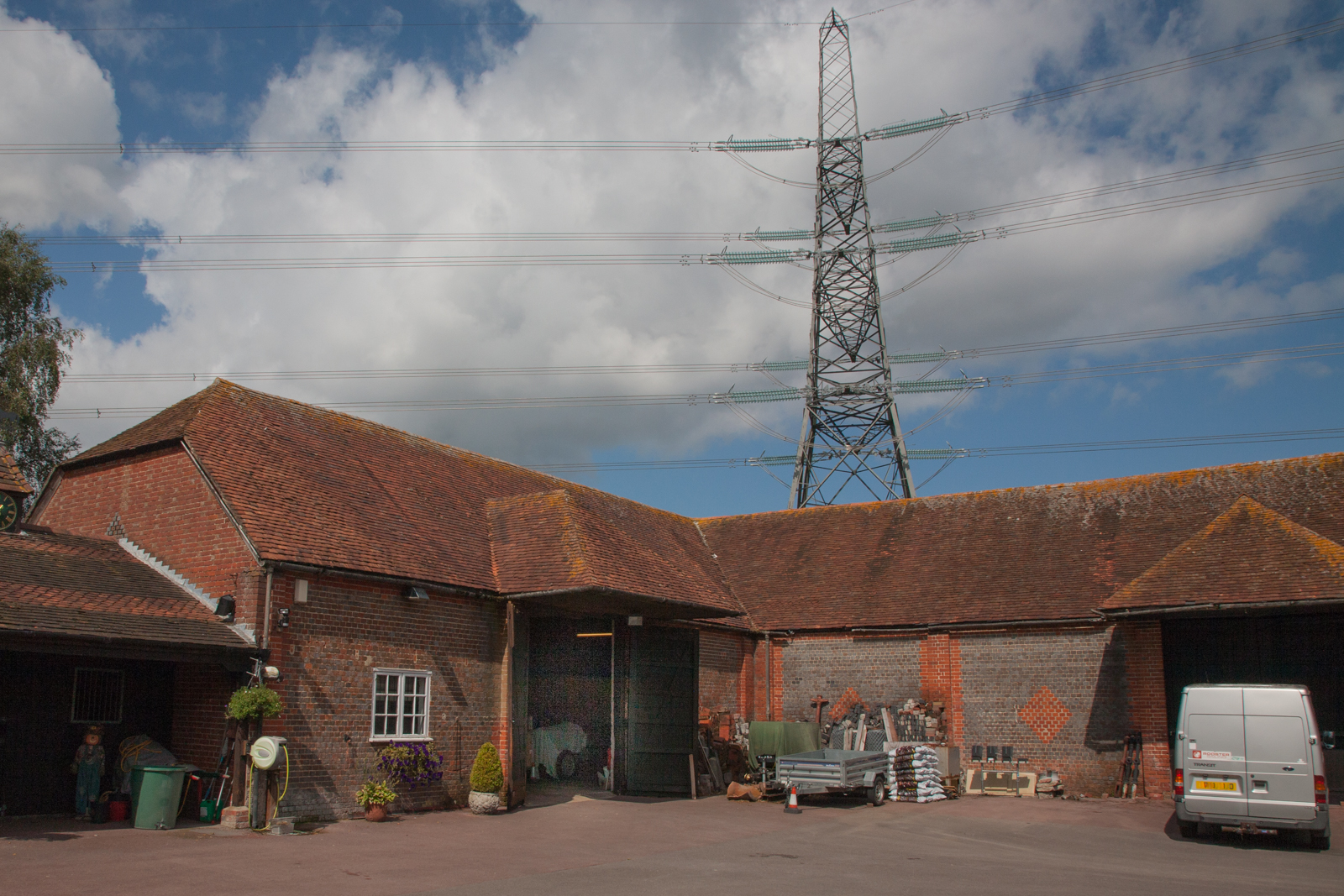
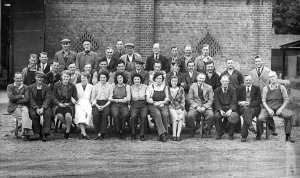
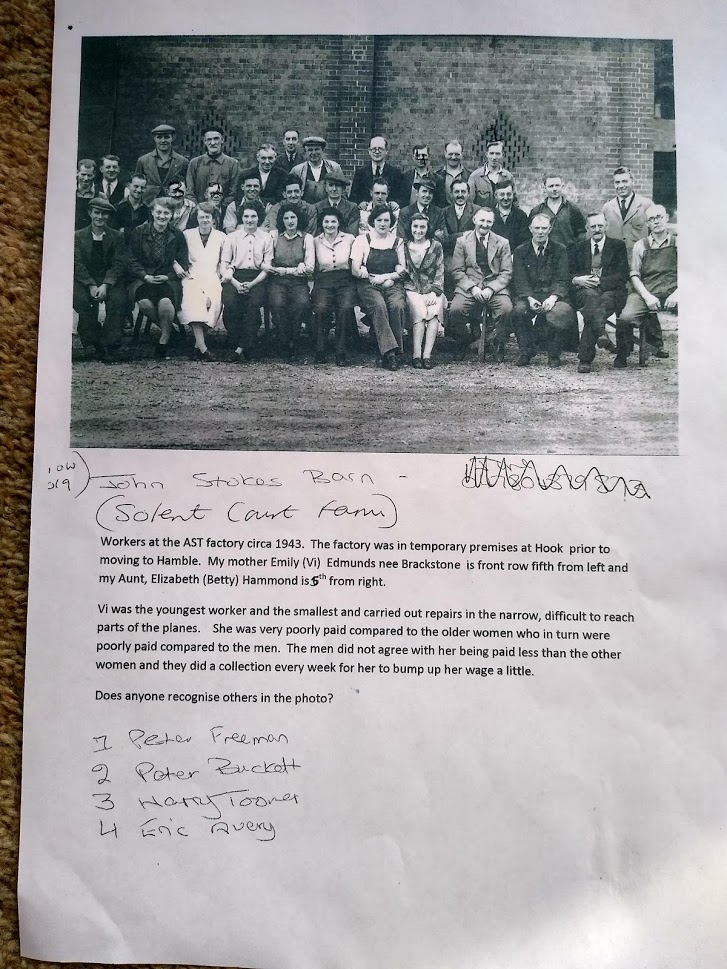


Images by The Spitfire Makers Charitable Trust and unknown owners
N J – Are they actually pointing outward?? Surely this design allows someone to have a wide field of fire moving the gun when standing inside, but have as little visible on the outside of tbe building which is intended to look as inconspicuous as possible.
P N – I understand that they would have been firewatcher slots in case of explosive ammunition in factories of the time, so the ARP could safely view the situation in the factory with reduced danger from burning ammunition etc exploding if there was a fire. I could be wrong.
Spitfire Makers to PN – A credible idea, thanks
PN – I think I read about them in relation to other WW2 factories.
Posted on Facebook by Alan Matlock – 15th January 2026
History revealed – but not exactly what we expected!
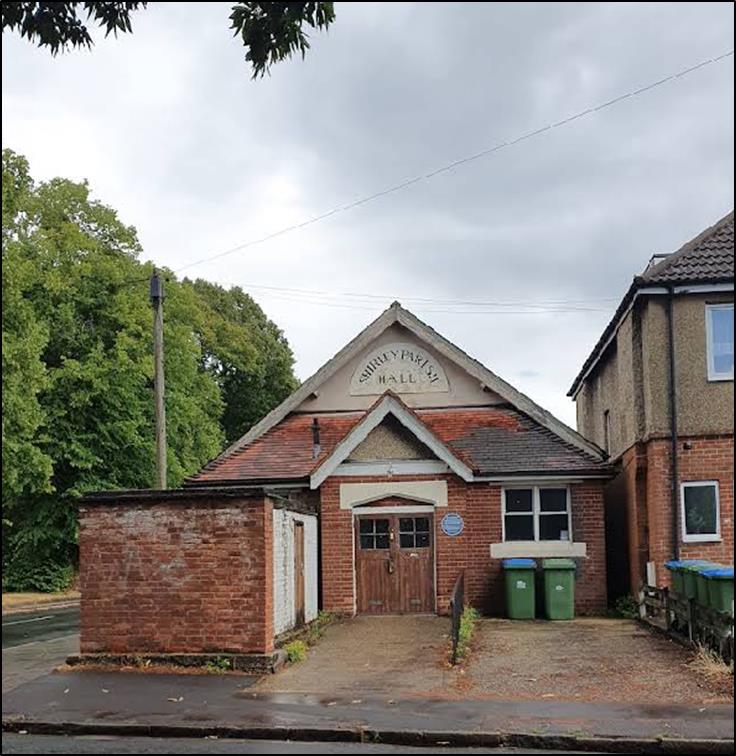
I was passing the Shirley Parish Hall yesterday, where we unveiled our first Spitfire Makers blue plaque nearly four years ago.
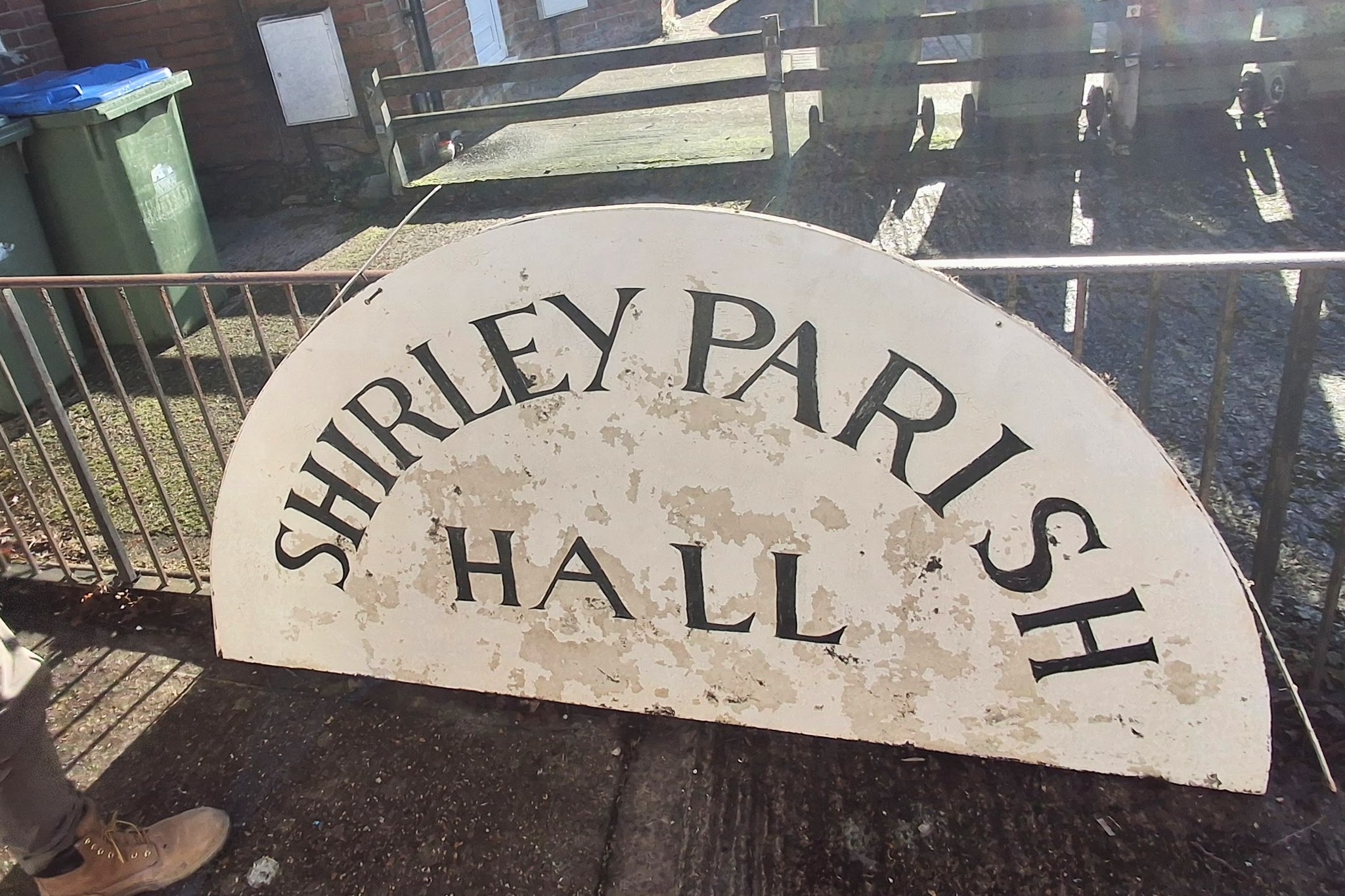
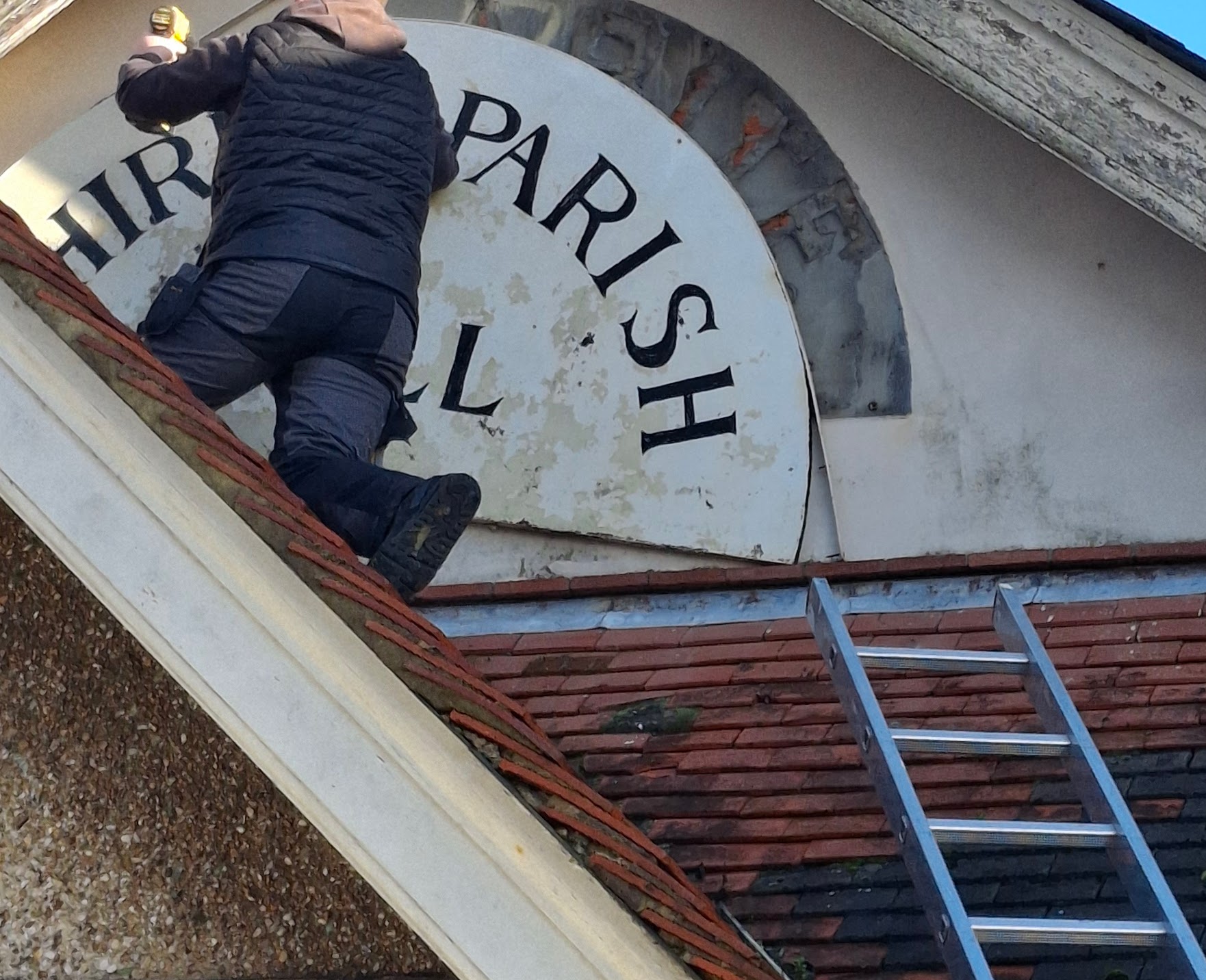
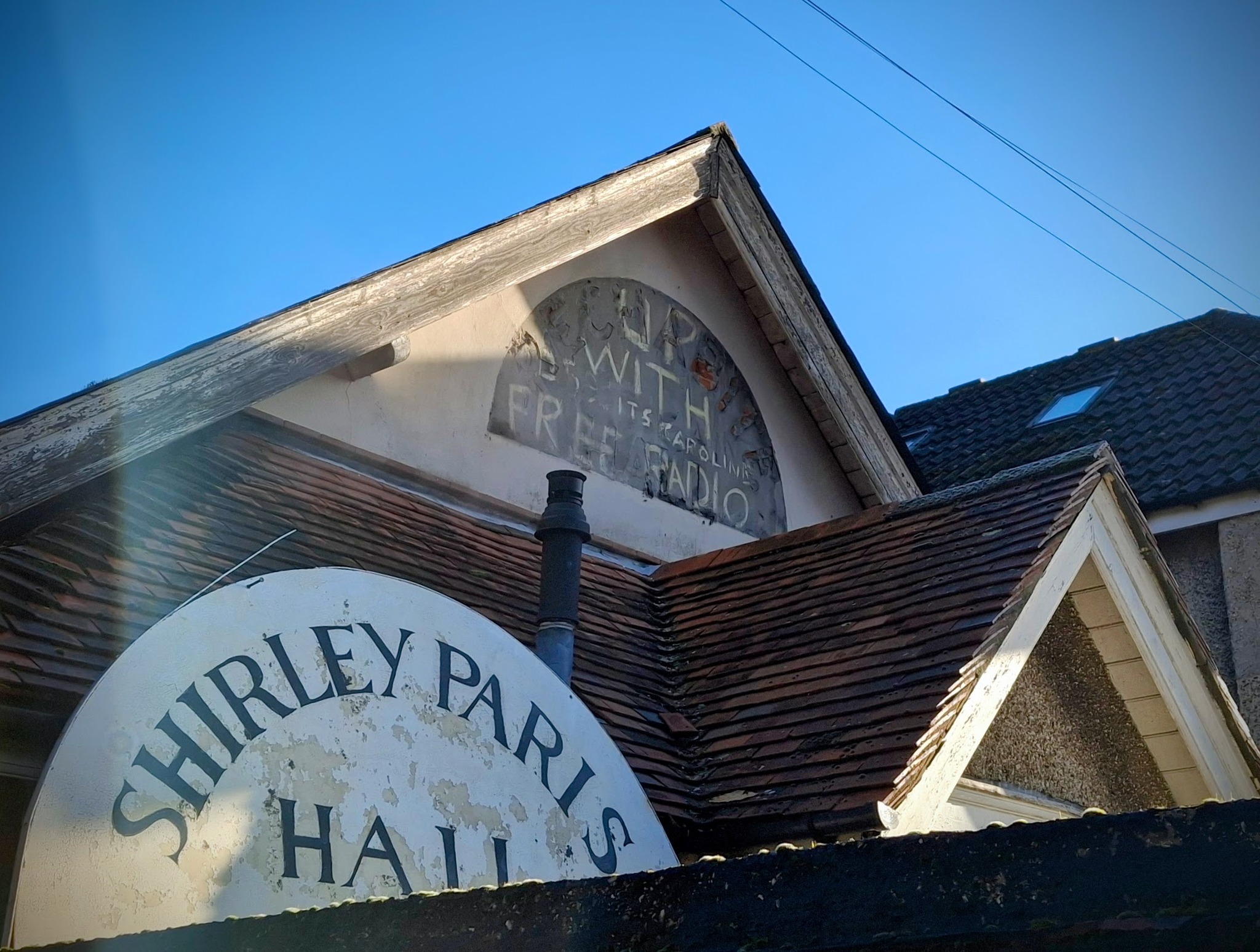
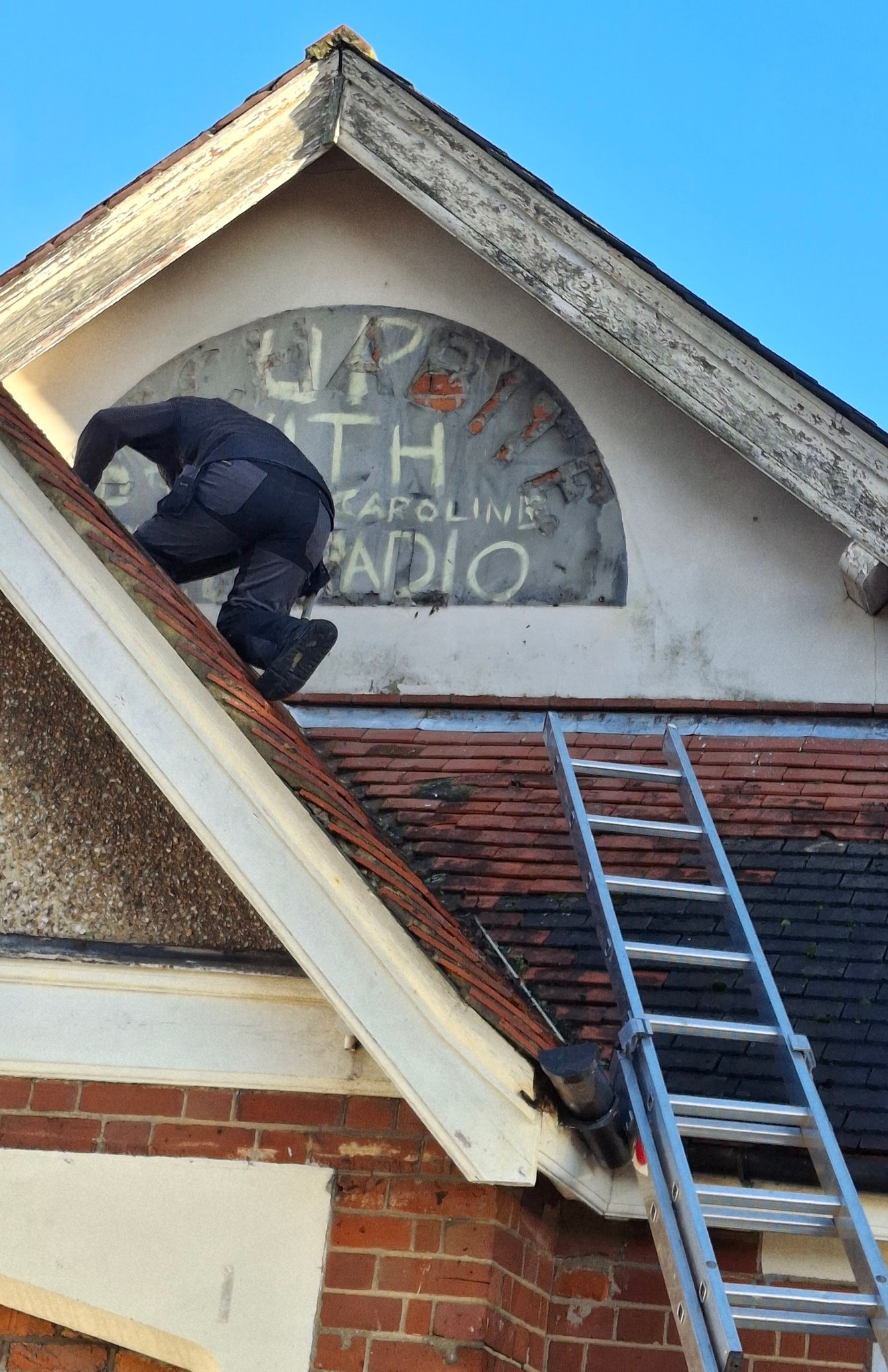
I noticed something was happening. Two workers from the nearby Spectrum Signs company, who do a lot of our printing, were up on the roof over the entrance with a drill, taking down the old Shirley Parish Hall sign.
The building is just over 100 years old and was originally the Shirley Rechabite Hall. Rumours had been going around that the RECHABITE HALL sign was underneath, so you can imagine the anticipation…
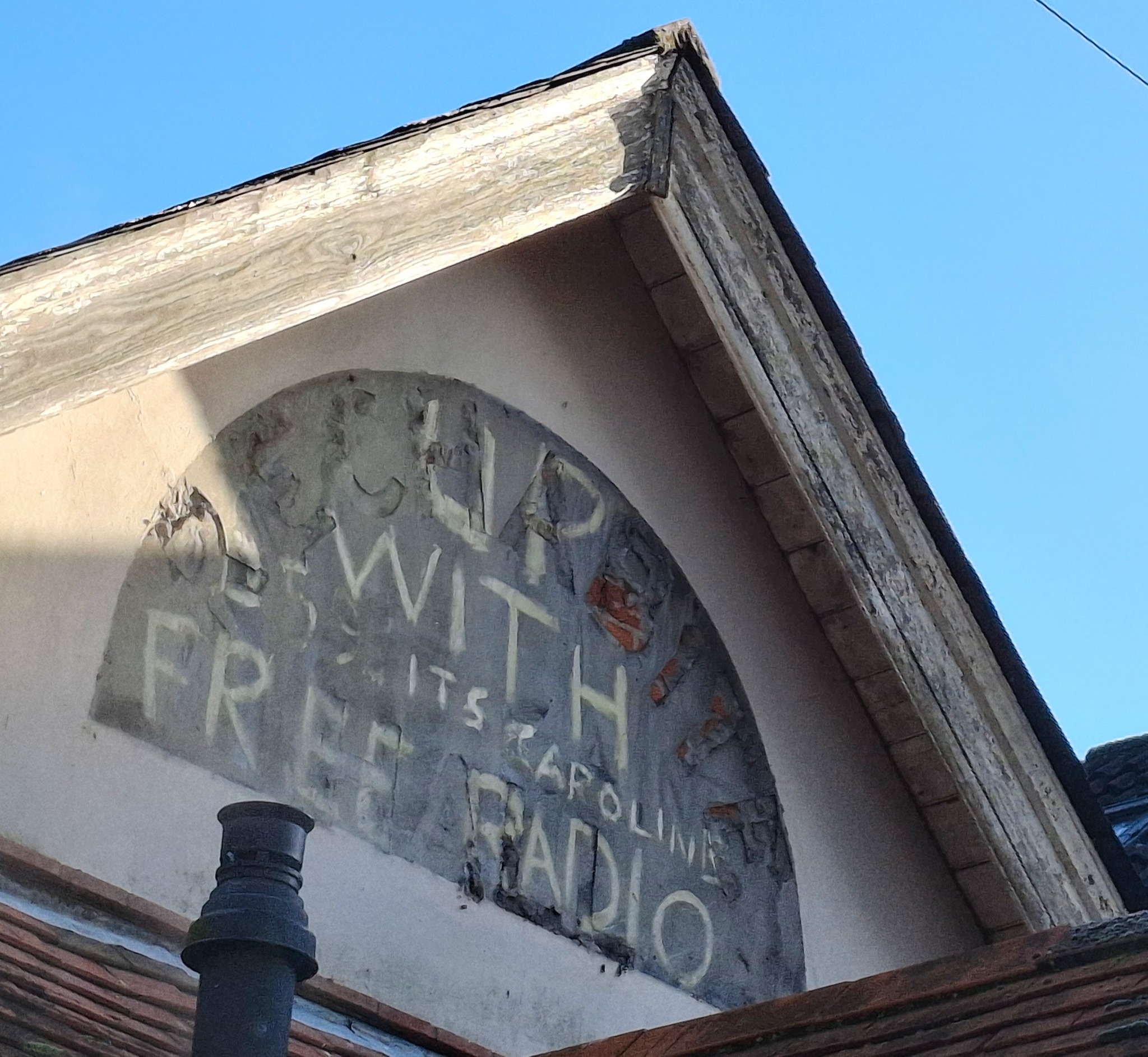
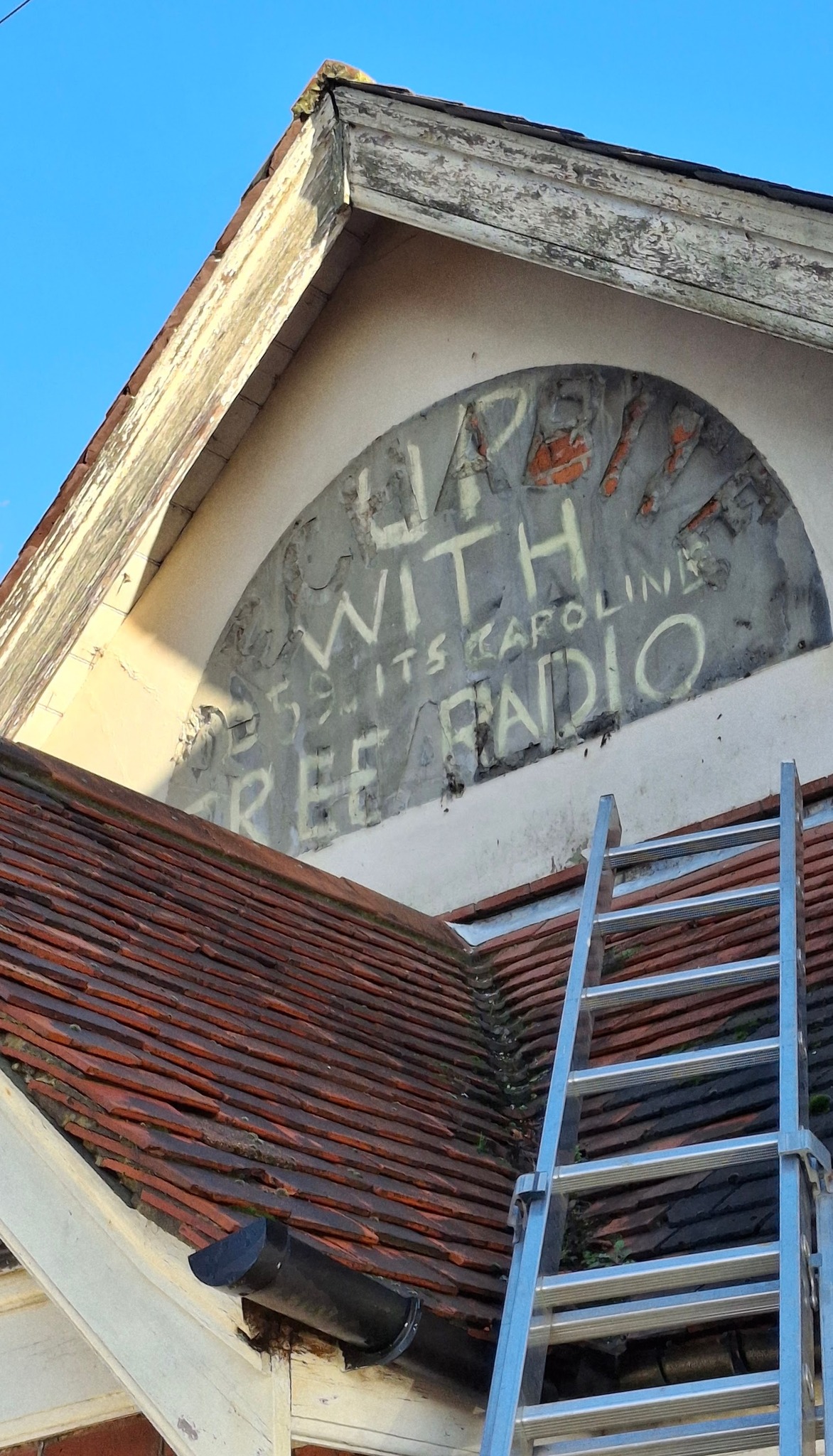
However, when it came off…what was underneath but a chalked on message from the 1960s! “UP WITH FREE RADIO” and “259, IT’S CAROLINE” (the Radio Caroline frequency and ‘call sign’).
Radio Caroline?
Radio Caroline was a radio station on board a ship in the North Sea, that started broadcasting on March 28, 1964, as the UK’s first offshore pirate radio station.
Viewed from the Colebrook Avenue side, you can see the full text, and, under the chalked-on slogan, there’s the ‘ghost-sign’ image of where the RECHABITE HALL lettering has been removed, in some places revealing the red brick beneath the render.
The work to refurbish the building is due to start next month and it is hoped that the weathered sign will be restored, a bit like an old painting, and displayed in the refurbished hall. Meanwhile, the Radio Caroline chalking could be disappearing in the rain!
It’s another case of, “There are more questions than answers, And the more I find out, The less I know!” (Johnny Nash, 1972)
Was there another sign over the RECHABITE HALL wording before this SHIRLEY PARISH HALL sign was put on top? If so, what did that one say?
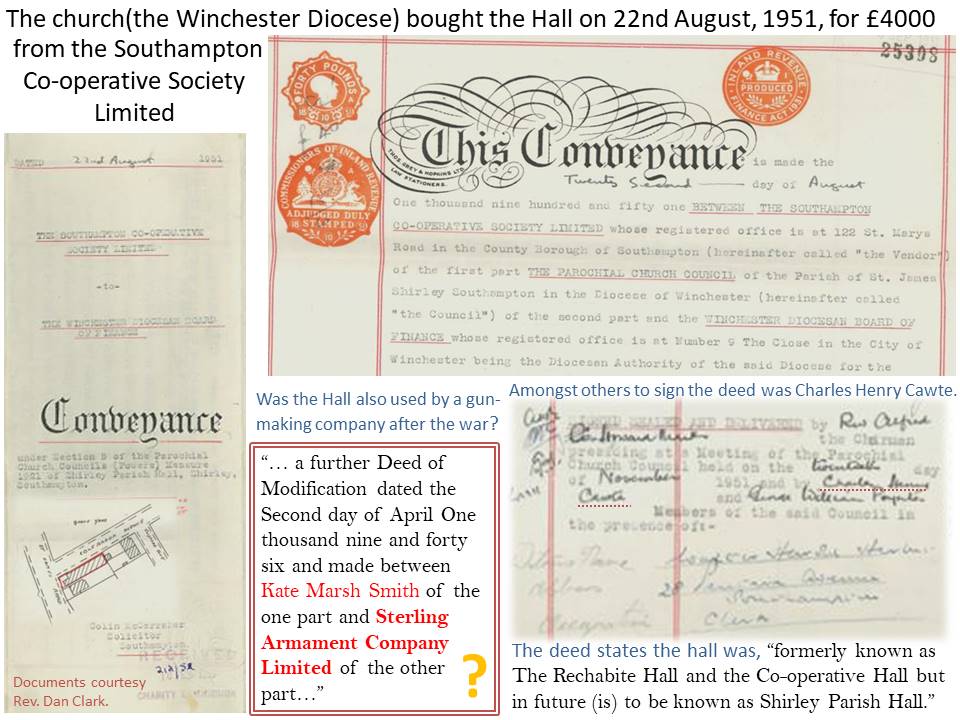
The deeds, shared by Dan Clark, the vicar of St James by the Park, show that after the war, before it became the Parish Hall in 1951, the building was in the names of the Sterling Armament Co Ltd (best known for the Sterling sub-machine gun, but who have no record of their involvement) and the Southampton Cooperative Society.
So, when did the RECHABITE HALL wording first get covered up?
Who made the sign that’s just come down, and who chalked the message onto the wall?!!!
Please post any insights, information, confessions etc!
Images by Alan Matlock, The Spitfire Makers Charitable Trust
 The Spitfire Makers Charitable Trust