Woolston Works, Hazel Road. Site of Supermarine works from 1912 to Sept 1940. Production dispersed after bombing in September 1940. Office building used by Southampton Technical College to train electricians and plumbers. Demolished 1980? Aggregate store. Marine Skills Centre, Hazel Road, Southampton. SO19 7GA
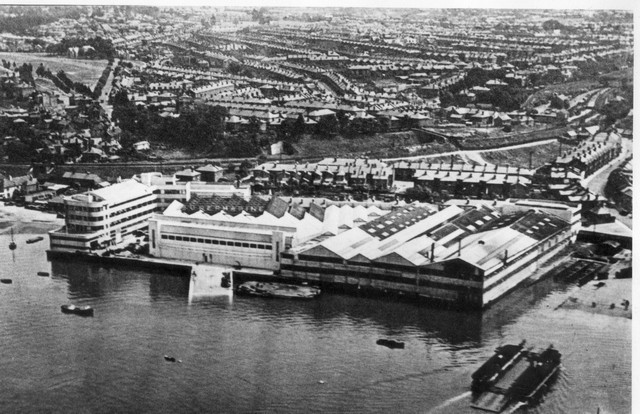
Woolston Works – pre World War 2 – Image owner unknown

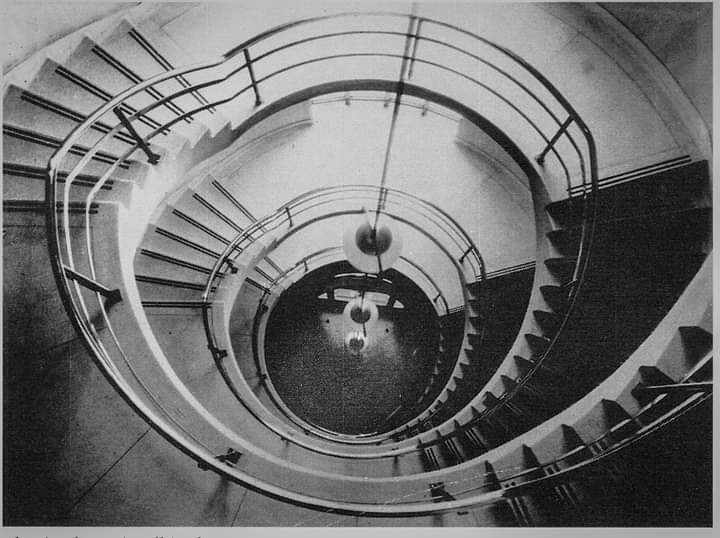

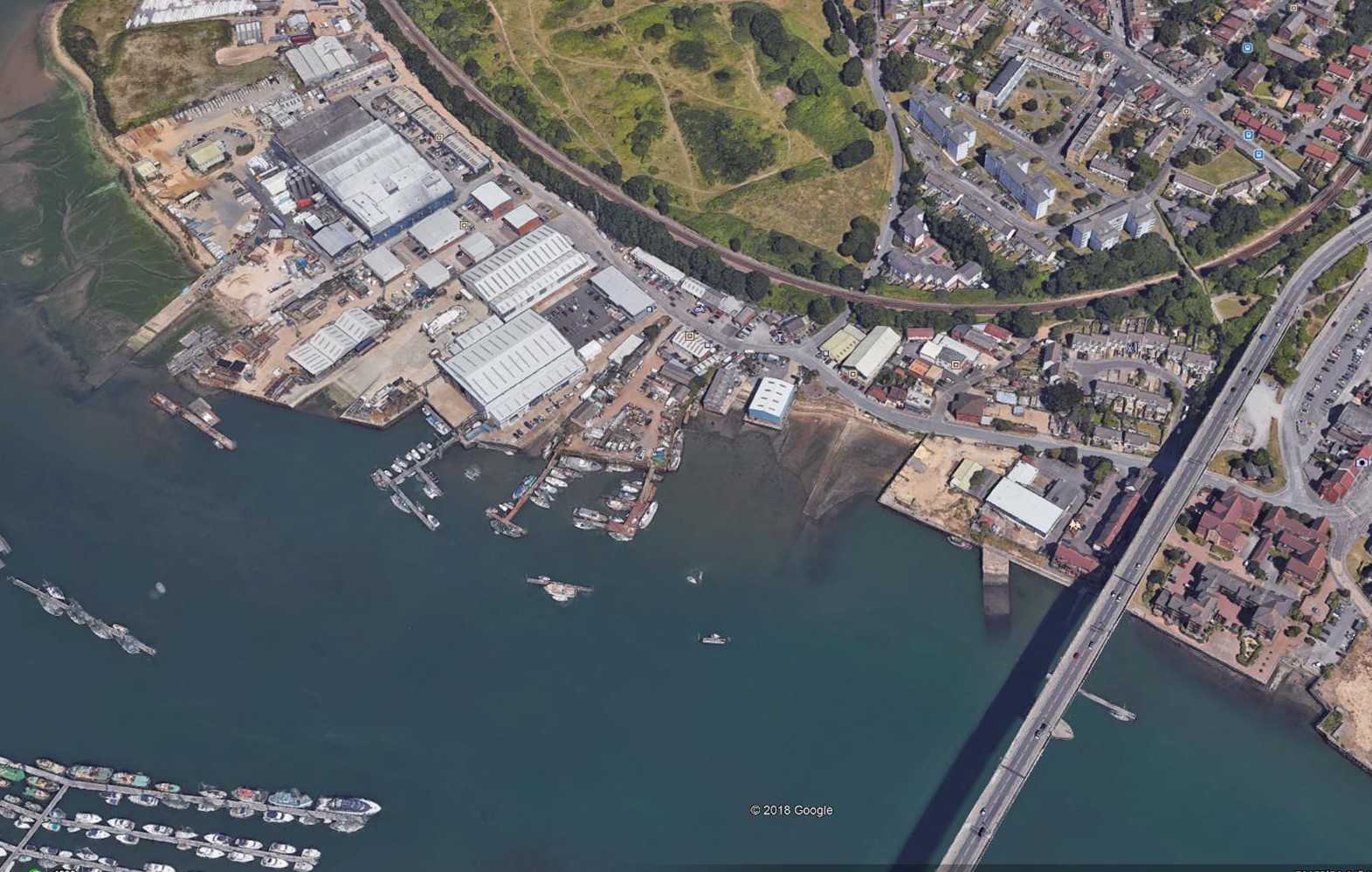
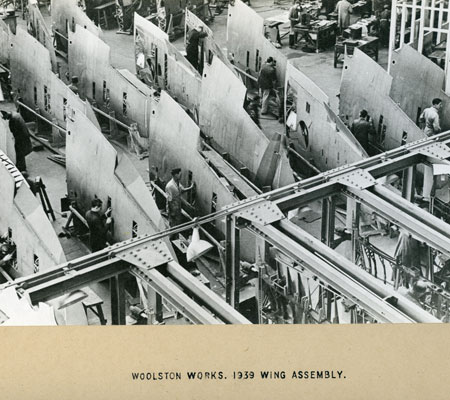

Woolston works – image owners unknown
Itchen Works. Additional premises built in 1937 – 38 to fulfil orders for the Spitfire. Damaged in September 1940. Re-clad building used by various businesses now Siva Group, Spitfire House, Hazel Road, Woolston, Southampton. SO19 7GB
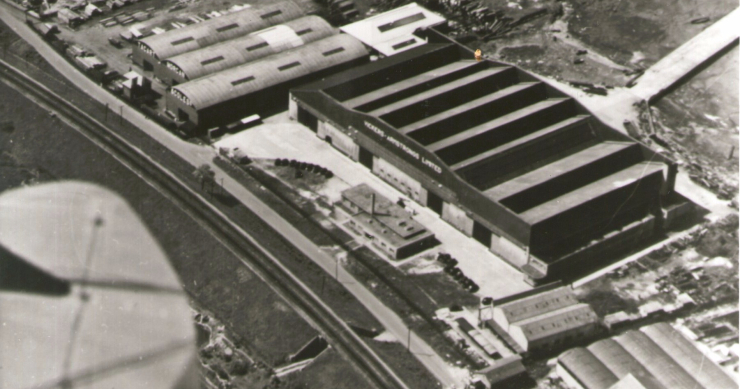
Supermarine Itchen Works C1938 – Image owner unknown possibly Vickers Archive
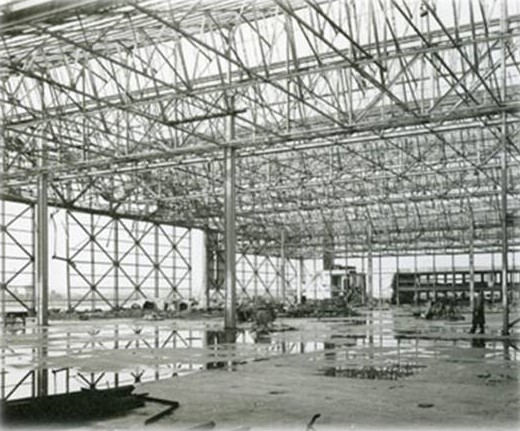
Supermarine Itchen Works after the bombing in 1940 – Courtesy of Vickers Archive
Southampton Municipal Airport (Eastleigh). Hangar for passenger aeroplanes. Supermarine Factory and Flight Shed. Details & final assembly and flight testing. It was thought that the Flight Shed had been dismantled to make way for the new airport terminal building when the airport was upgraded to become Southampton Int Airport, However, this was not the case and in 2021 it was discovered that the building had remained as part of the Ford Factory that had been built adjacent to the airport. The building had been converted to be used as a paint shop. Due to the redevelopment of the site after the closure of the factory the Flight Shed building was demolished despite a petition of approximately 50,000 signatures to try to save it.

The Supermarine Flight Shed – image courtesy of the Daily Echo
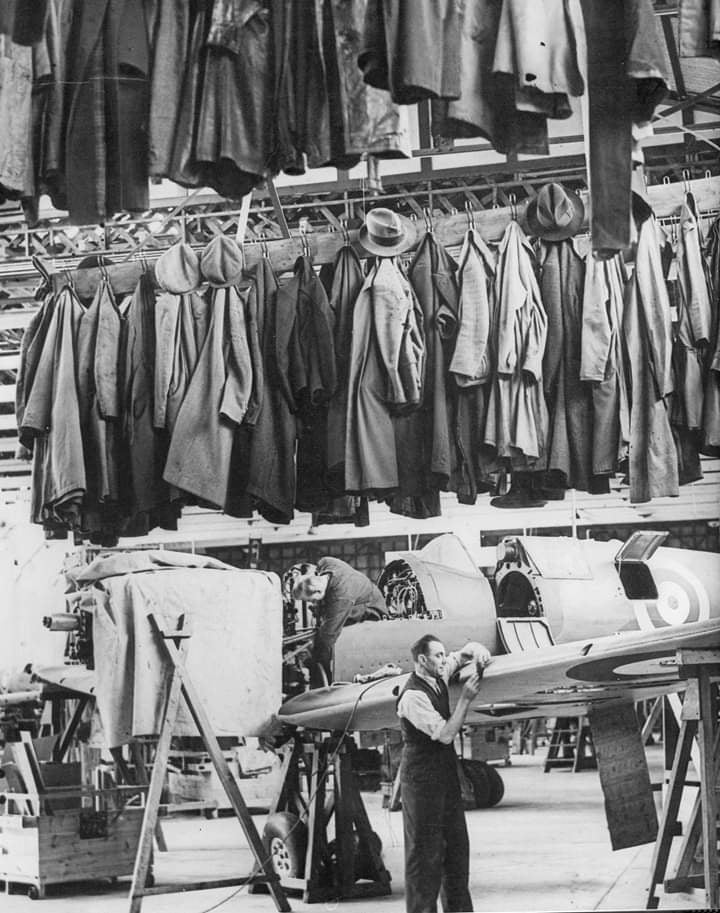
A rare image of the Flight Shed in use. The image shows the hats and coats of the workers which were hung on a rail at the start of the shift. The foreman would then raise the rail and only lowered it again at the end of the shift. The owner of the image is unknown but it was recently shared on Facebook.
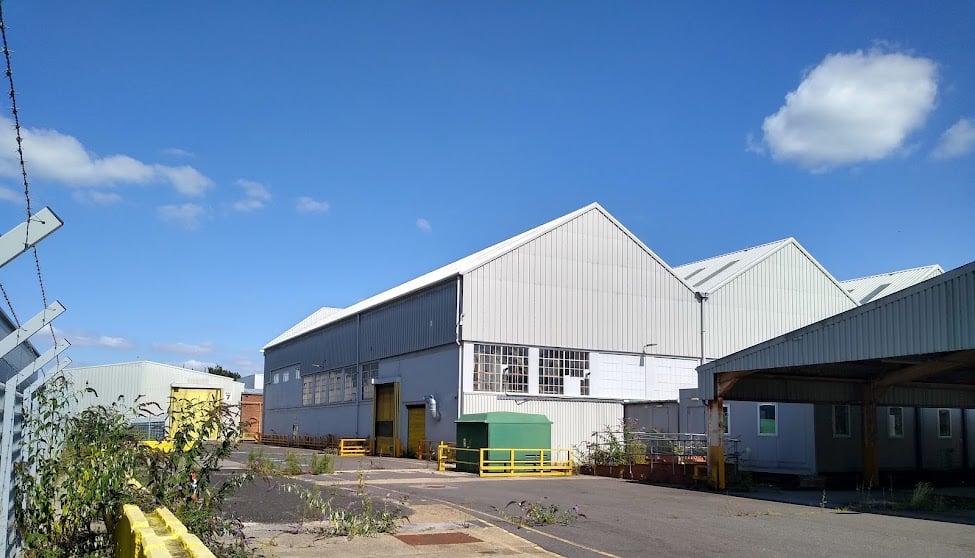
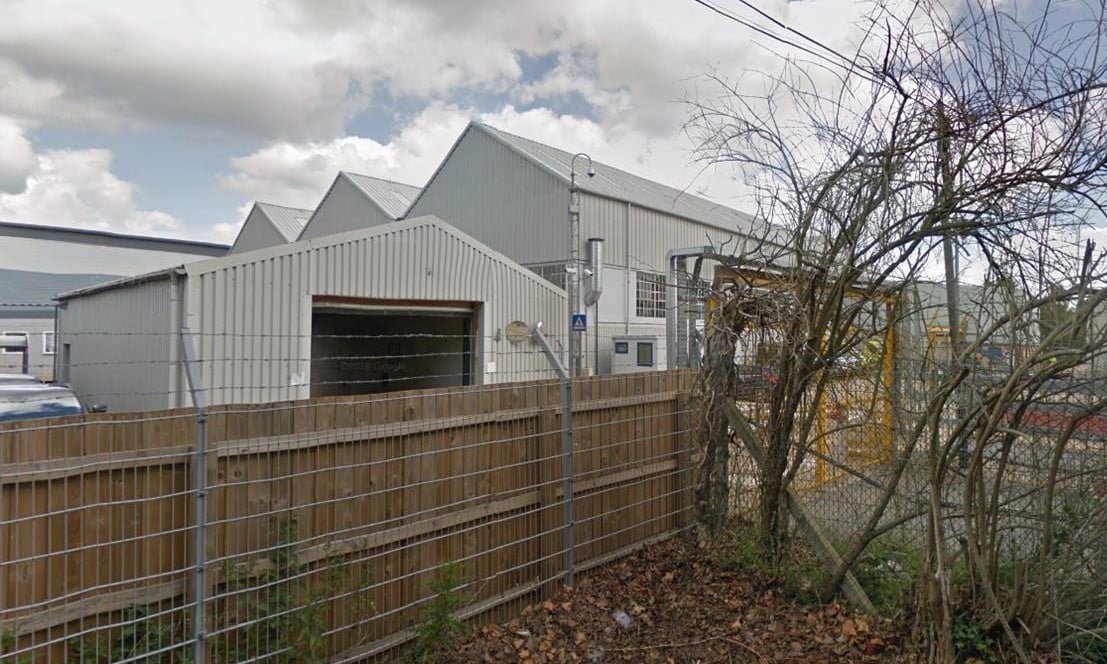


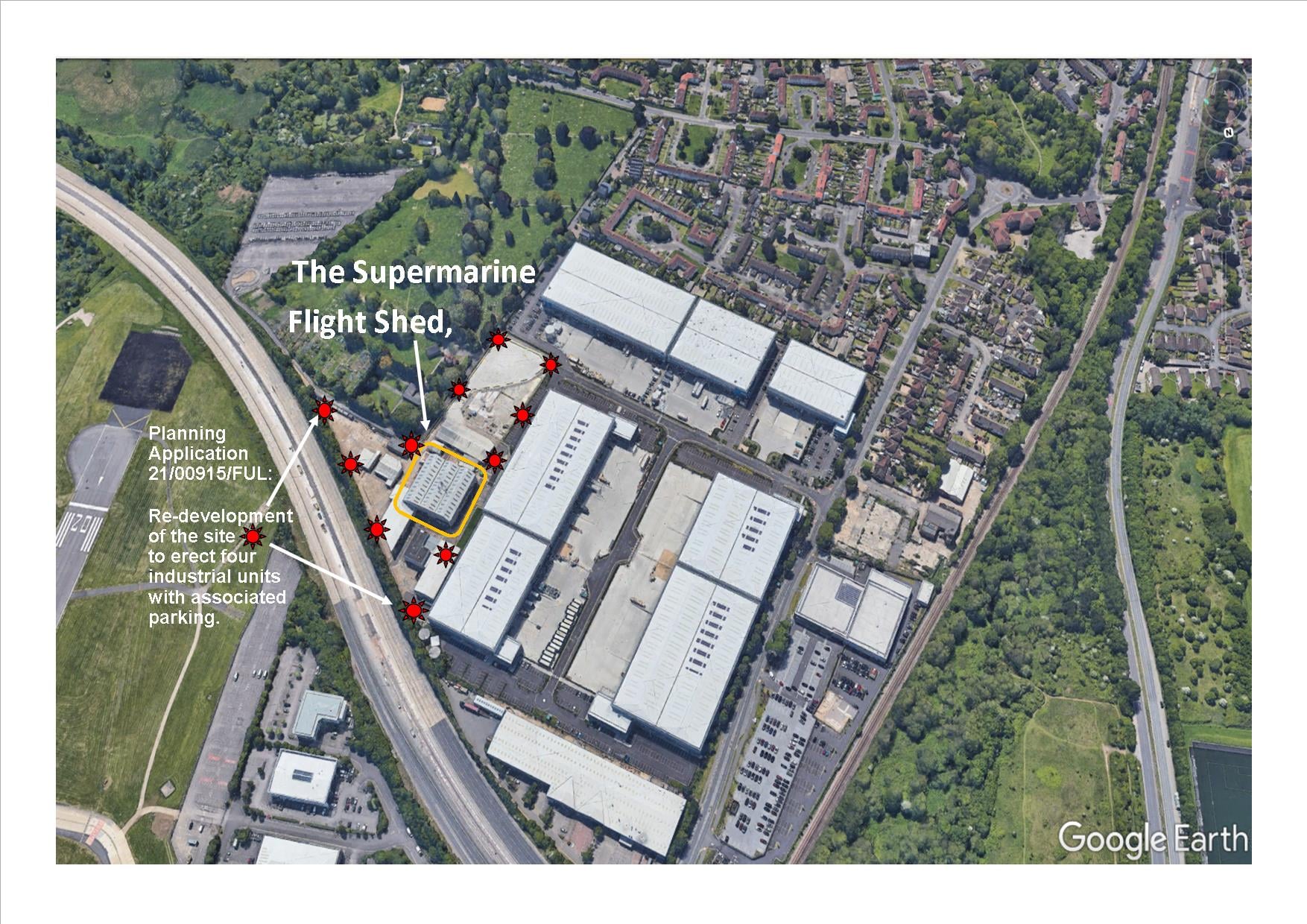
Modern images of the Flight Shed building – Images by Google Earth and Alan Matlock, The Spitfire Makers Charitable Trust
The vast majority of all of the Spitfires that fought in the Battle of Britain, particularly in the crucial early months, had “passed through” The Flight Shed. This really is one of the key facts
The Flight Shed handled the very first production Spitfire (K9787) and the very last (VN496 built at South Marston but finished according to fitter Brian Simpson who worked on it in The Flight Shed) to be modified and shipped to a foreign air force after the war. The airport was the only location involved in the production of the Spitfire from the very first, to the very last. A fact for which the Eastleigh facilities (Main Hangars and Flight Shed) are unique.
The (Heavy) Bomber was one of RJ Mitchell’s last designs and was a major reason for the existence and design of The Flight Shed. Approval for the construction coming from the Vickers Board in June 1937 specifically to accommodate the ‘Expansion Programme’ (i.e. the rearmament of the British military that the Spitfire was a key element of) and the ability to use it for testing both other Vickers aircraft from Weybridge like the Wellington Bomber and Supermarine’s proposed bomber to meet the Air Ministry specification B12/36. In the end the pressure to produce Spitfires meant that the bomber was put on hold and the prototypes destroyed in the September raids on Woolston & Itchen, so the Flight Shed was never used for it’s originally intended purpose.
The Flight Shed, Main Hangars and rebuilt Itchen Works were involved in the production of wings and other assemblies for the Swift and Scimitar (main production line was at South Marston)
The Flight Shed team involved a large Experimental Department who worked with Hursley and Chilbolton in the production of the prototype aircraft during the 1950s.
Click here for more information on the Flight Shed and the Heavy Bomber
 The Spitfire Makers Charitable Trust