Posted on Facebook by Alan Matlock – 2nd October 2026
Spitfire Makers Blue Plaque for former garage site?
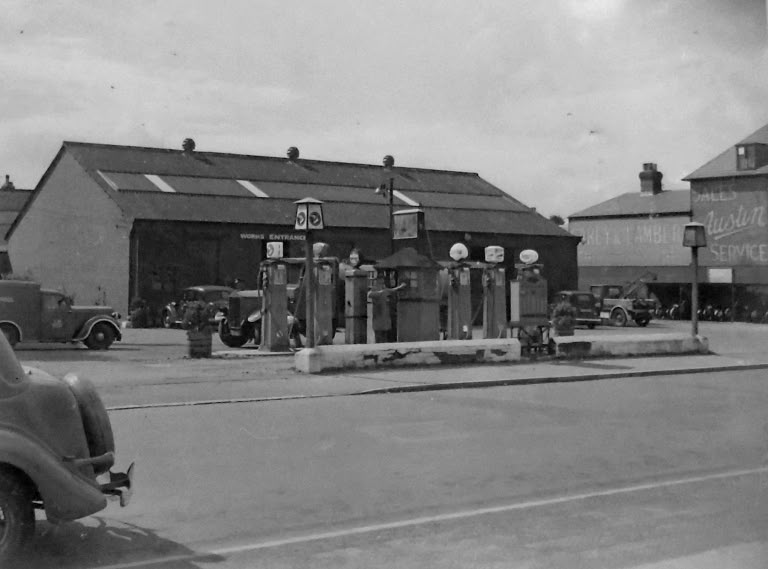
Carey & Lambert’s Austin House Garage, on the corner of Banister Road and The Avenue, was one of the many Supermarine dispersal sites in and around Southampton that carried on making parts for the Spitfire after the bombing of the main factories.
The Garage became Hartwells and then Doves before it was demolished in 2024 and replaced by May Tree Place, the McCarthy Stone retirement apartments.
Spitfire Makers have been working to get a commemorative blue plaque installed there, and as part of this plan, chair Alan Matlock and project team member Keith Baker visited last week.
Alan gave a “Building Spitfires Without a Factory” talk to the residents and staff who were fascinated by the history of Supermarine across Southampton and the work being done by Carey & Lambert in particular.
Alan shared contemporary photos from the Vickers archive of the exterior and interior of the building and commented in particular on the forewoman being Frances Penton, the only woman in charge of a Spitfire production site.
Afterwards, Alan and Keith talked to several residents with personal memories of wartime Southampton, and they have been inspired by the history of the site to help raise funds for a Spitfire Makers blue plaque. The McCarthy Stone management were equally supportive and are keen to be involved.
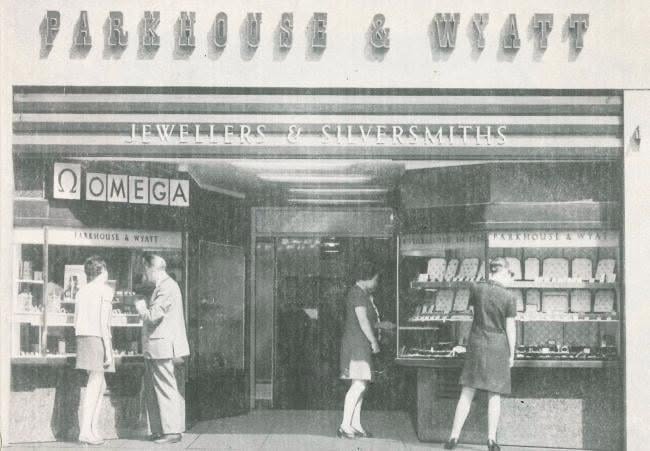
Residents included Mr John Parkhouse, whose family jewellery business in Above Bar Street was hit in the Southampton Blitz and who explained how, after the bombing, they joined up with another jeweller based in the High Street and they became Parkhouse & Wyatt.
The Southampton Kelly’s Directory for 1939 – 40 lists PARKHOUSE W. L. & SON, 96 Above Bar Street and PEGLER & WYATT, 151 High Street.
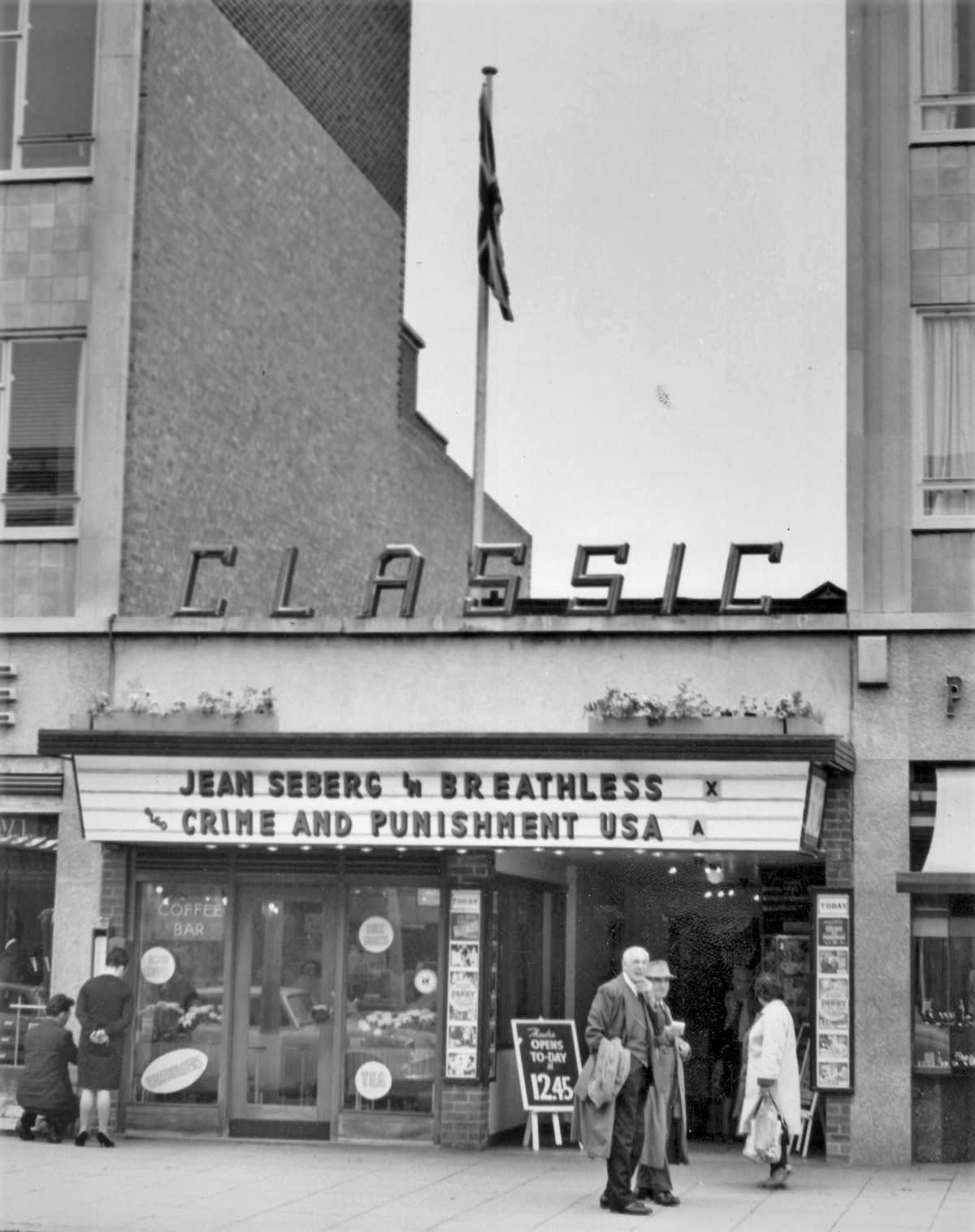
The Parkhouse shop, “Principal Jewellers” was at 96, and at 98 Above Bar Street was the Classic Cinema.
If any former employees or their family members would like to contribute to the cost of the plaque, please get in touch.

Images from Daily Echo archives and unknown sources
- Carey and Lambert’s Austin House garage at 1, Banister Road during WWII
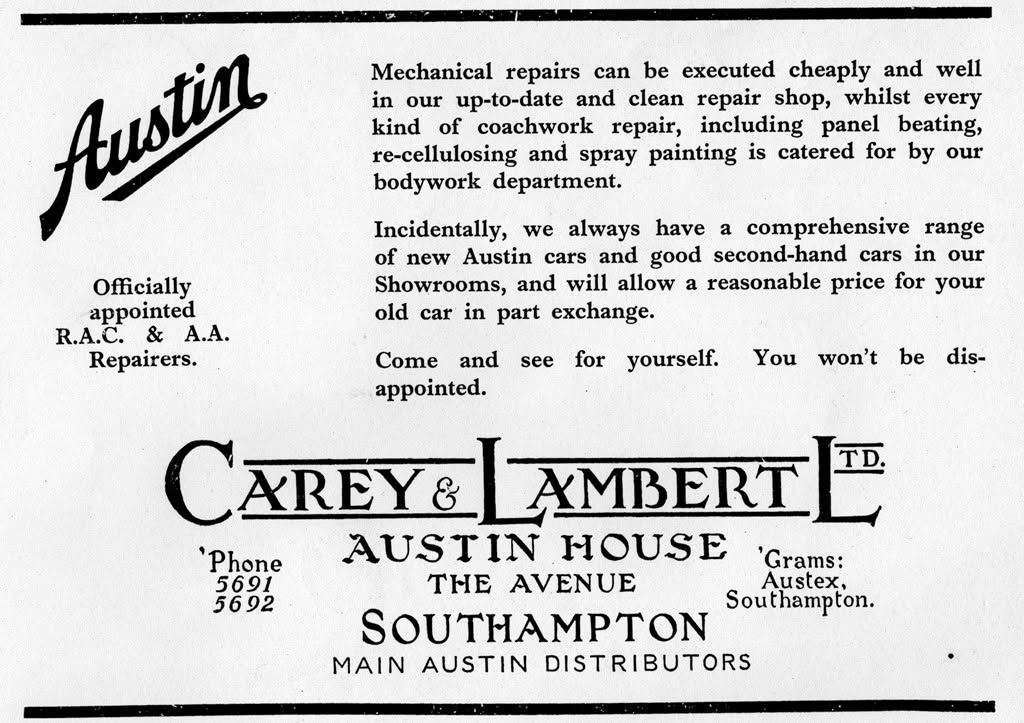
- A pre-war advertisement for the garage.
- McCarthy Stone’s retirement apartments that now stand on the site.
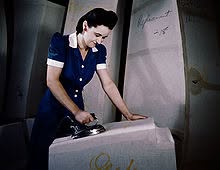
- Fabric was used to cover some of the bodywork of early Spitfires
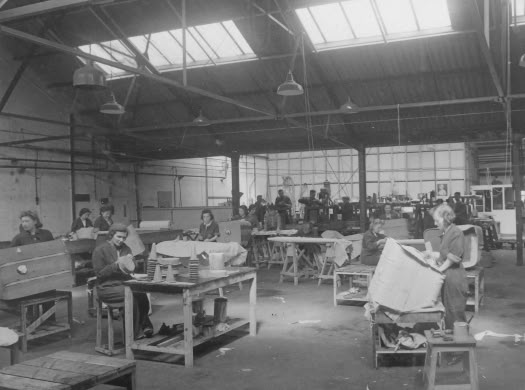
- Women workers inside the garage during WWII are covering fuel tanks with fabric coated in a self-sealing rubberised solution.
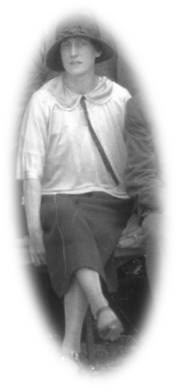
- Miss Frances Penton, having been the forewoman of the dope shop at Woolston, was the only woman to be in charge of a requisitioned Spitfire production site.
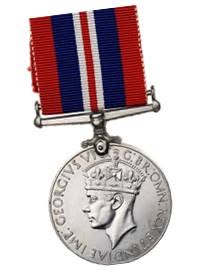
- The British Empire Medal was awarded to Frances Penton in the King’s Birthday Honours, June 1943.
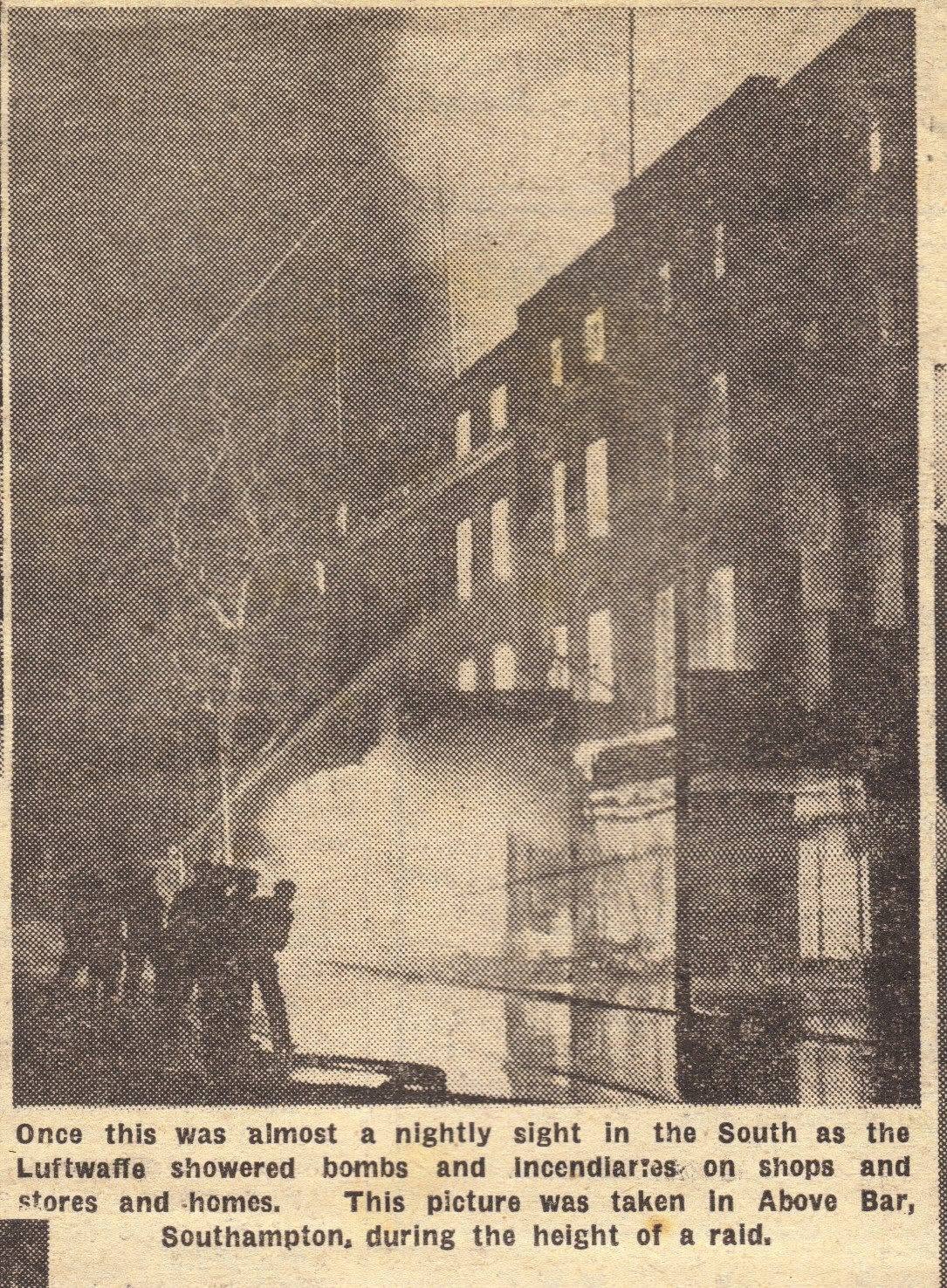
- A Daily Echo photo of firemen tackling the blazing Classic Cinema, and shops on either side, at 98 Above Bar Street in late 1940.
- A 1960s photo of the same scene with the P of Parkhouse & Wyatt, just visible next door to the rebuilt Classic Cinema, at 96 Above Bar Street.
- Parkhouse & Wyatt Jewellers, Above Bar Street, Southampton (c1960’s). Photo: Daily Echo. Is that Mr John Parkhouse talking to a customer?

Posted on Facebook by Alan Matlock – 5th October 2026
Woolston Spitfire Trail Walk
On the 86th anniversary of the bombing raid that targeted the Supermarine factories, the chair of the Southampton-based Spitfire Makers Charitable Trust, Alan Matlock, led a guided walk around the key sites.
Starting at the RJ Mitchell Memorial on Hazel Road, the 20 participants saw six of the Spitfire Makers’ blue plaques which describe what happened at each location. (Two more will be added to the trail when final wording and permission have been approved.)
The most poignant point was reached at the entrance to the tunnel under the railway that workers went through to reach their air raid shelters at the bottom of Pear Tree Green. The 29 known casualties of September 24th, 1940, died when bombs fell short on the shelters, the tunnel or the open ground that led to the tunnel.
Standing at the entrance to the tunnel, which Network Rail cleared for the Trust last year, Alan related the moving story of the only woman to die in the attack: 19-year-old office worker Peggy Moon. Her younger sister Betty, aged just 7, who had been evacuated, had died of meningitis only a few weeks before.
Alan went on to explain how those workers who did not get out of the factory, or returned to it to fetch a coat or handbag, all survived. No bombs hit the factory on the 24th, and all who could returned to work the next day.
The walk continued past the site of the Red Lion pub on Sea Road, where, on the 26th, nearly 80 workers sheltered in the beer cellar as a second attack demolished almost all the nearby buildings.
Alan shared photos showing the devastation to the houses in Wharncliffe Road and the surrounding roads before stopping on Lower Vicarage Road to remember those who died sheltering in a railway workers’ tunnel set into the embankment leading to Woolston Station. Their names were: John Hughes, 54; George Copson, 61; Louis Hubbard, 40; Percival Keene, 56; Charles Palmer, 48; Kenneth Park, 17, who were six of the 20 or so killed on the 26th.
More details on all the casualties, and other Supermarine info here:
https://supermariners.wordpress.com/…/remembering-the…
The walk ended at the site of Supermarine’s original Woolston Works by kind invitation of Landau Marine Ltd, where they have established a new base for their boat repair business.
Working in conjunction with Spitfire Makers and Solent Sky Museum, Landau have been keen to embrace the historic significance of the site. It has been renamed Supermarine Quay, and each room in the building is now named after a Spitfire Maker or someone else who worked for the company.
Complimentary teas and coffees were served from the “Betty Stephens Kitchen” (Betty worked in the Supermarine Canteen) and were enjoyed in the impressive “Noel Pemberton Billing Conference Room” looking out over the Itchen and the original Supermarine slipway below.
Each participant left with a copy of the Trail Map and a deeper understanding of what Churchill meant when he said, “The front line runs through the factories…”
In those crucial weeks of the Battle of Britain, and under constant threat of enemy action, Southampton Spitfire Makers had built 1,198 Spitfires for the RAF before the factories were put out of action and production had to be dispersed.
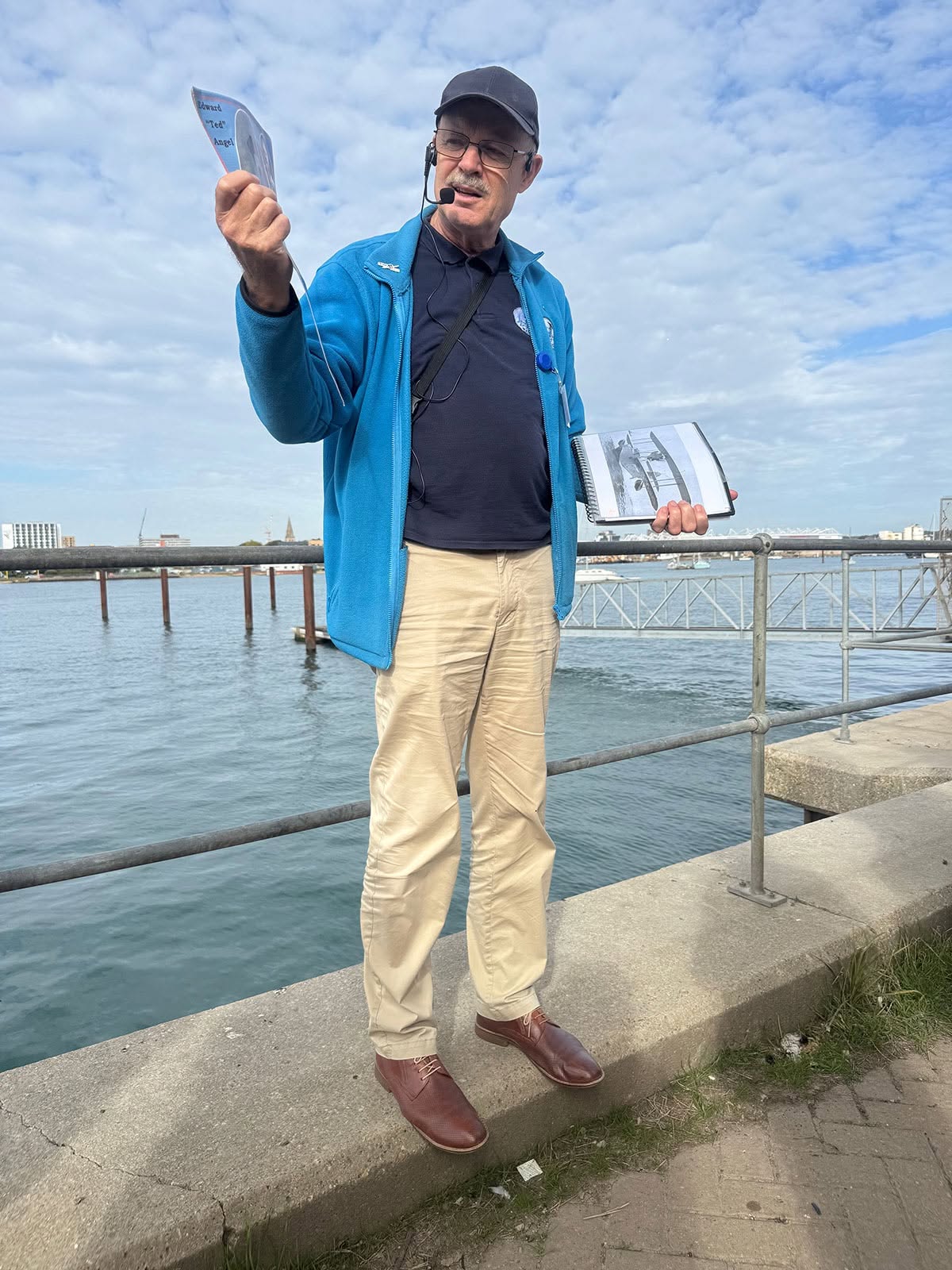
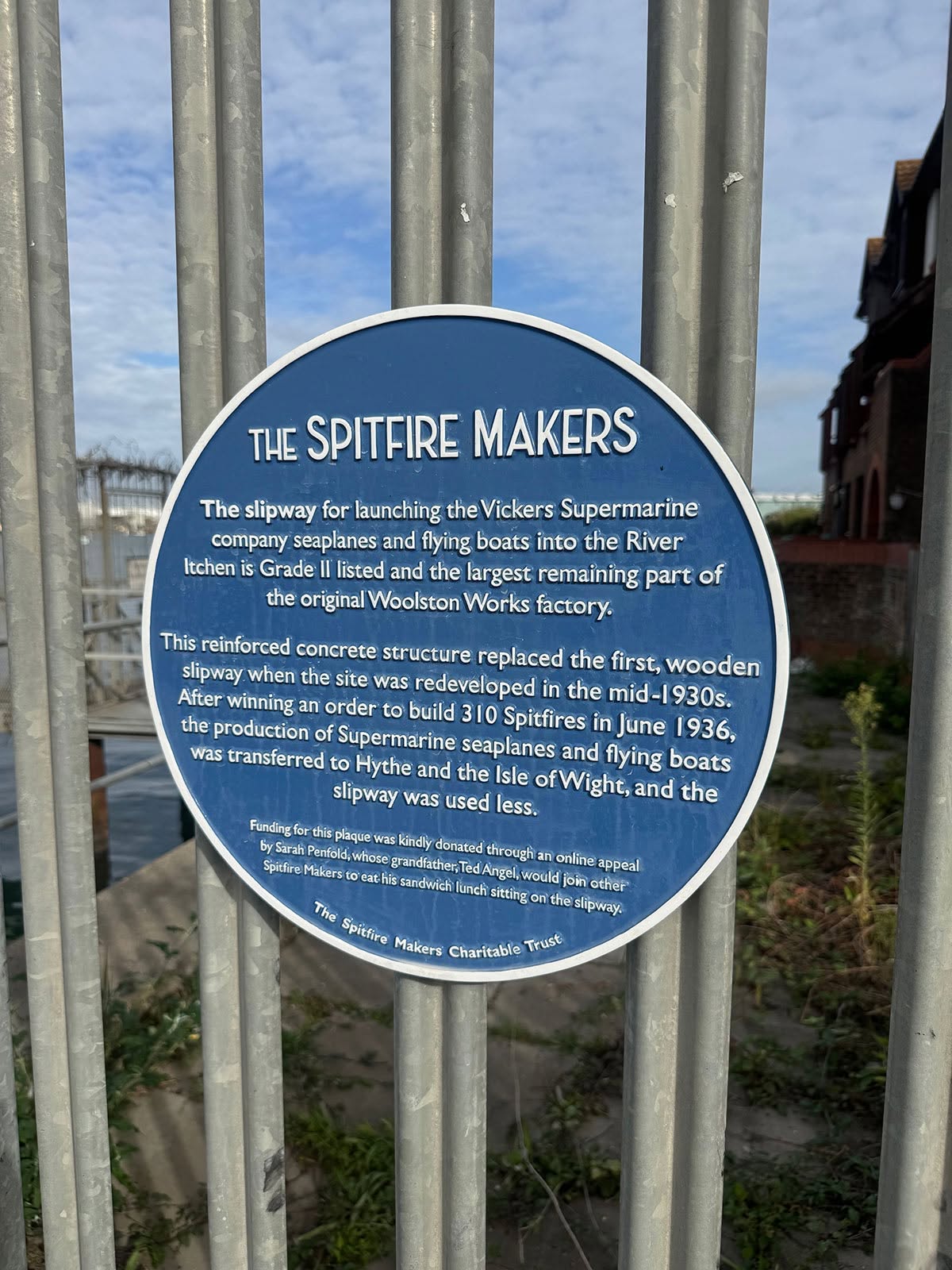
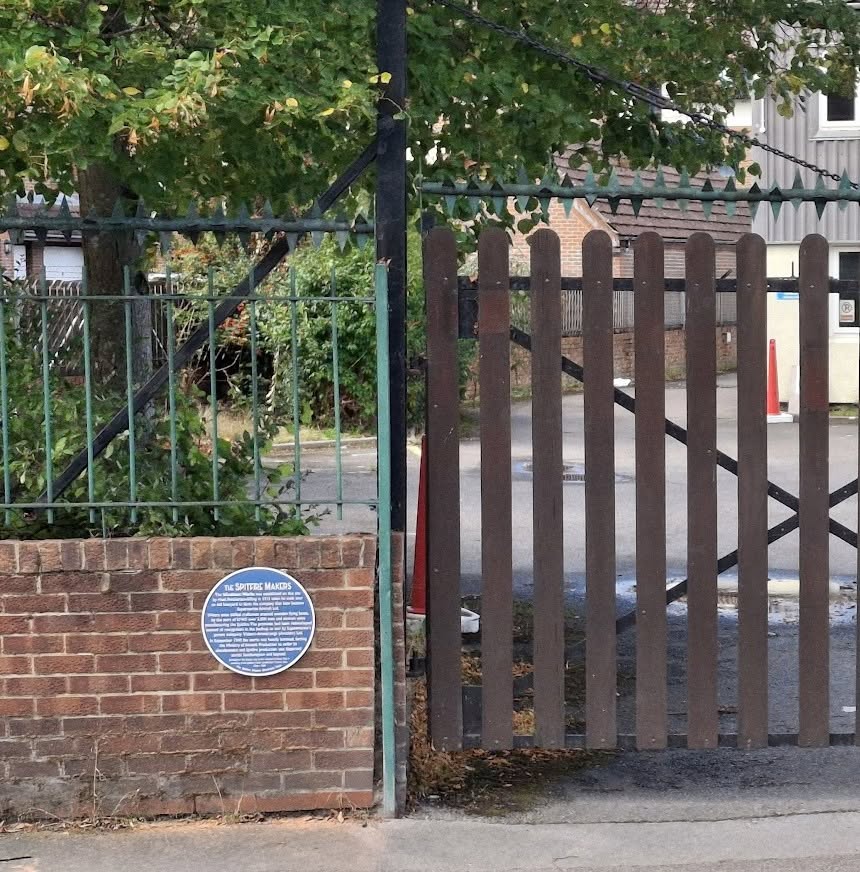
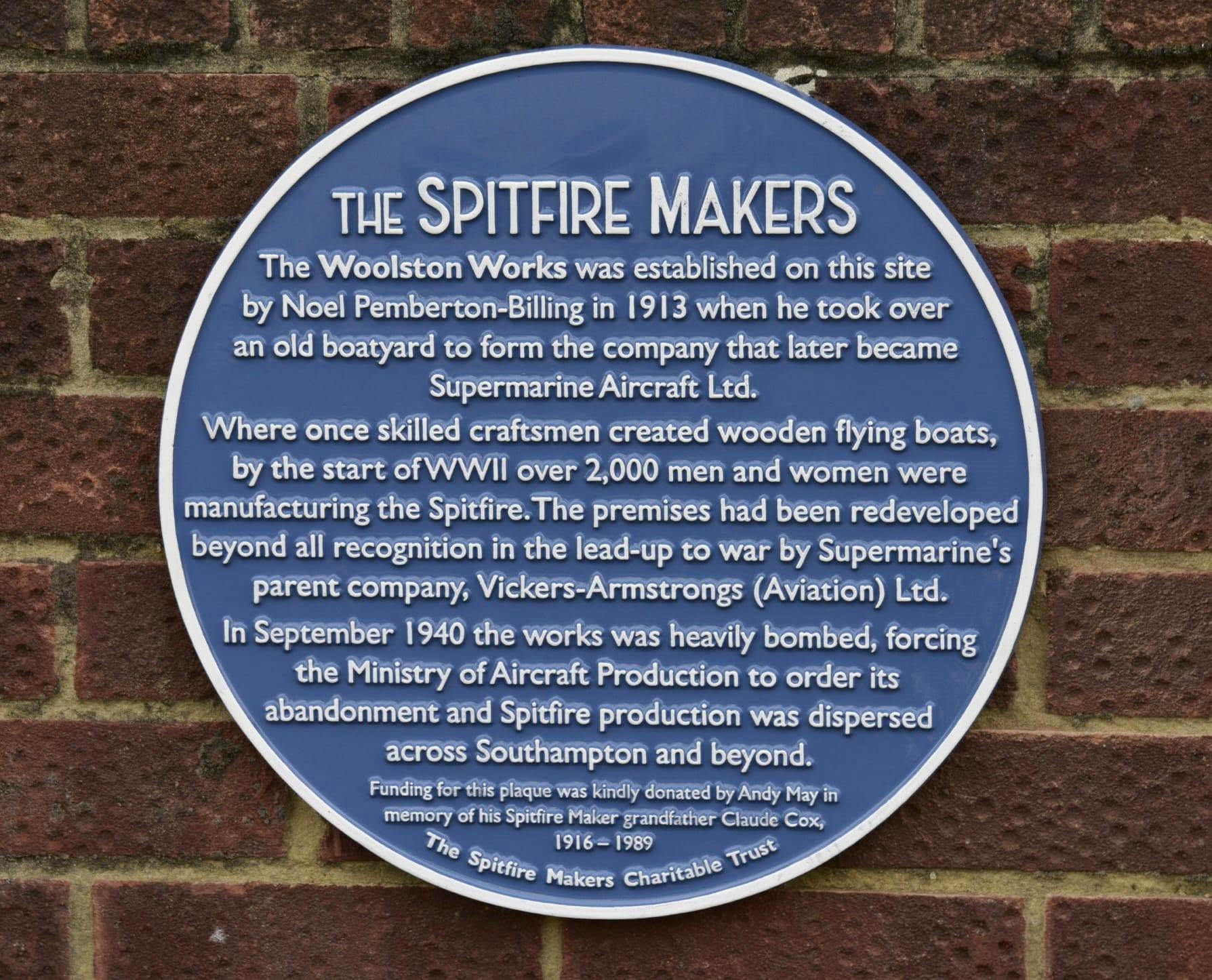
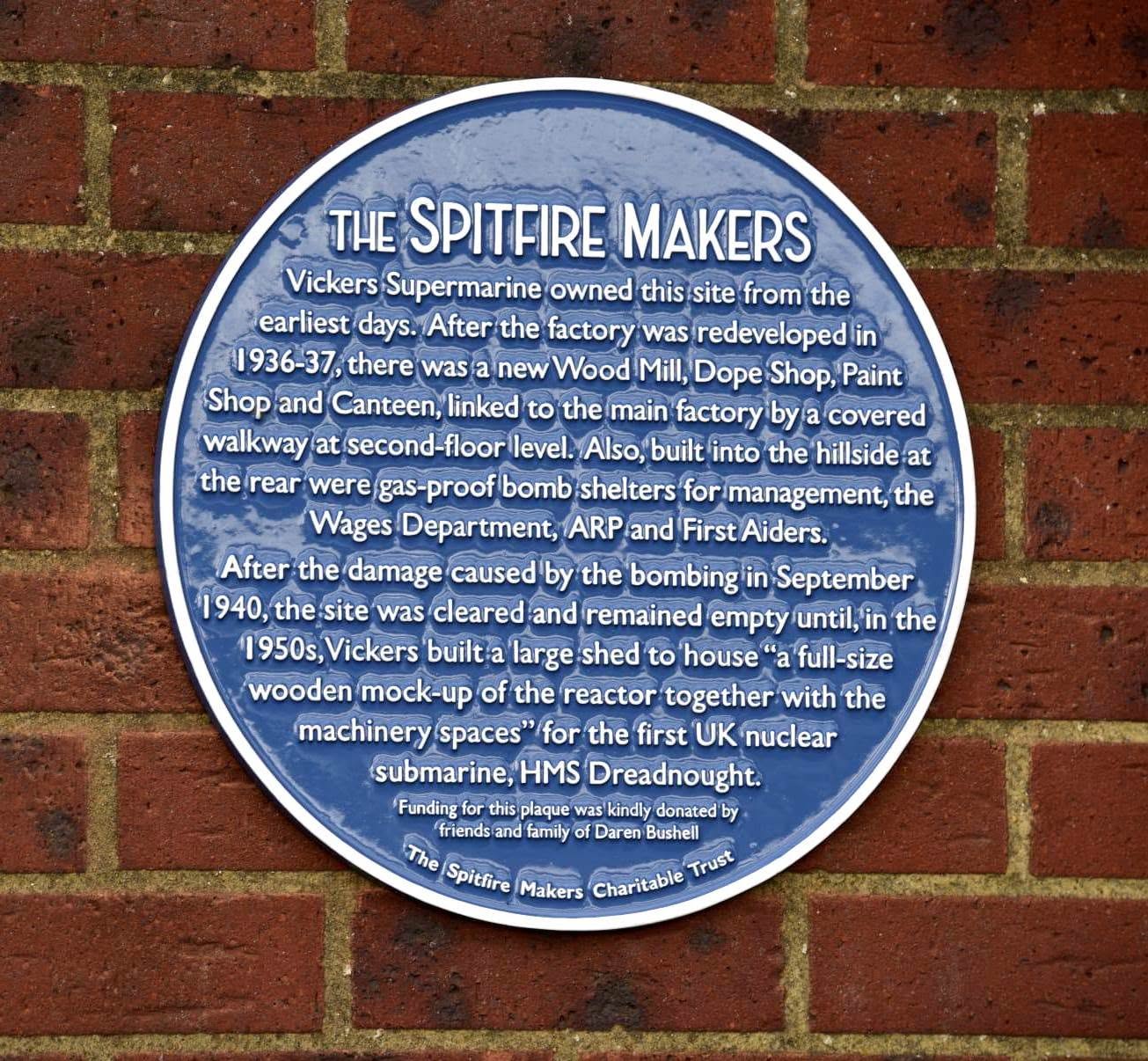
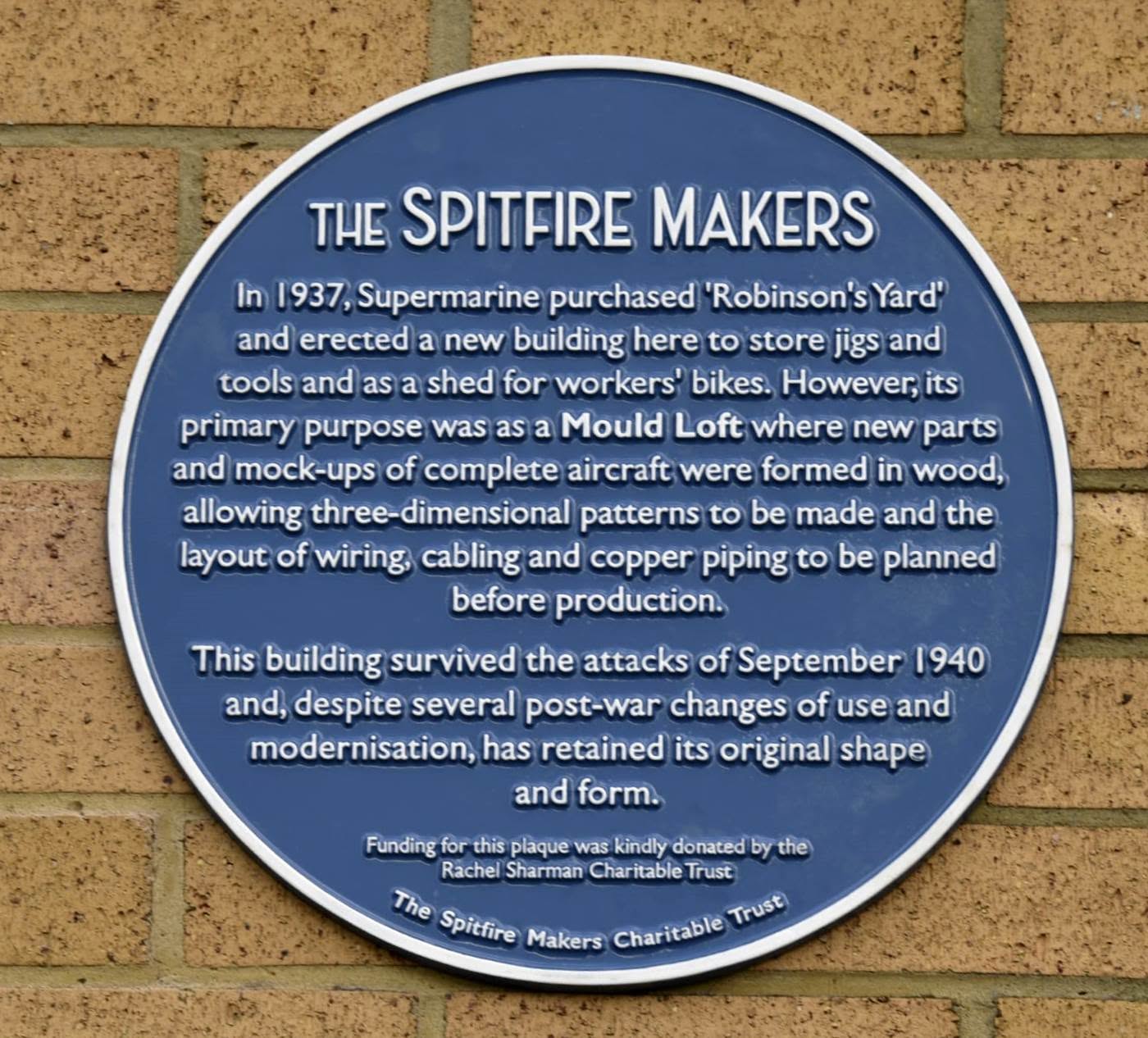
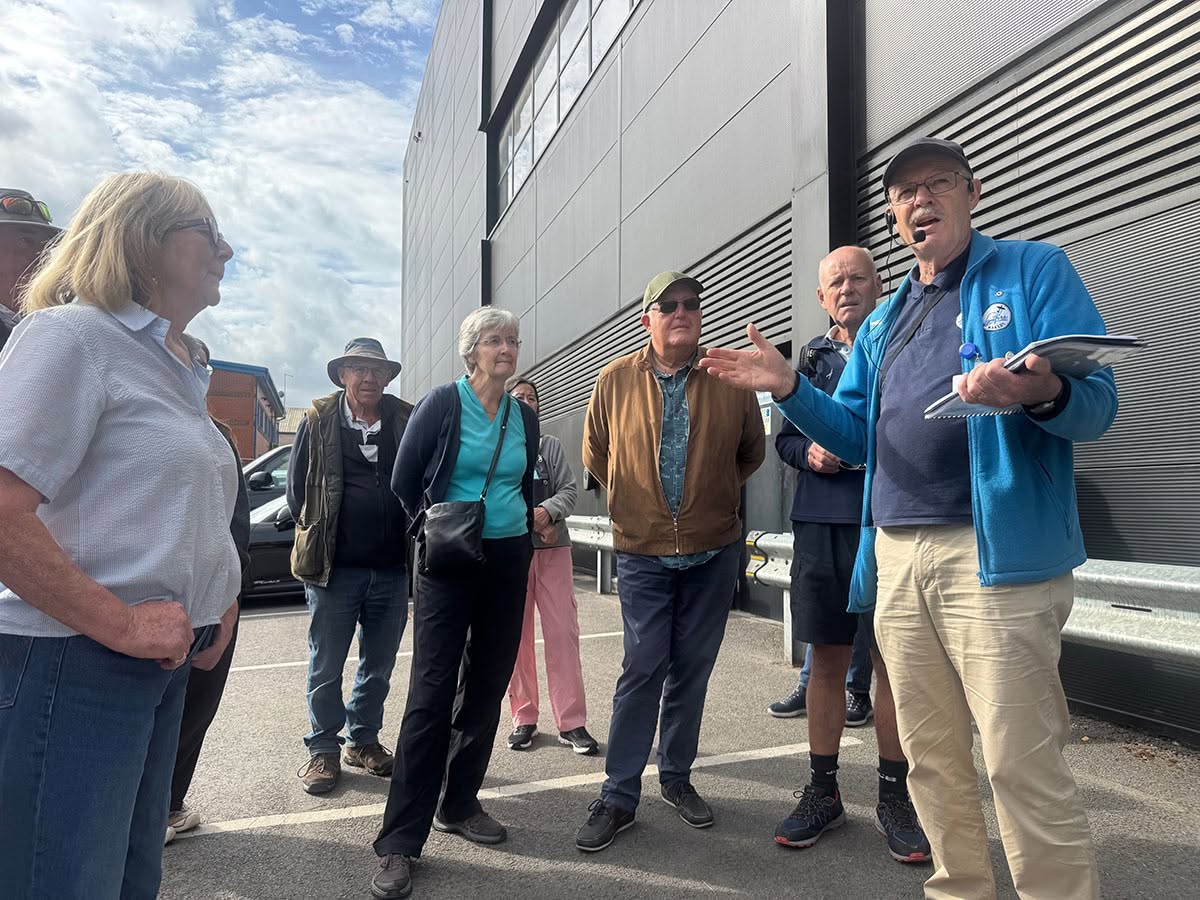
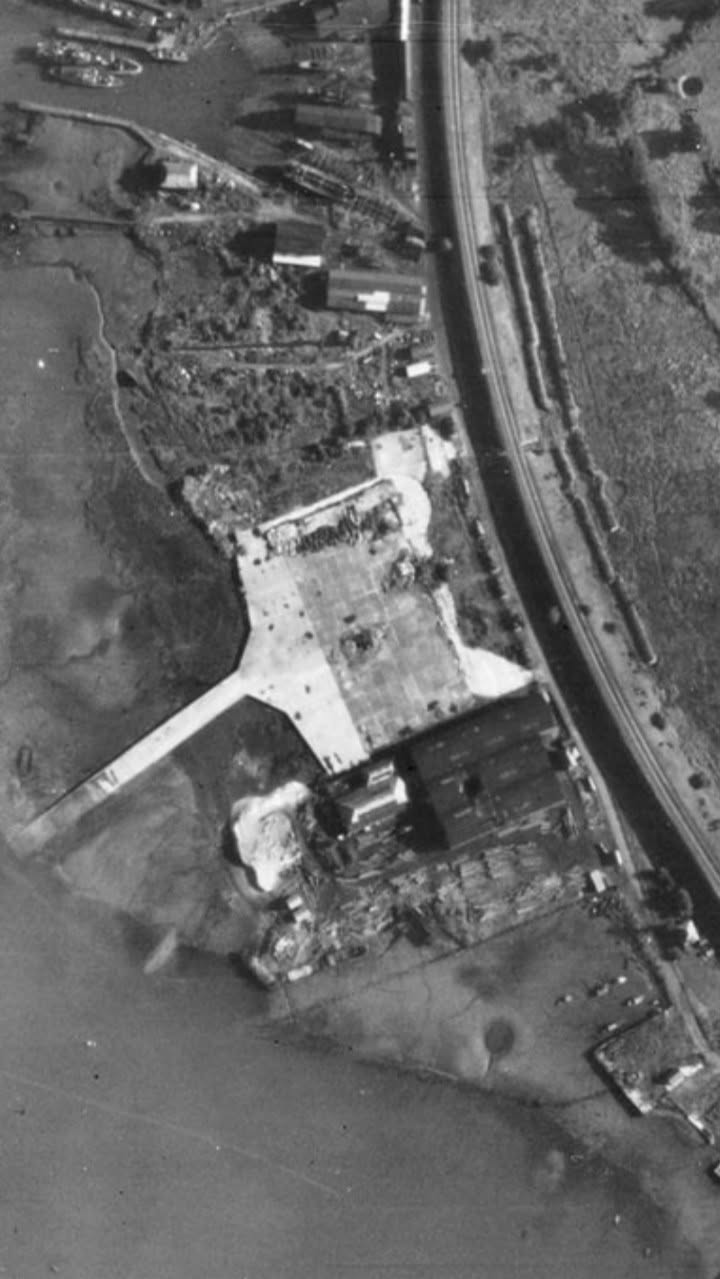
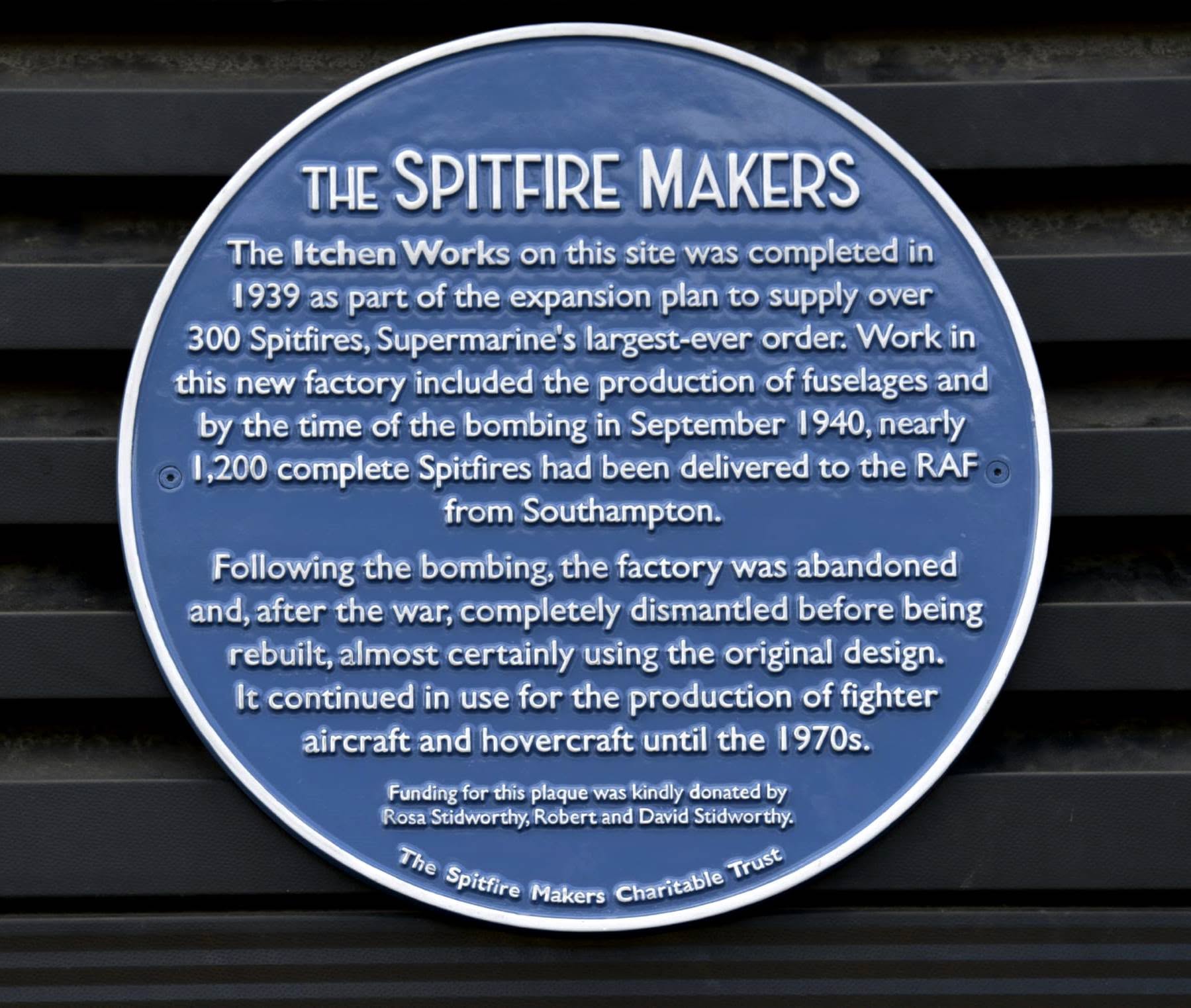
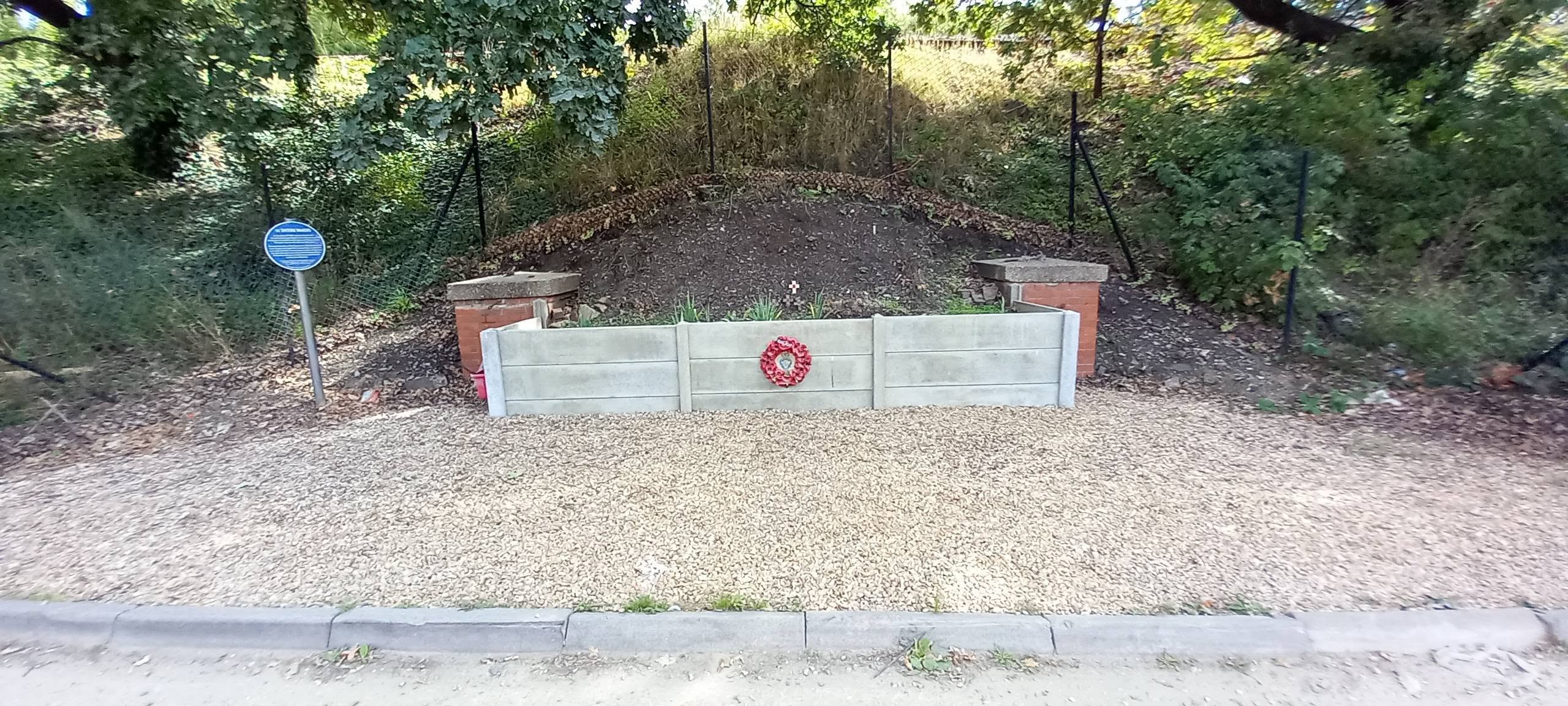
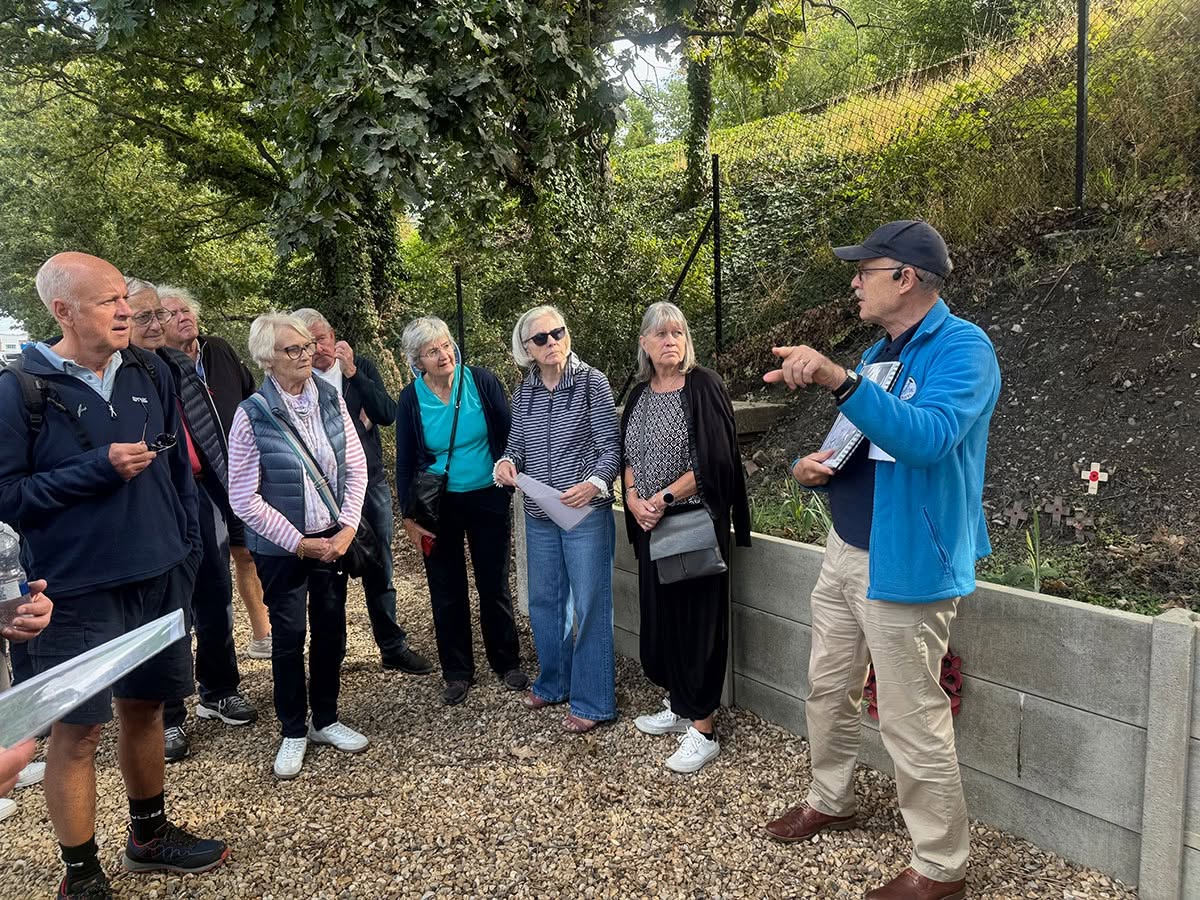
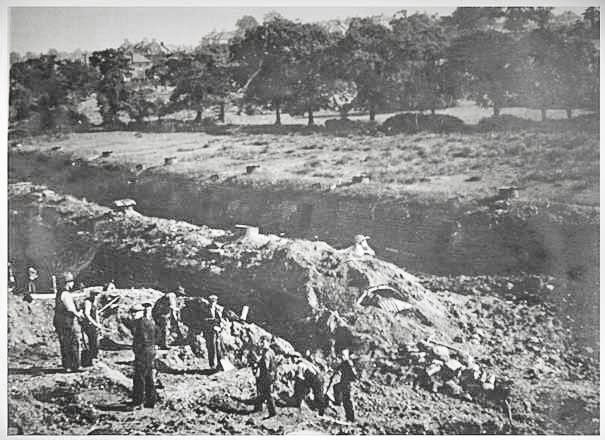
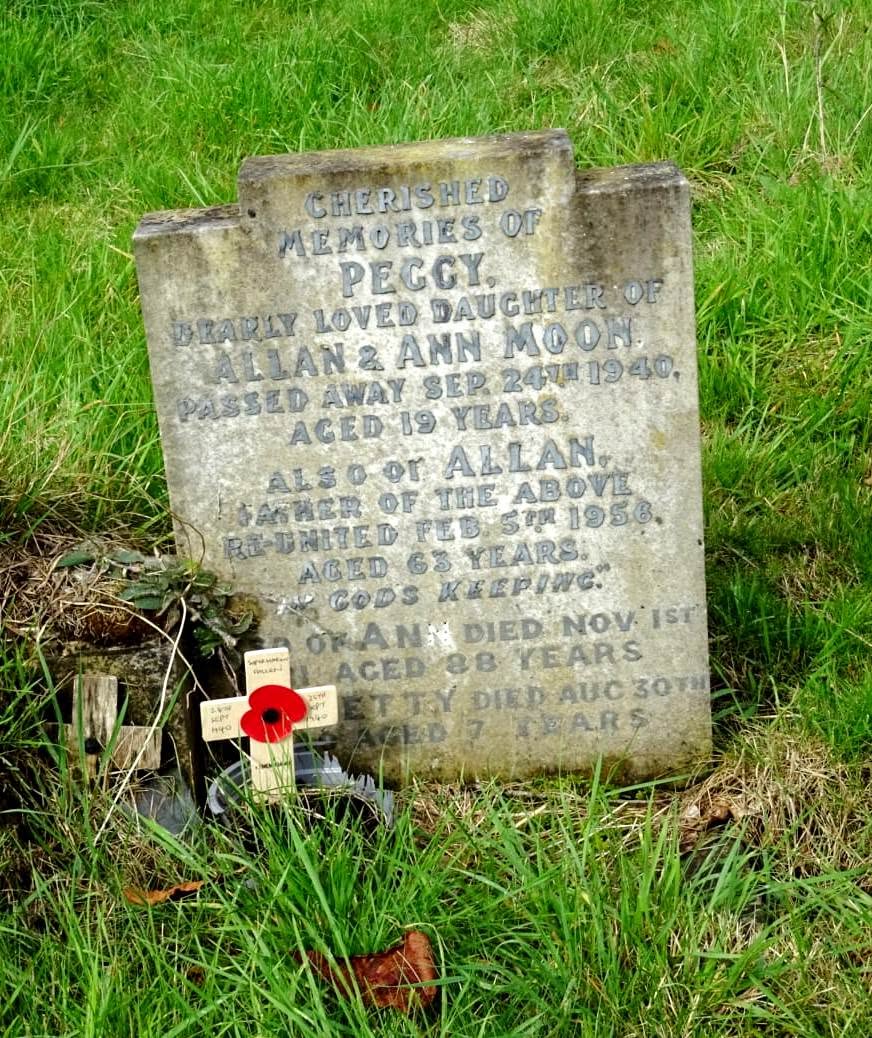
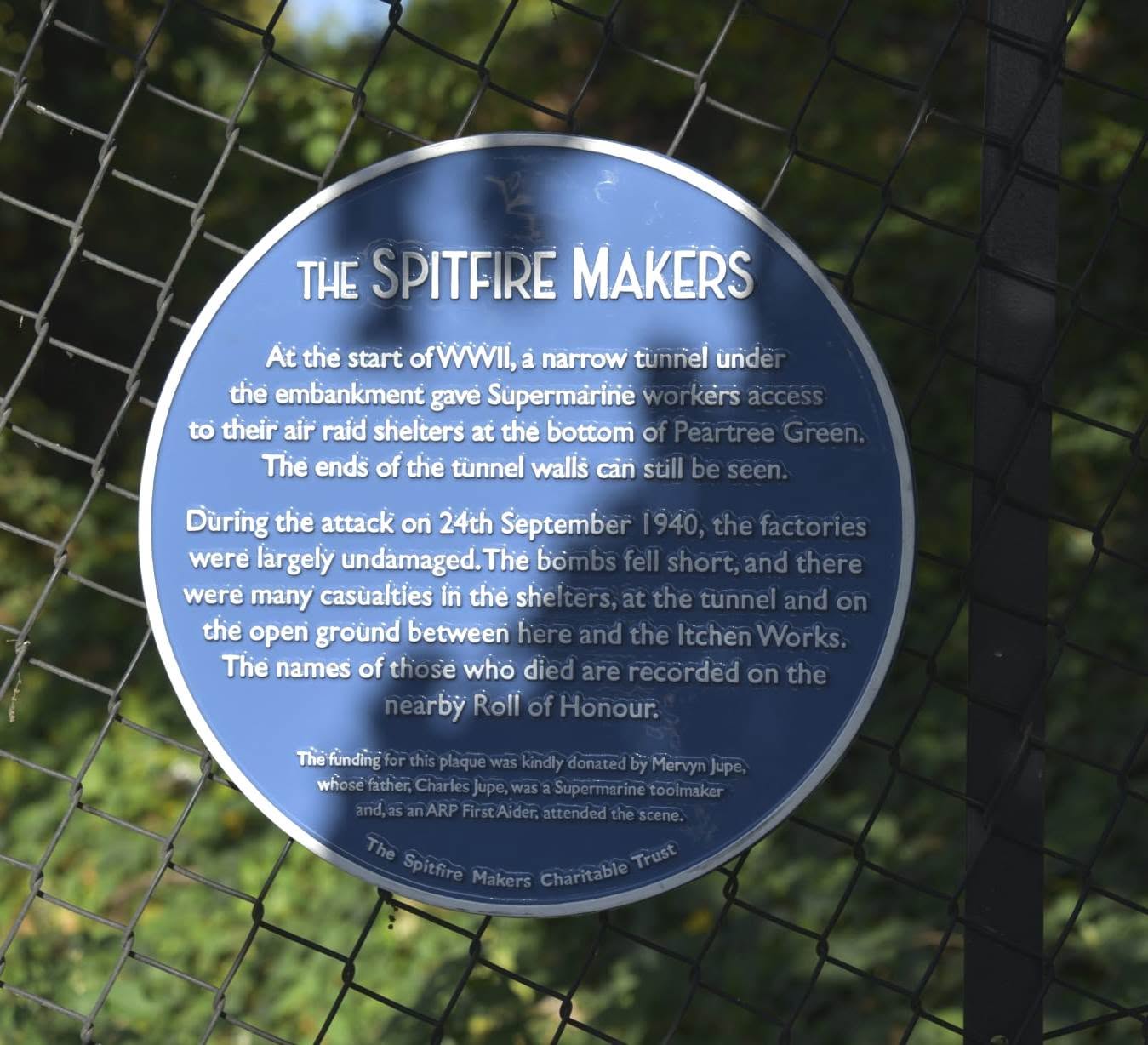
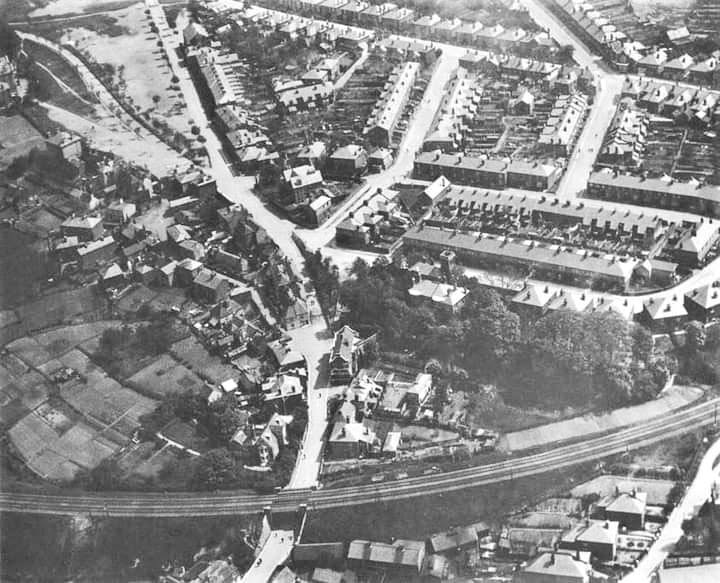
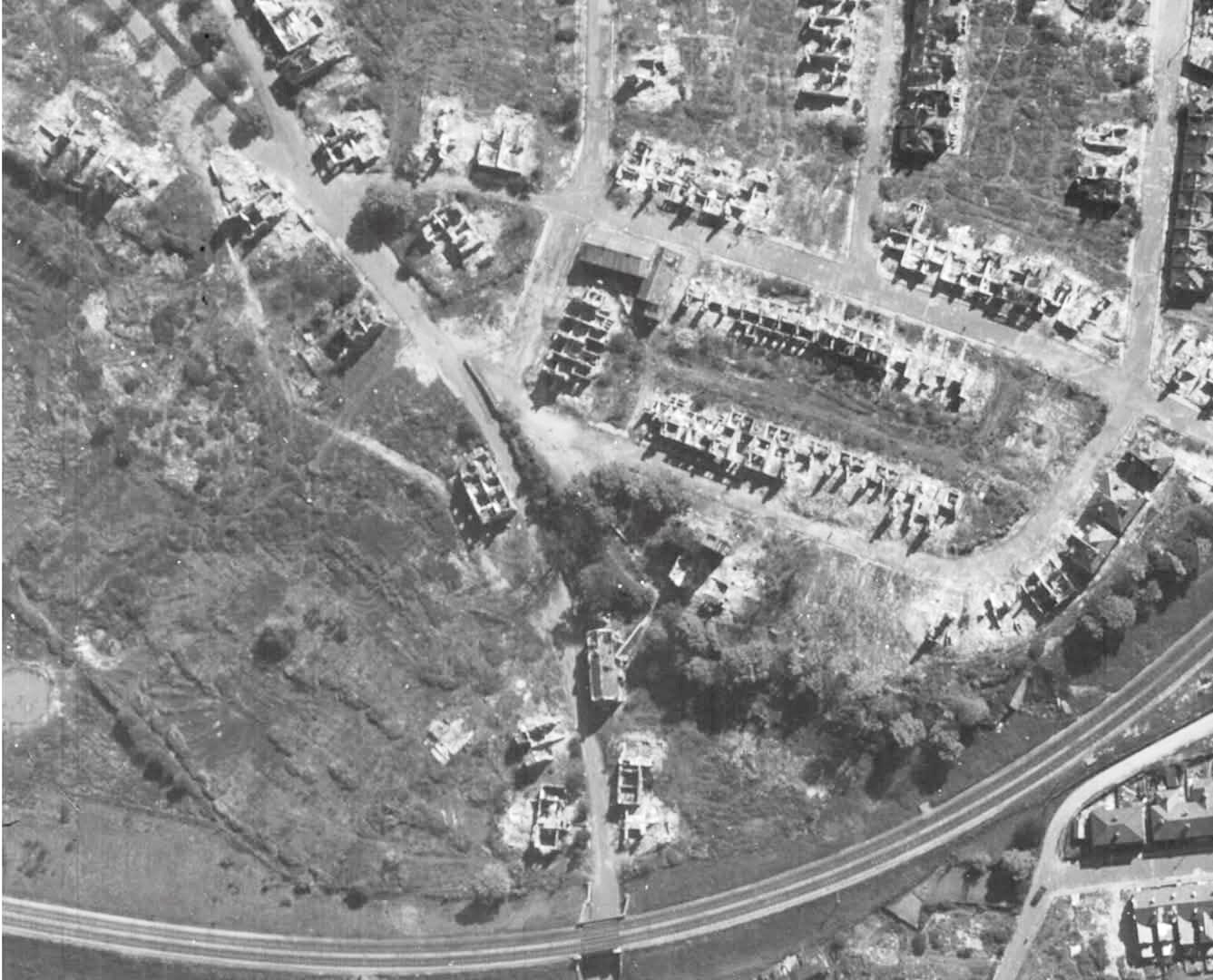
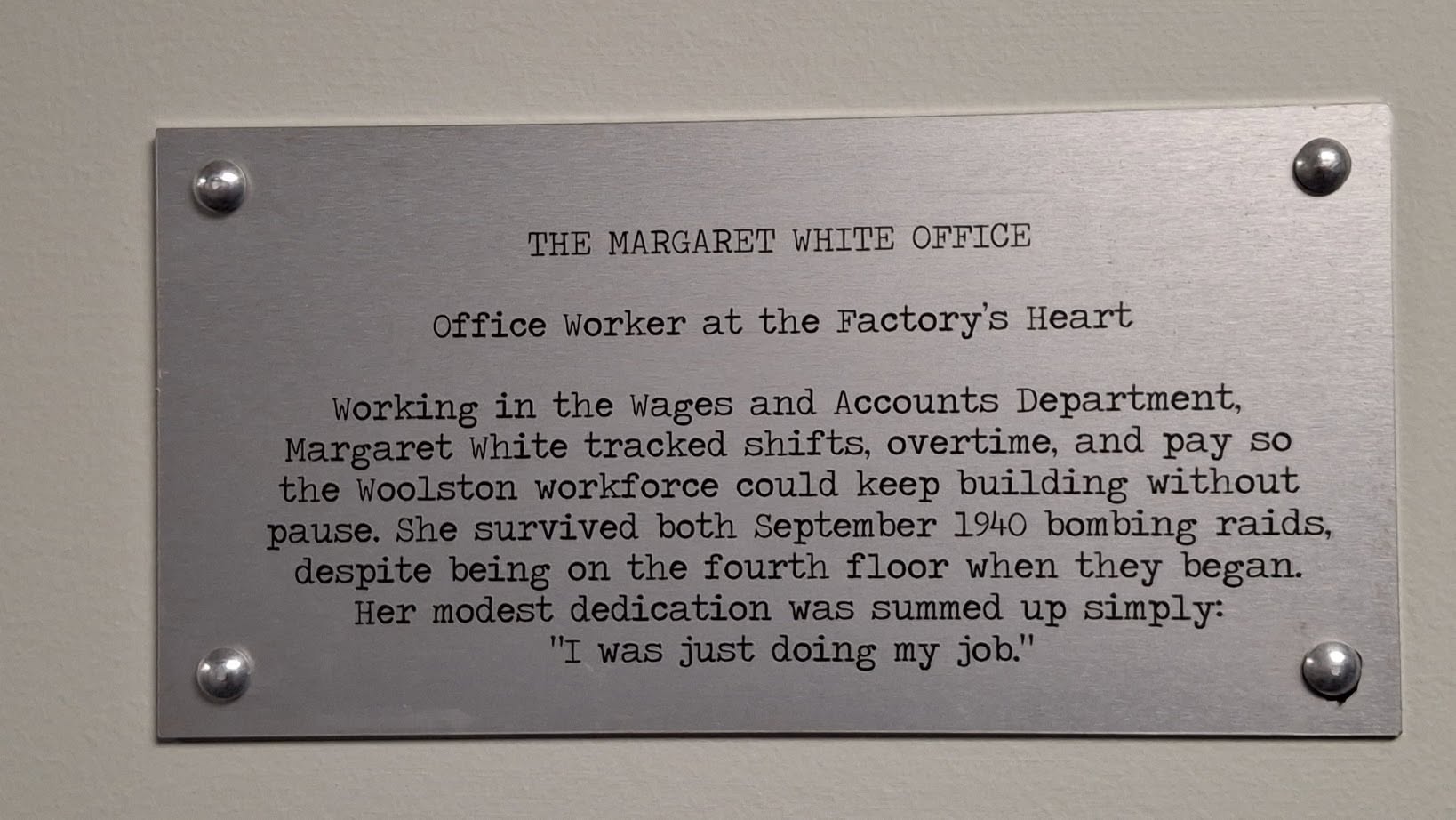
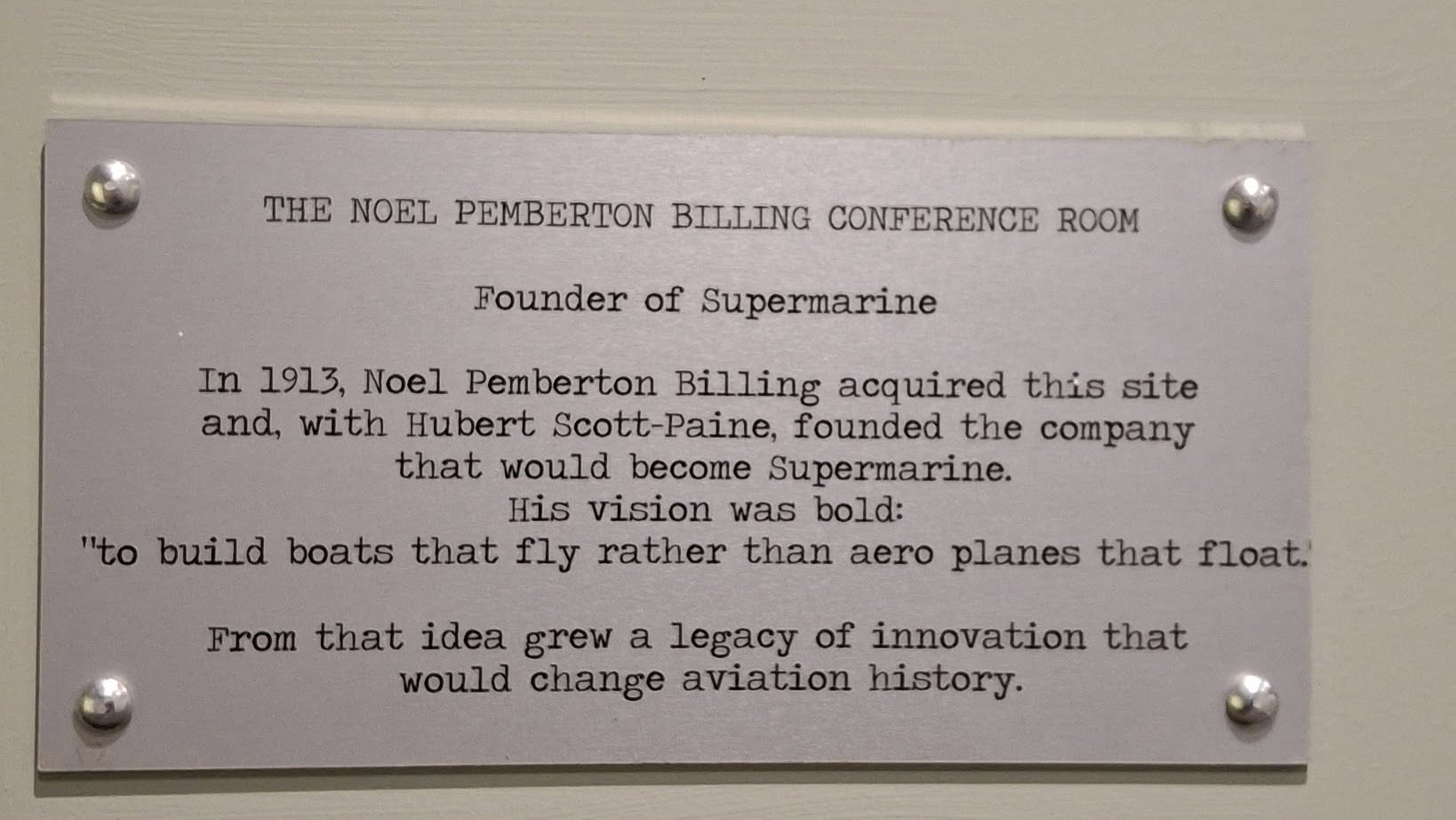
Photo credits: Marc Heighway, Robert Stidworthy, Spitfire Makers, Vickers Archive, Southampton City Archive
- 1. Telling the story of the Supermarine slipway and Spitfire Maker Ted Angel who ate his sandwich lunch sitting on the slipway.
- 2. The slipway plaque
- 3. The Woolston Works plaque at the entrance to what is now Landau Marine.
- 4. Close up of the plaque at the entrance.
- 5. The plaque on “Dreadnought Flats” Hazel Road
- 6. Remembering the Mould Loft, now a sail loft for Doyle Sails.
- 7. In front of the rebuilt Itchen Works, now owned by Siva Group.
- 8. Although the Itchen Works building is essentially the same as it was before the bombing, the site was completely cleared before the factory was rebuilt. RAF photo, September 1945.
- 9. The Spitfire Makers plaque for the Itchen Works.
- 10. The cleared entrance to “the fatal tunnel” under the railway.
- 11. Telling the story of the casualties at the tunnel and in particular, Peggy Moon.
- 12. Workers dig to recover bodies from the devastated Supermarine Shelters on Pear Tree Green. Southampton City Archives.
- 13. Peggy and Betty’s gravestone in St Mary’s Extra Cemetery, Sholing, with poppy cross placed this year by Spitfire Makers team member, Robert Stidworthy.
- 14. The commemorative plaque at the tunnel site.
- 15. The Red Lion on the right going up Sea Road, in a 1930s aerial photo.
- 16. After the bombing. A 1947 RAF photo showing the Red Lion still standing whilst all around barely one other building escaped.
- 17. One of the rooms named after Supermarine workers. Margaret took shelter in the cellar of the Red Lion on the 26th September 1940.
- 18. The main meeting room that overlooks the Itchen and the Supermarine slipway, is named after the founder of the company.
Posted on Facebook by Alan Matlock – 6th October 2026
Memorial unveiled at Supermarine factory site in Woolston
“A small but permanent tribute to the people, craftsmanship and remarkable engineering history of this site.”
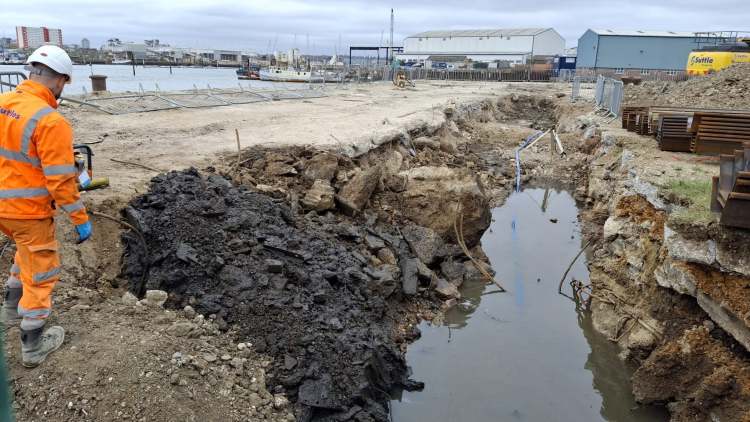
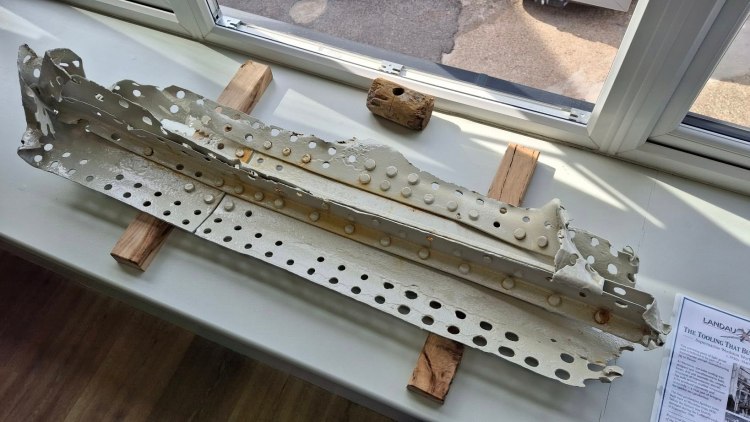
After recent construction work at the site of the Supermarine Works in Woolston, steel and timber have been recovered which was clearly part of the original factory.
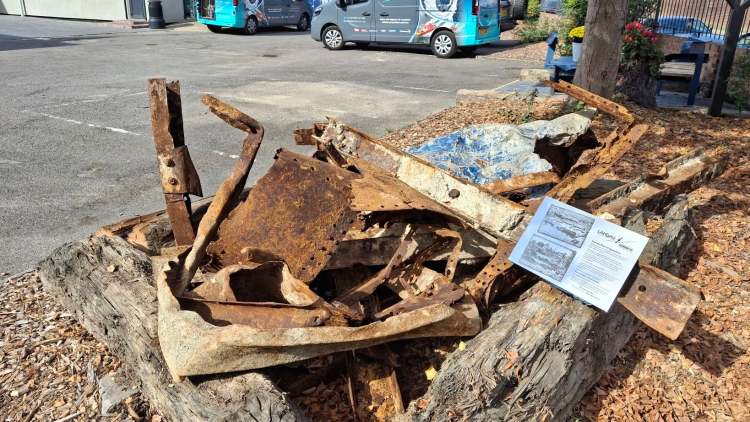
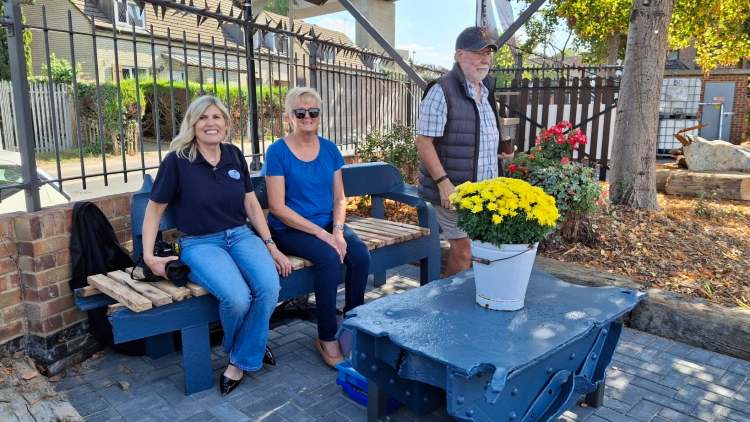
Landau Marine, the new owners of the site, have taken the metal beams and girders recovered from the remains of the original Supermarine buildings and shaped them into a Spitfire Memorial Bench and Table. Other excavated items, including aircraft parts, have been preserved and are on display in the Landau buildings.
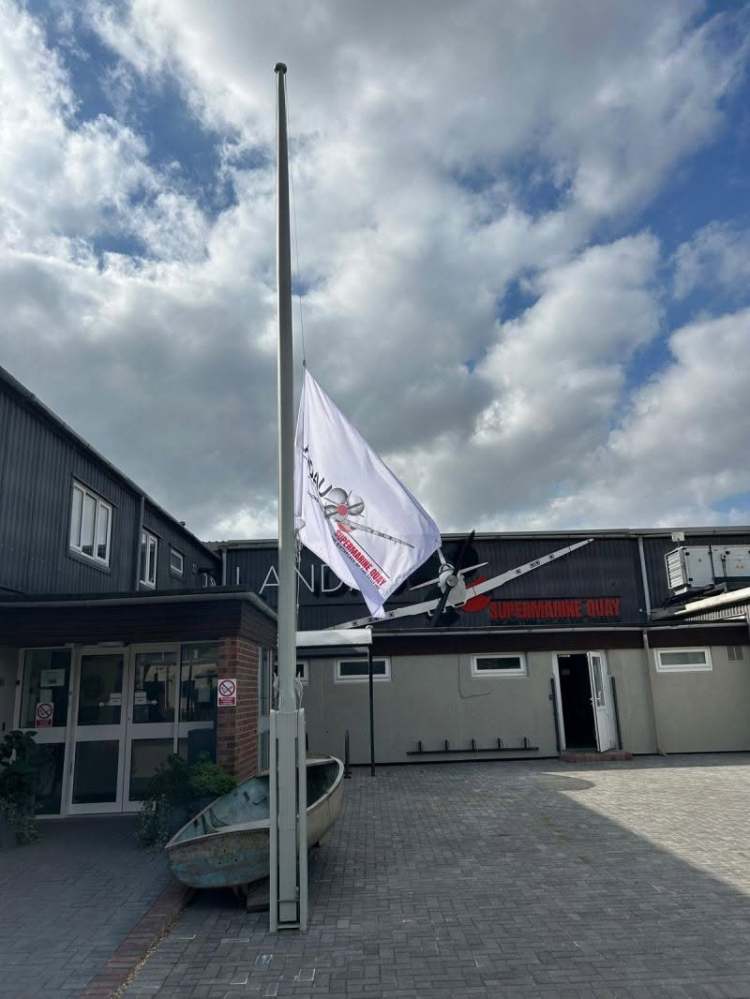
The company flag flew respectfully at half-mast as the bench and table were unveiled by Landau’s Group Managing Director, Nigel Stuart, and chair of the Spitfire Makers Charitable Trust, Alan Matlock. The event was held on 25th September, the day between the two days in 1940 when the factory was bombed out of action and many workers were killed. Before the unveiling Alan outlined the history of the site and the how the Trust had been working with Landau to embrace its heritage.
86 years on from the bombing raids, with family members among the guests, Alan remembered those who had been killed and those who had been injured.
Also present were Jason Pemberton Billing, grandson of Noel Pemberton Billing, the founder of Supermarine, and Trevor Guy, a 98-year-old former aircraft apprentice, who saw the first flight of the Spitfire and began his working life as a tea boy for engineers repairing Spitfires at the Cunliffe Owen factory!
Ben Metcalfe, Landau MD, explained their approach to the heritage of their new premises, “The scarred steel girders incorporated into the memorial once helped support the roof of the factory where the legendary Supermarine Spitfire was built. For us, it was important to preserve something tangible from that history, not simply as a memorial to the past, but as something that can continue to be part of the site for generations to come.”
“Having people like Jason and Trevor with us made the occasion particularly special. For them, and for many of those who joined us, with their own connections to Supermarine, Woolston and the story of this remarkable place, the history of Supermarine is not simply something written in books, it is part of their own lives, families and memories.”
Ben went on, “For us, working from this historic site brings with it a real sense of responsibility to remember the people and engineering heritage that came before us. We’re incredibly proud that this piece of Woolston’s history now has a permanent home with Landau Marine, at Landau Supermarine Quay, where the story of this extraordinary site continues.”
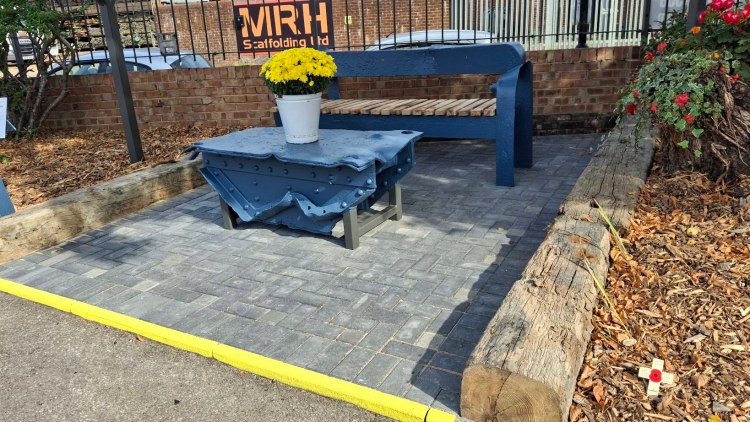
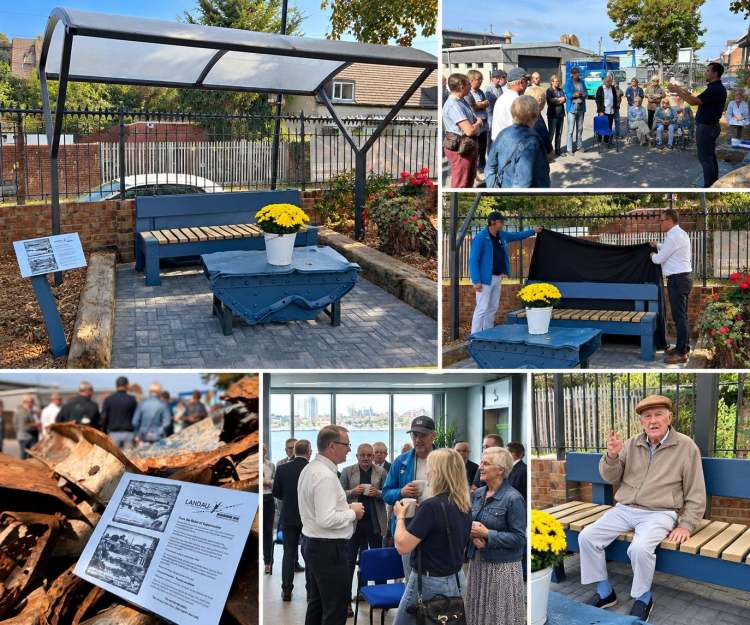
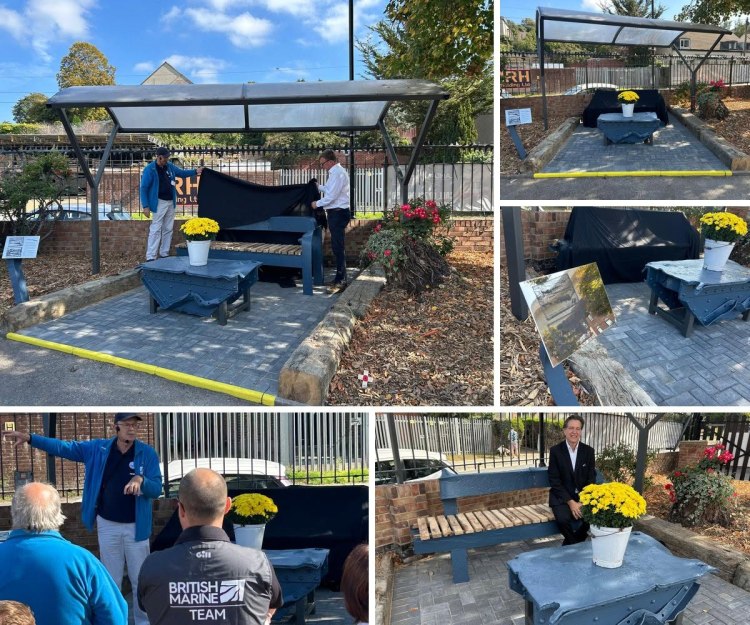
- 1. The Memorial Bench and Table are inside the Landau site but can be seen from Hazel Road through the perimeter fencing. The wooden (oak?) planking for the seat of the bench was recovered from the excavation along with the various items of metalwork.
- 2. Landau’s new company identity embraces the heritage of the site.
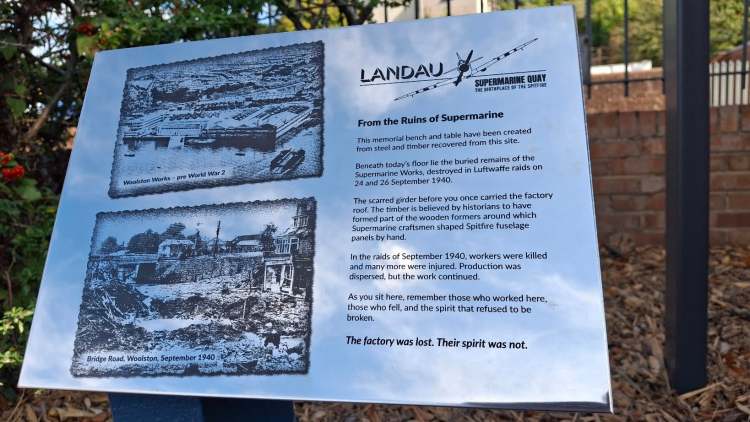
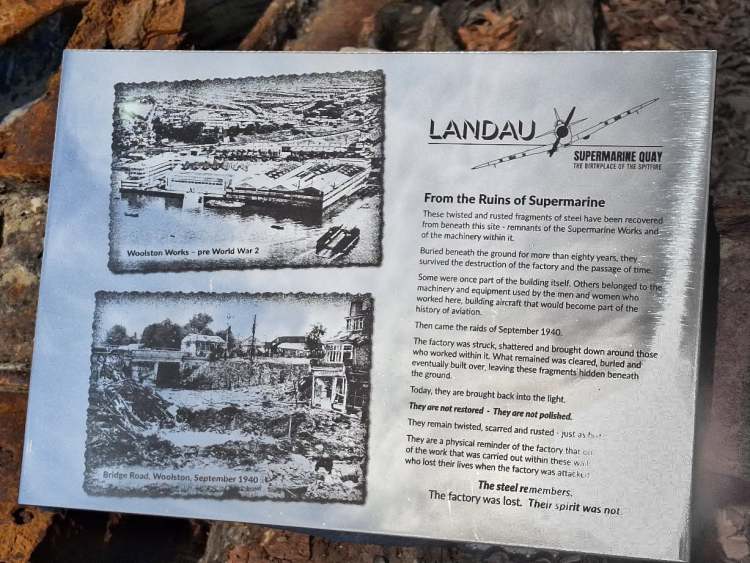
- 3. The plaque next to the bench and table.
- 4. The company flag flew at half mast.
- 5. The trench which uncovered original parts of the factory structure which were made into the Memorial Bench and Table.
- 6. Some of the other recovered factory remains are exhibited next to the bench and table.
- 7. The plaque next to these remains.
- 8. A montage of moments from the day captured by Landau’s photographer. Bottom right, Trevor Guy, who saw the first flight of the Spitfire, 90 years ago this year.
- 9. Bottom right, Jason Pemberton Billing, grandson of the founder of the company, sits on the Memorial Bench.
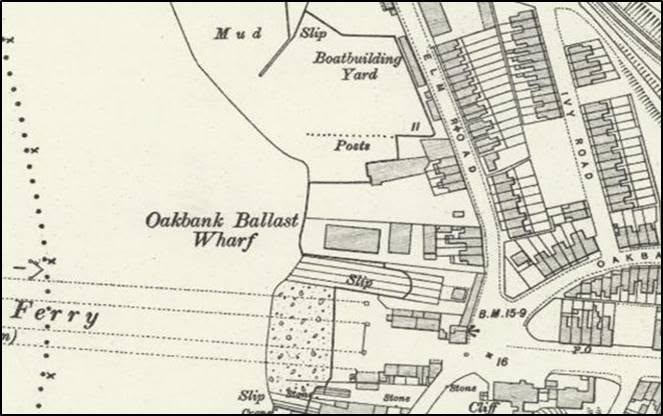
- 10. A 1910 map showing the Ballast Wharf and Boatbuilding Yard that became Supermarine’s Woolston Works.
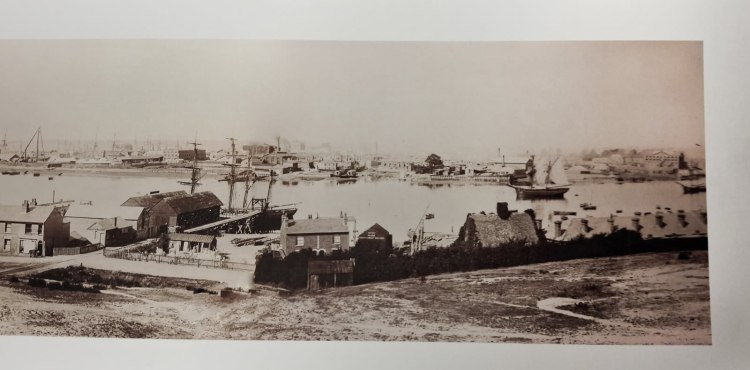
- 11. A very early photograph, possibly late 1860s, taken from where Laurel Close is today, showing the jetty for the ballast wharf and, to the right, the boatyard which were all part of the Supermarine site from 1913 onwards. Photo credit, The Bridge Gallery, Bedford Place.
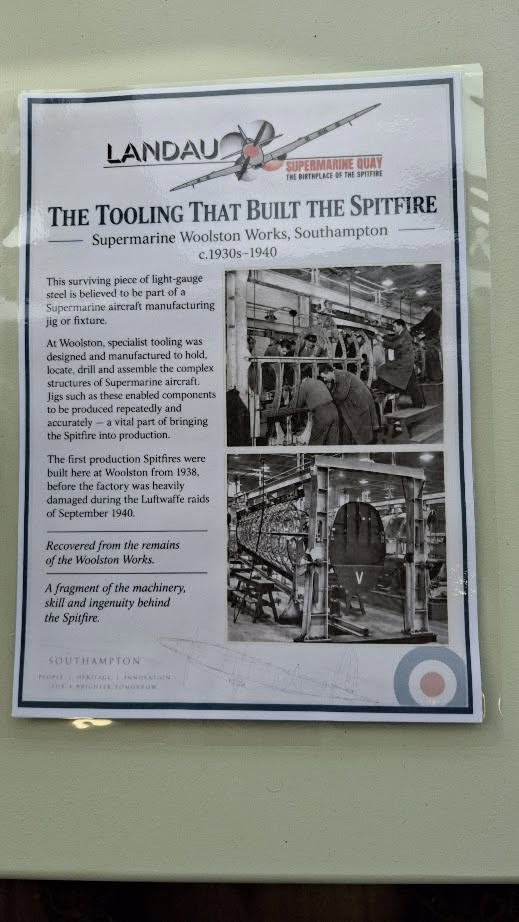
- 12. Displayed in the window of the Noel Pemberton Billing Conference Room, part of a Spitfire fuselage jig and amazingly well-preserved wooden struts found with it, recovered during the excavations.
- 13. Expanatory label for the jig.
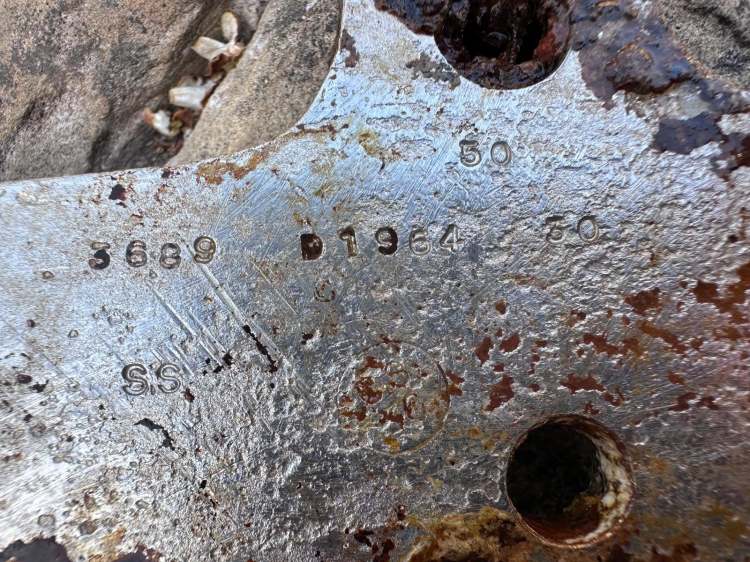
- 14. An aircraft (Spitfire?) part, with its serial number stamped into it.
- 15. Relatives of survivors: L-R: Sarah Penfold, whose teenage grandfather, Ted Angel, was in an air raid shelter whose concrete floor was split open by the force of nearby bombing; Glynis May, whose father, Claude Cox was a riveter. With just his hand sticking out of the rubble he was pulled out alive; Kevin Bosanquet, whose mother, wages clerk Gwen Wells, had moved to the recently requisitioned Deepdene House in Midanbury Lane, when the bombing happened.
Posted on Facebook by Alan Matlock – 7th October 2026
Secret Spitfire production in Shirley… not-so-secret now!
Promoted by the New Forest and Hampshire Wartime Association, Chair of Spitfire Makers, Alan Matlock, assisted by project volunteer Keith Baker, led a fully booked tour around the Spitfire production sites on the Shirley Spitfire Trail.
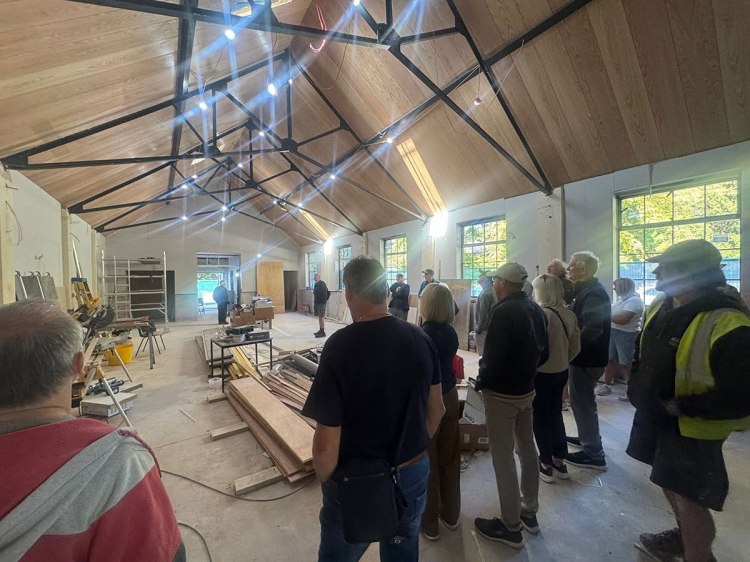
As a special part of the itinerary, Alan had arranged for the guided walk to step inside the St James by the Park Community Hall. Currently undergoing a major refurbishment, the one-time Rechabite Hall was used by Supermarine subcontractor, Autometalcraft, to make jettison fuel tanks and air filter housings for Spitfires.
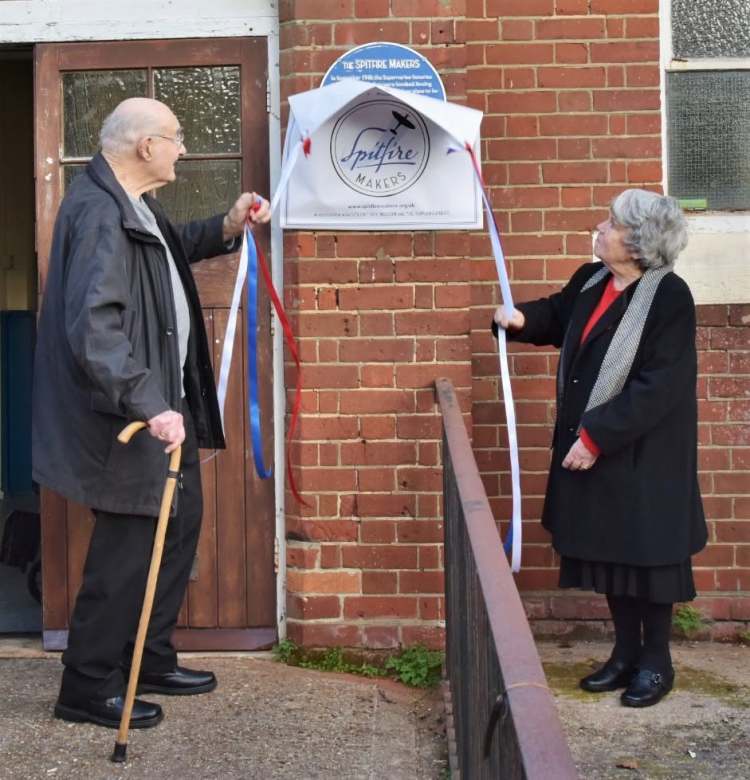
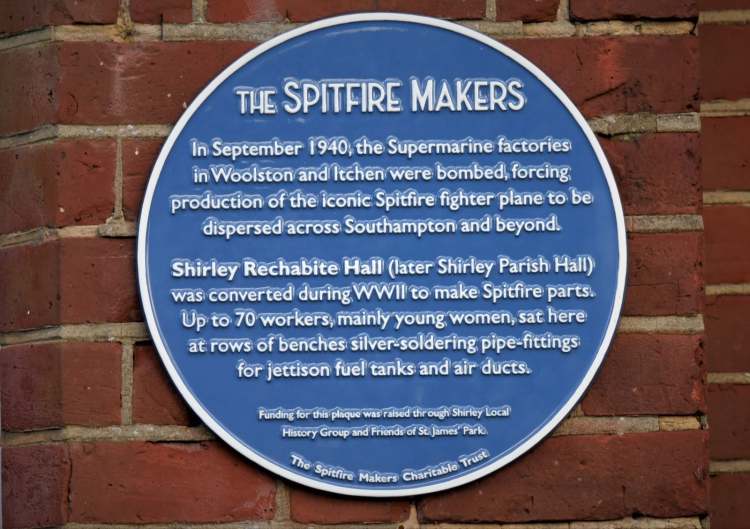
The Spitfire Makers blue plaque at the original front entrance has been covered up during the building work but the gas pipes which ran through the open ceiling of the building for the brazing and soldering work have been retained. In March 2023, the plaque was the first of more than 30 which have now been installed by the Spitfire Makers Charitable Trust. It was unveiled by Don Smith who worked for Autometalcraft as a 14 year old apprentice and helped to fit the gas pipes which can still be seen above the main meeting space, which is to be known as “Spitfire Hall”.
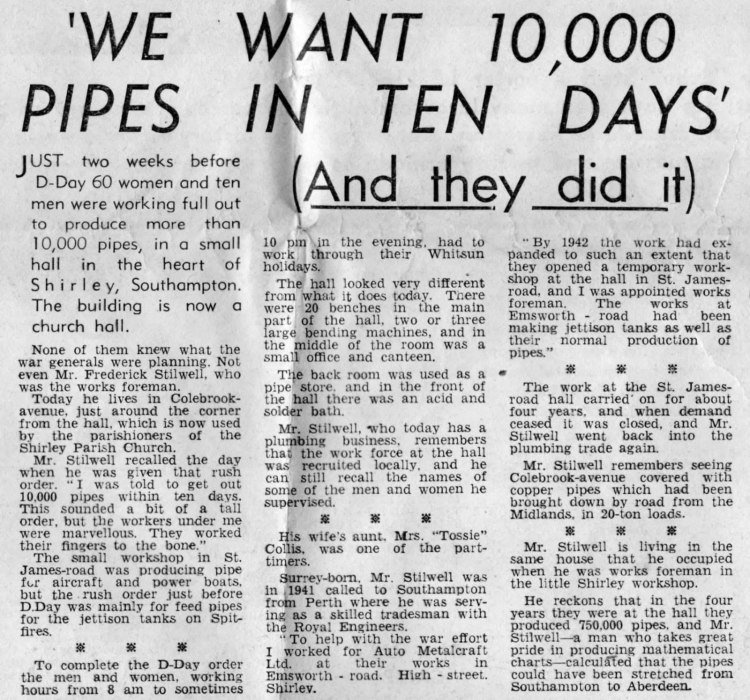
Helping Don with the unveiling was Val Stoten, the daughter of his foreman Fred Stilwell. Some of Fred’s handiwork was seen in the side gate of the nearby house where Fred lived.
Along the route, Alan explained how various premises were requisitioned by Supermarine to enable production of the Spitfires to continue after the bombing of the factories in Woolston. Some of these places were being identified and had been moved into even before “The long-expected big chop” that eventually came in September 1940.
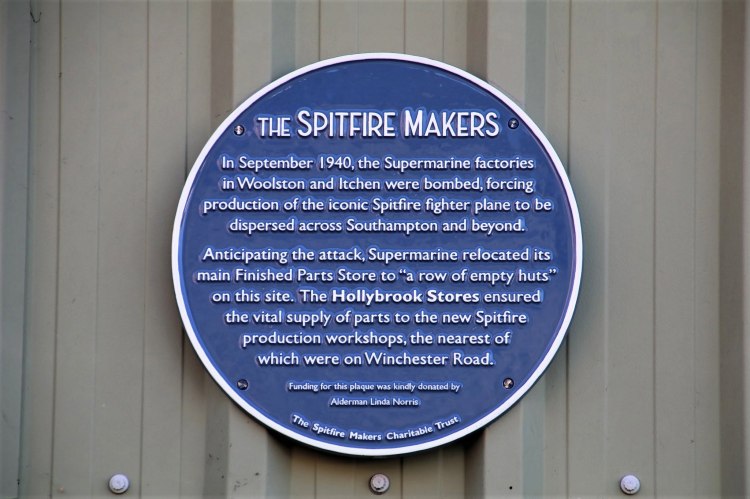
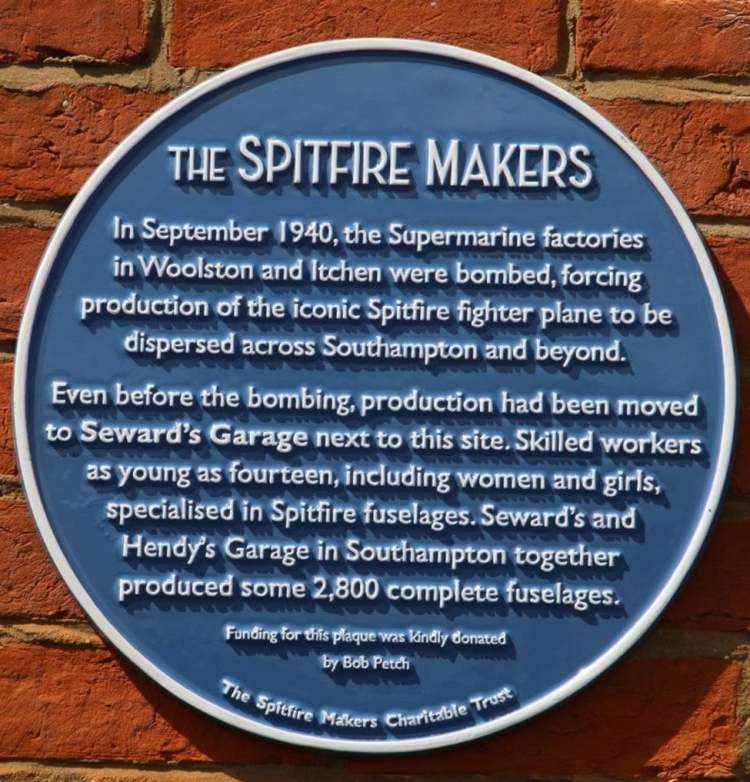
Further Spitfire Makers blue plaques were viewed at the site of the Sunlight Laundry and The Hants & Dorset Bus Garage (both at the Shirley Retail Park on Winchester Road), the Serpell Biscuit Company (now a set of small industrial units on Hollybrook Road) and Seward’s Garage (the plaque on the side of the vets, Christopher Carter, commemorates the garage that was where The Range is now).
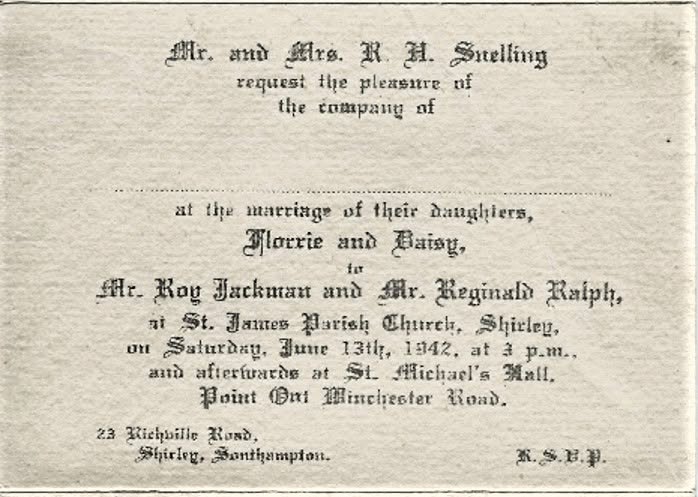
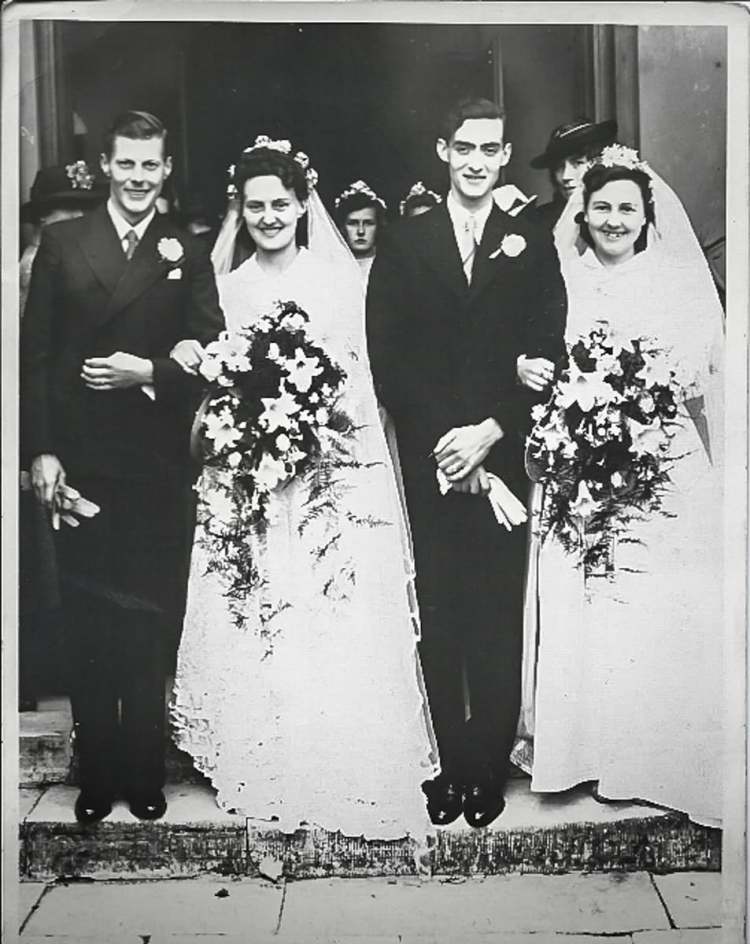
The walk ended up at St James Parish Church and remembered the double wedding of “the Spitfire Sweetheart”, two sisters, Daisy and Reg who worked at the Sunlight Laundry. There they had met Reg and Roy, two aircraft fitters. Alan told how their workmates had been given an unprecedented hour off work to see them come out of church. So many turned out that they blocked the road outside and police were unable to get the traffic moving.
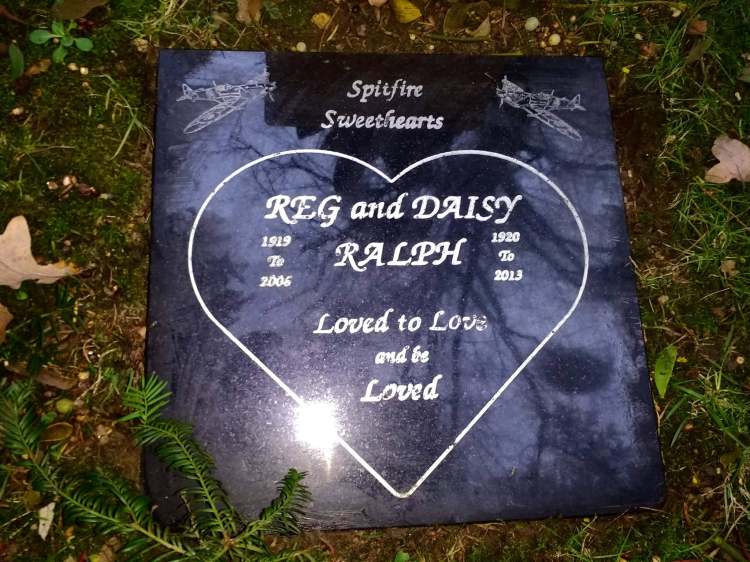
One final stop on the tour was left off but can be seen amongst the gravestones, just to the left of the church doors where the happy couples stood: a simple memorial to Daisy and Reg.
One of the participants wrote the following: “Thank you to all involved particularly Alan & Keith for their willingness to share such a wealth of knowledge. I had a really great morning.”
For more information on these and other dispersal sites, go to our Commemorative Plaques page or visit the Supermariners website: https://supermariners.wordpress.com/…/southampton-area…
Images by Spitfire Makers Charitable Trust, Southampton City Archive, the Snelling/Ralph family & AI
- 1. Don and Val unveiling Spitfire Makers plaque no 1 in 2023 at the entrance to the former Rechabite Hall where Spitfire fuel tanks were made.
- 2. The plaque is currently covered during the rebuilding works.
- 3. The gas pipe fitted by Don can be seen above the doorway at the far end.
- 4. Fred Stilwell was interviewed by The Echo for the 25th anniversary of D Day. Locals watching the refurbishment have told the workers they remember how Colebrook Avenue outside the Hall was completely blocked with these pipes.
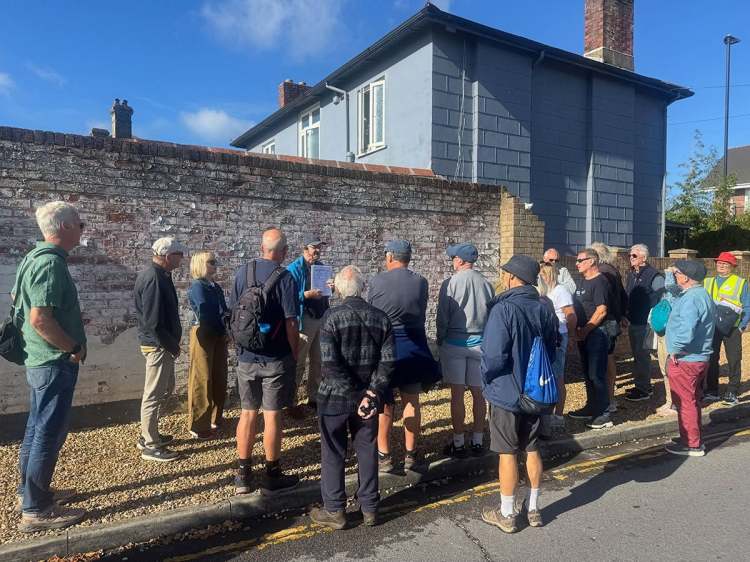
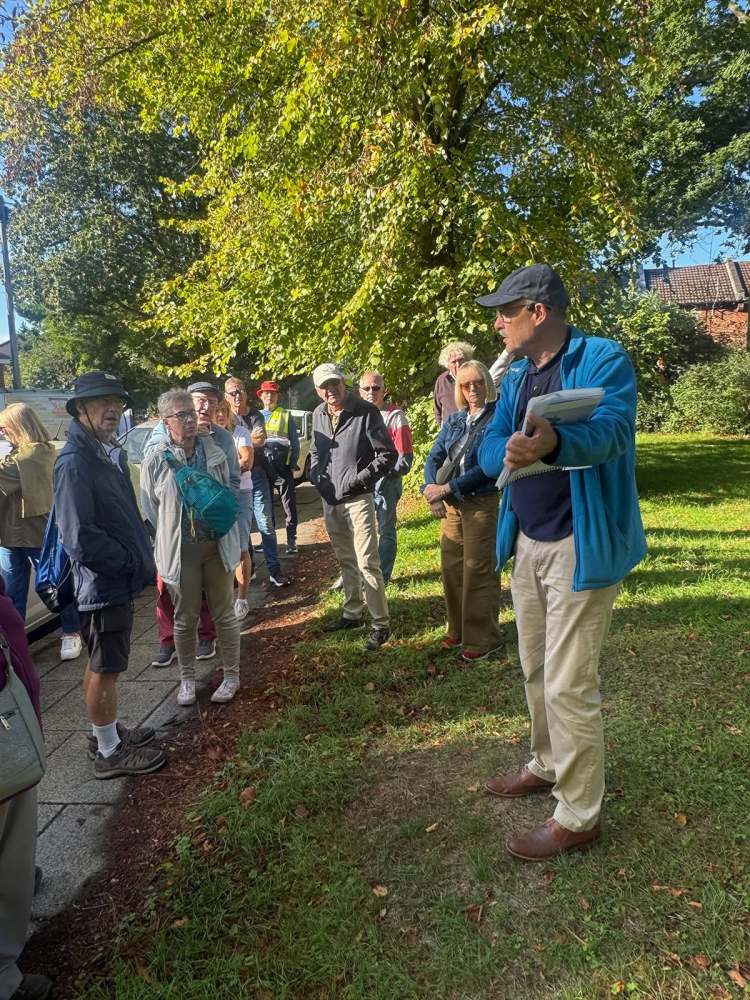
- 5. Alan talking to the participants at the entrance to the Shirley Retail Park, Winchester Road. They are standing in front of a perimeter wall of the Sunlight Laundry which is still covered in flaking white paint.
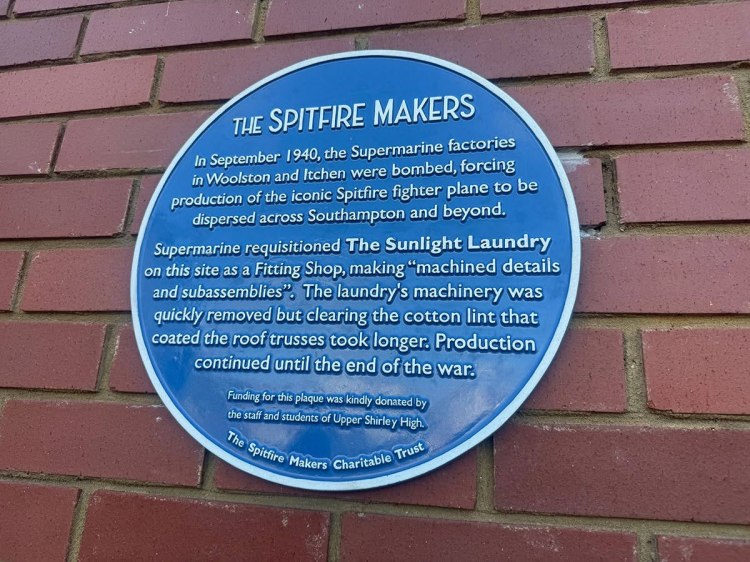
- 6. The plaque for the laundry which was the family business featured in 2018 and 2019 play, “The Shadow Factory”, performed at the new Nuffield, now Mayflower Studios Theatre.
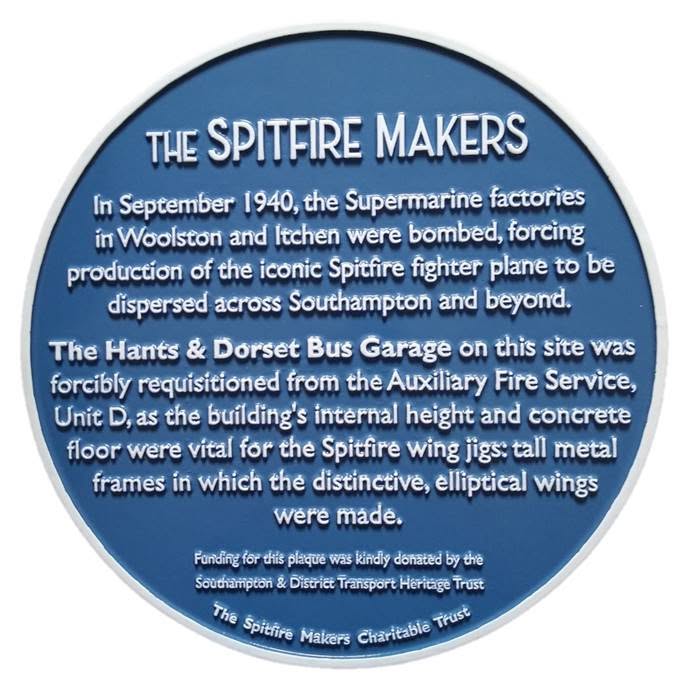
- 7. The Hants & Dorset Bus Garage plaque situated next to the Sunlight Laundry.
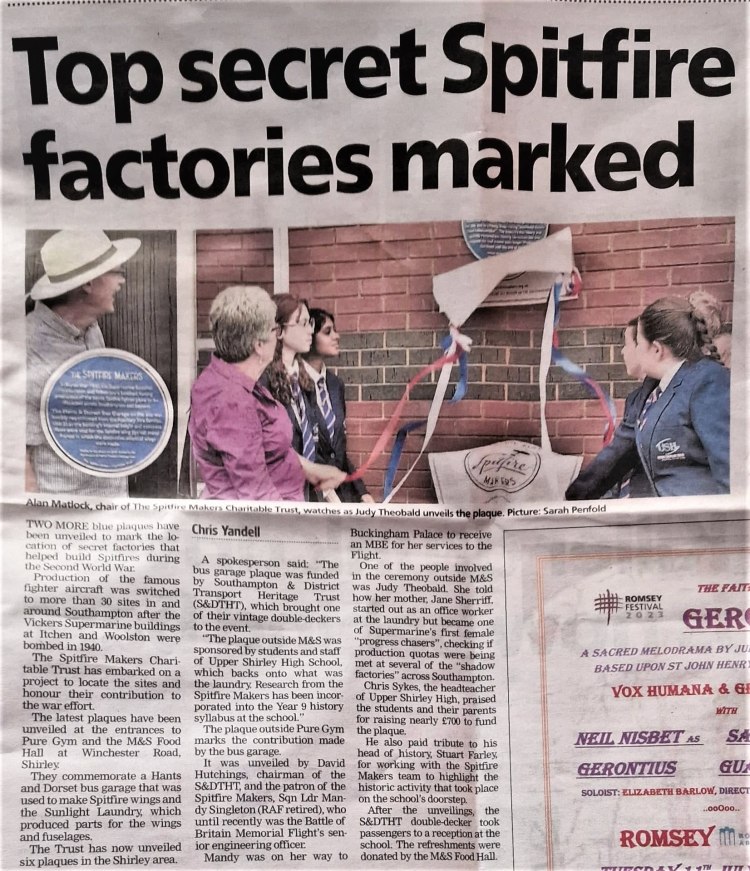
- 8. The Echo in June 2023 reported on the unveiling of the two plaques.
- 9. The plaque in Hollybrook Road.
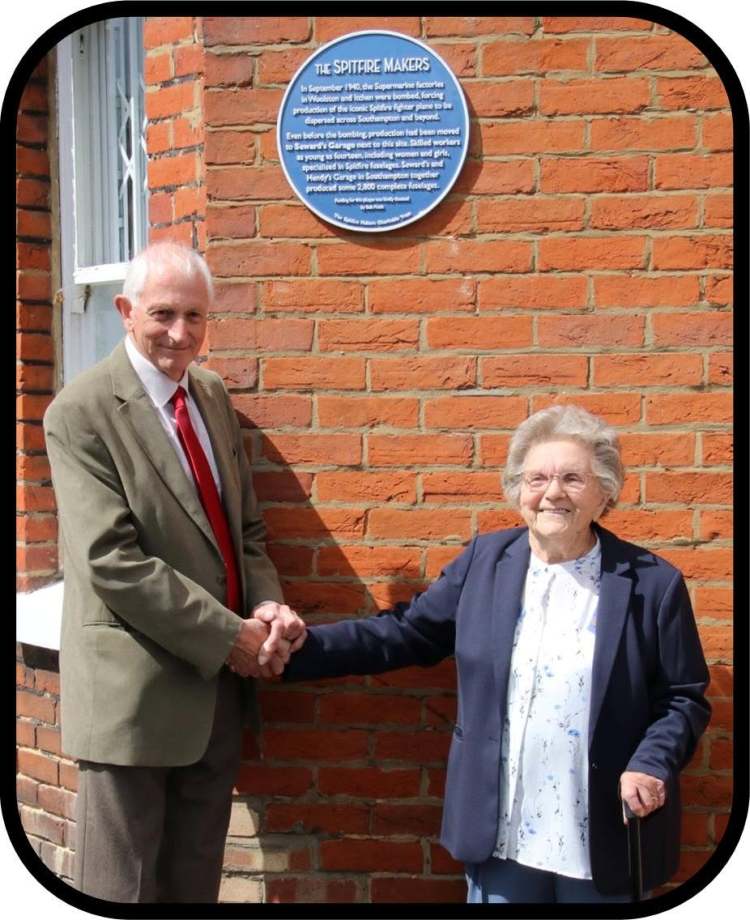
- 10. Bob Petch and Edna Penny unveiled the Seward’s Garage plaque.
- 11. The Sewards Garage plaque.
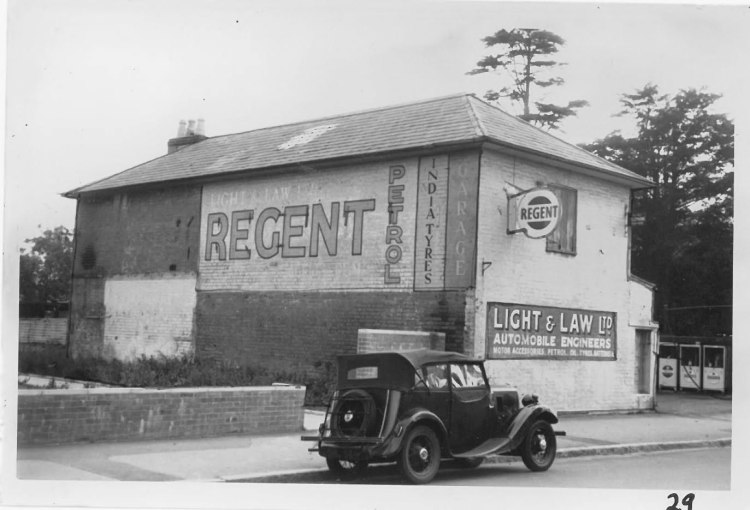
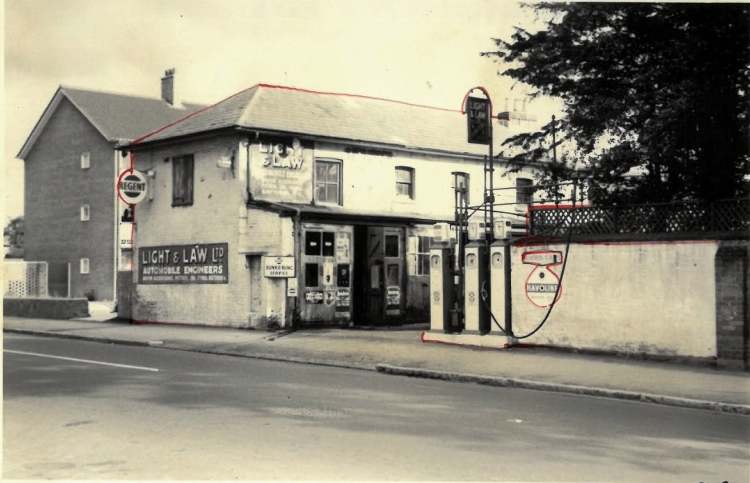
- 12. There was a stop at the site of the Light and Law garage in St James Close. We have some evidence that they were carrying out subcontractor work for Supermarine, but it is not yet sufficiently detailed to warrant a plaque.
- 13. The “Oatlands Garage” of Light & Law in the 1950s. Photos – SCC Archives.
- 14. Another view of Light & Law. Photo – SCC Archives.
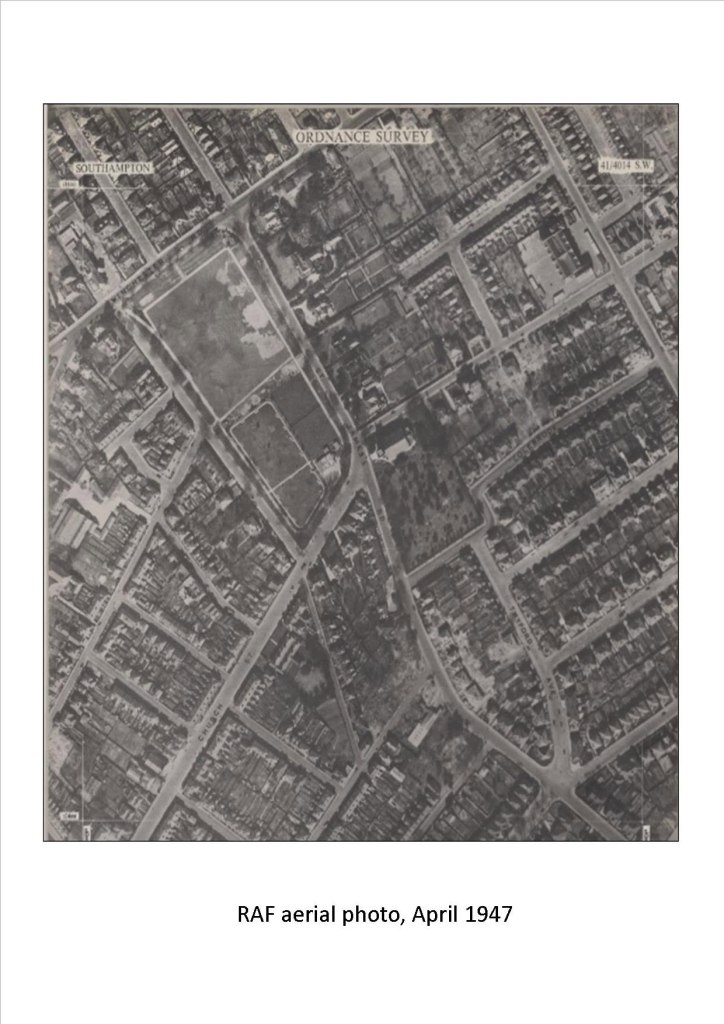
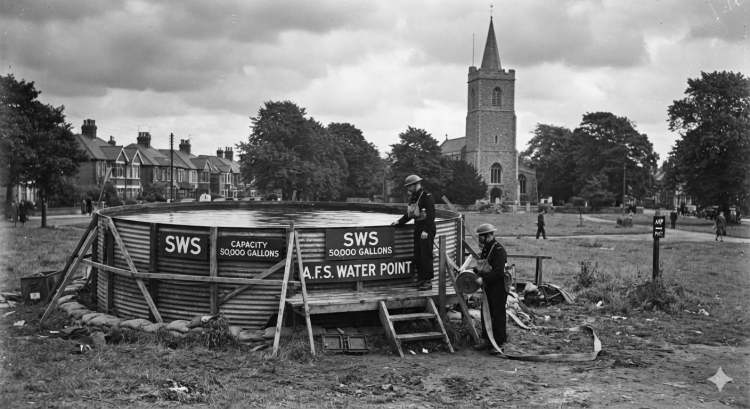
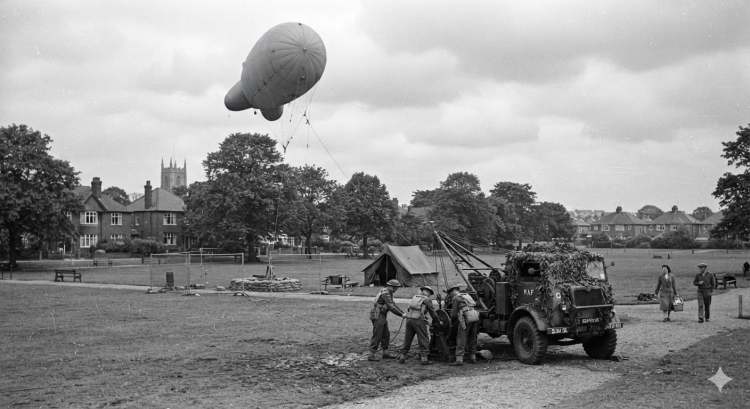
- 15. RAF aerial photo of the area in 1947 showing evidence in the disturbed ground of the wartime activity in the park. Alan described how a trench shelter was dug in the north-east corner, a Static Water Supply tank was put next to that, and a barrage balloon team operated a balloon from the centre of the park.
- 16. Reader beware! An AI (Awful Idea) of what the water tank might have looked like!
- 17. Reader beware! Another AI (Awful Idea) of what the barrage balloon team might have looked like. We do know that the balloon escaped – twice – once with the cables damaging the parapet of the church and on the second occasion pulling down chimney pots before it was recaptured in Janson Road!
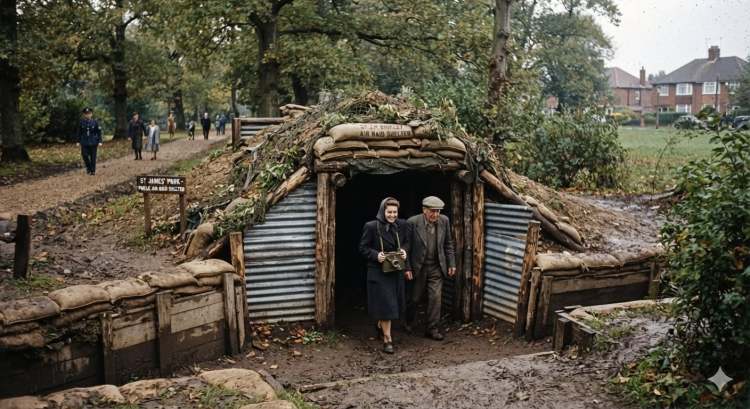
- 18. AI again! this time what it thinks the trench shelter in Shirley Rec might have looked like!
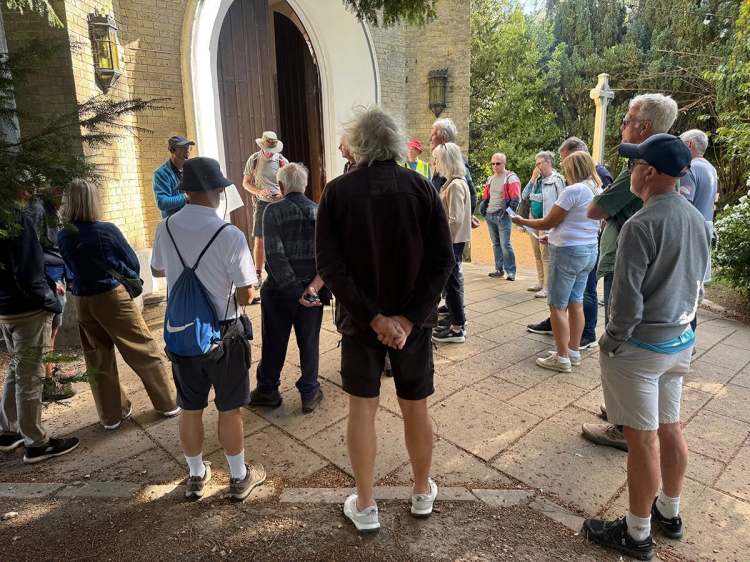
- 19. The last stop, before coffees at the Parklife Cafe, was at the front of the church.
- 20. The double wedding took place on June 13th, 1942.
- 21. L-R, Roy and Florrie, Reg and Daisy.
- 22. The memorial to Reg and Daisy is in the churchyard, to the left of the main door.
Posted on Facebook by Alan Matlock – 7th October 2026
WWII buildings at Spitfire dispersal production site near Trowbridge demolished
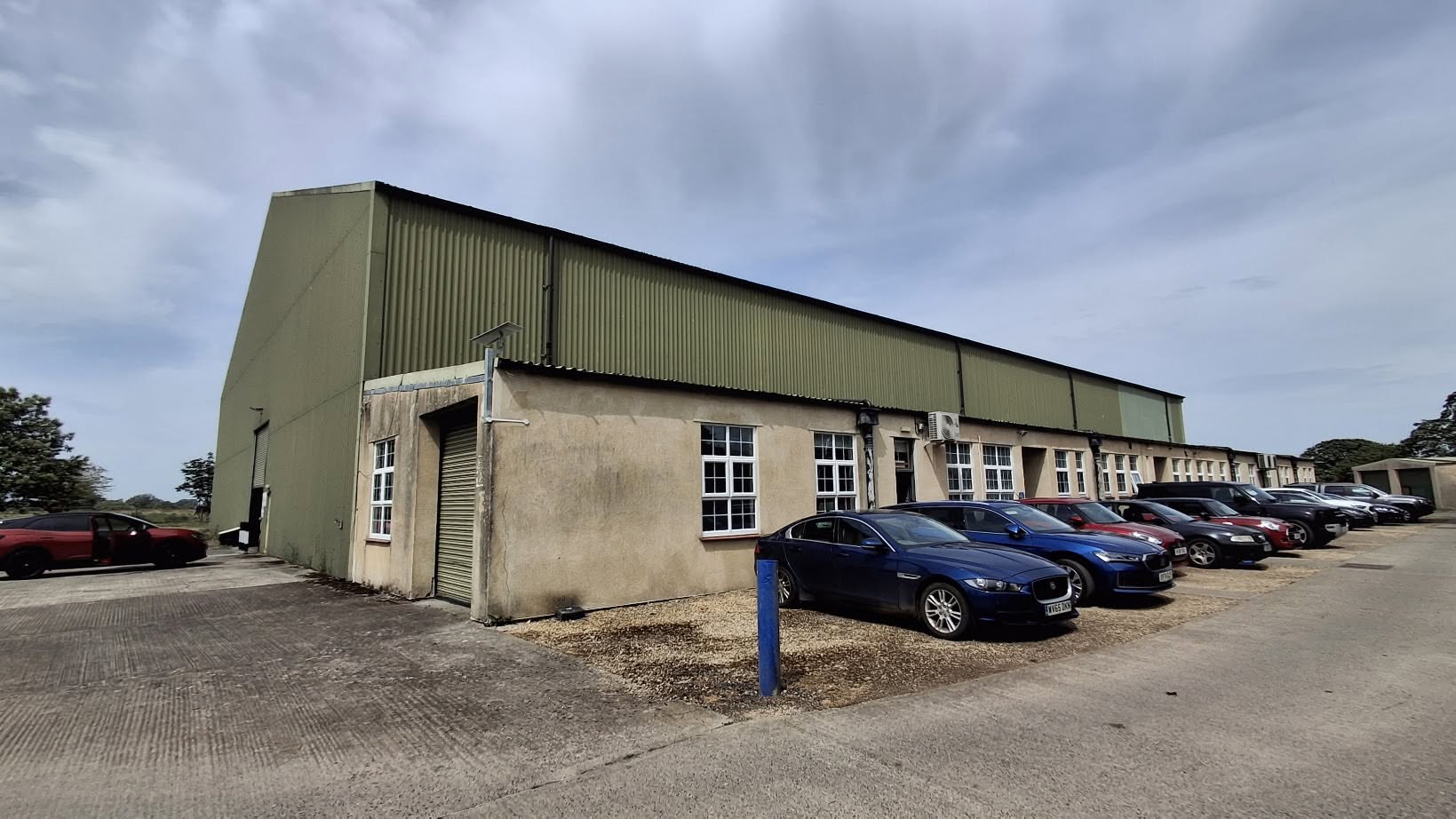
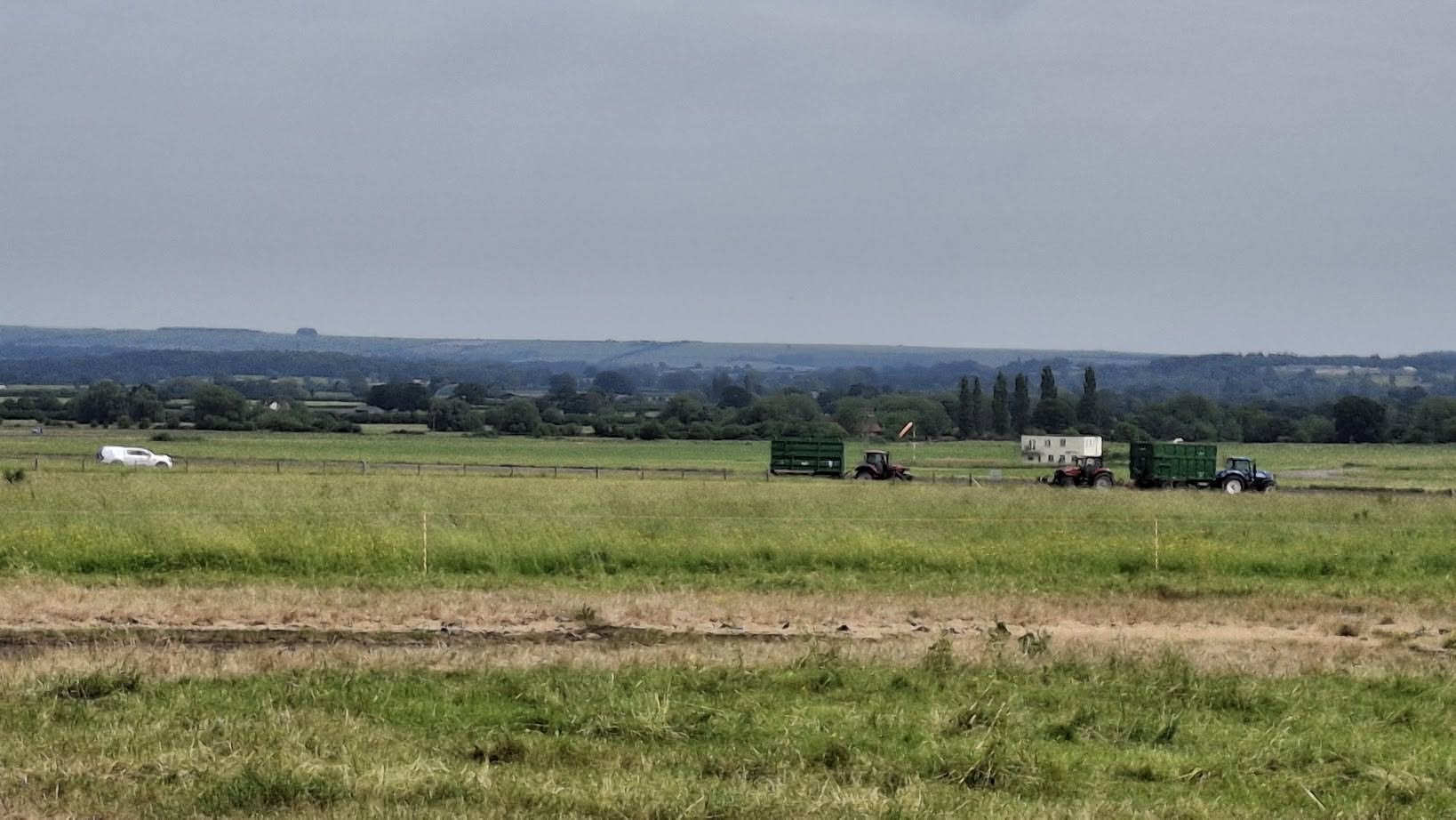
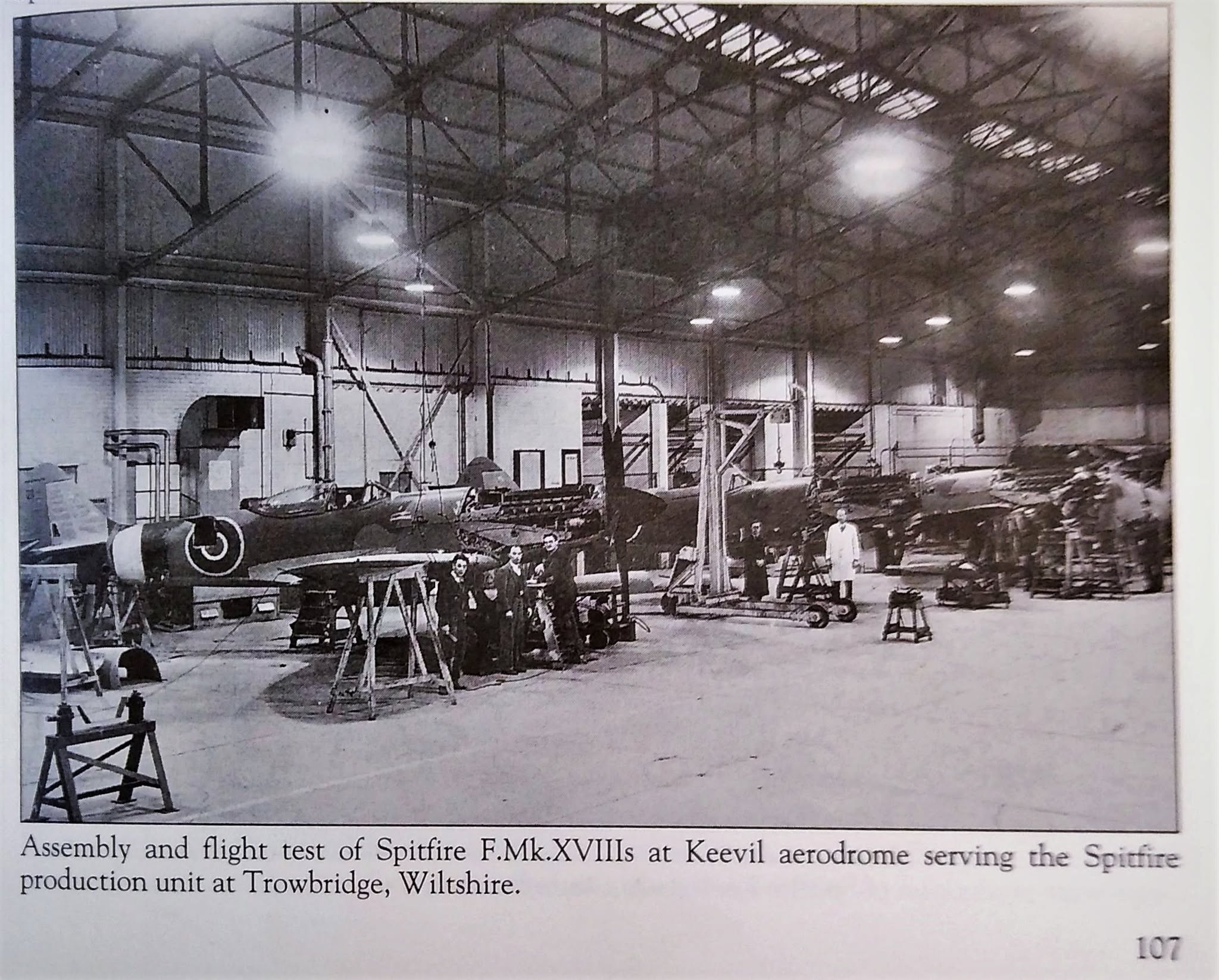
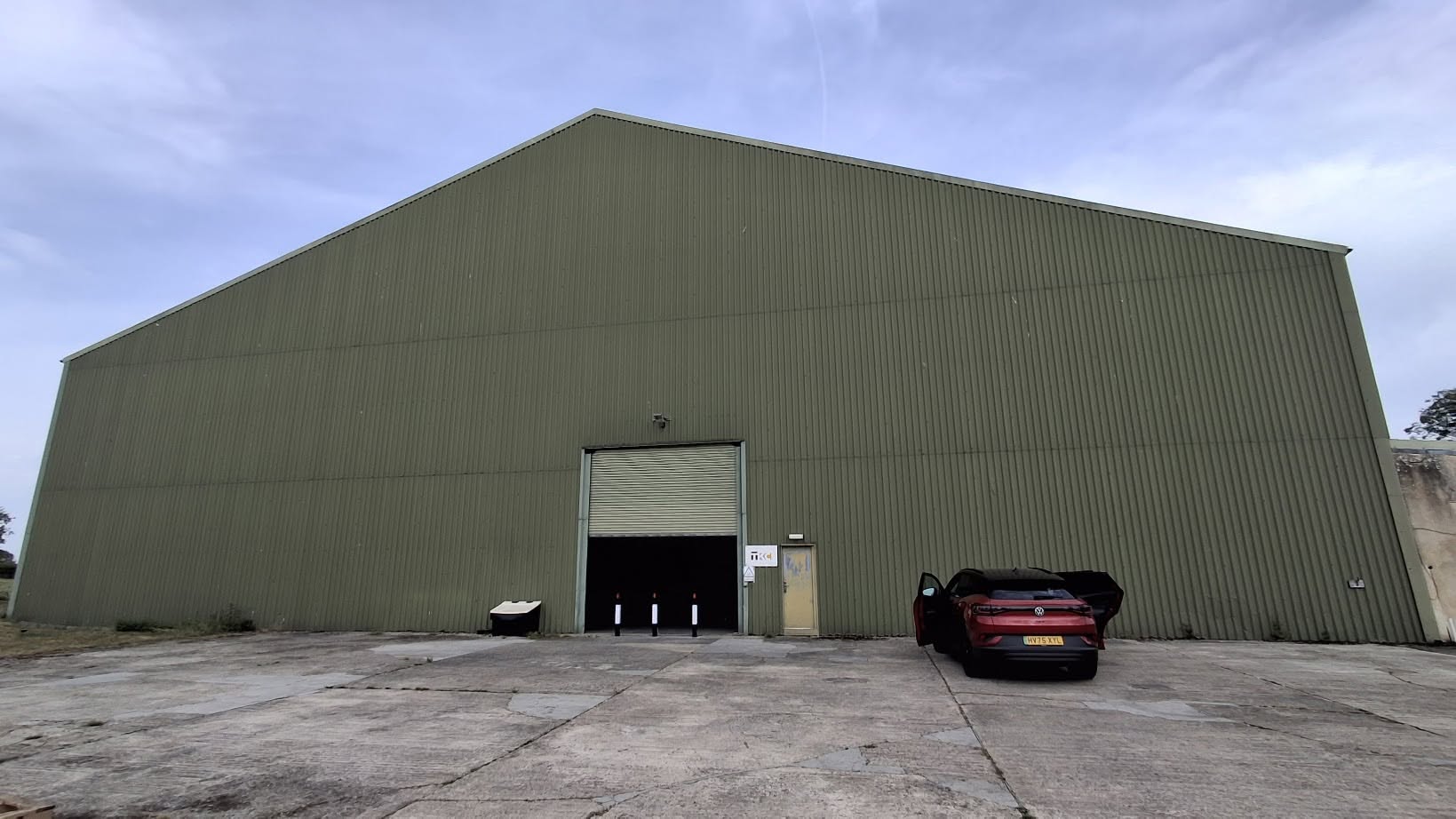
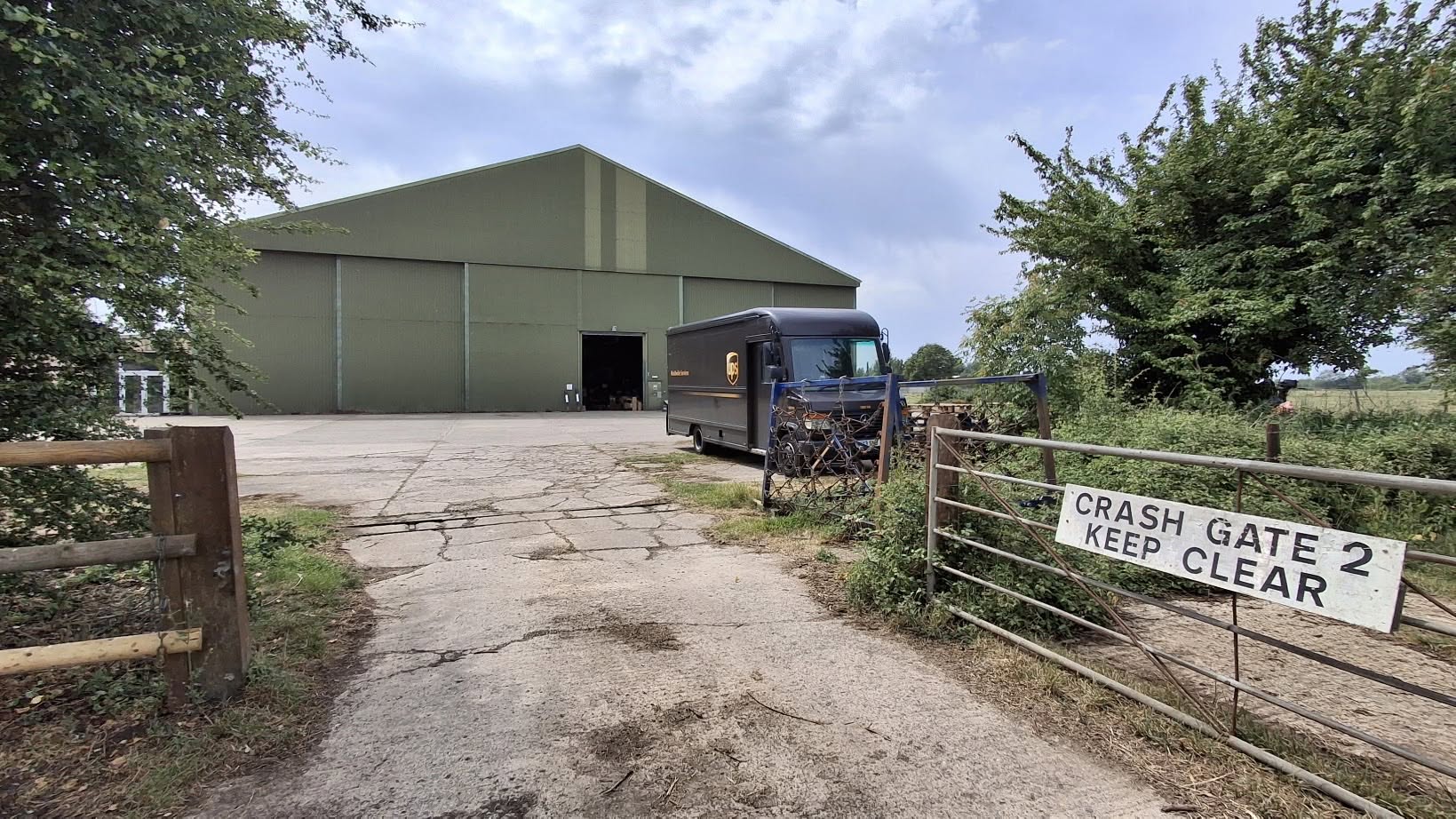
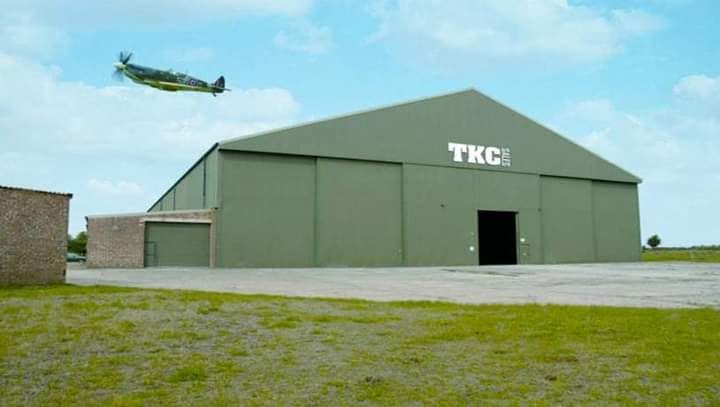
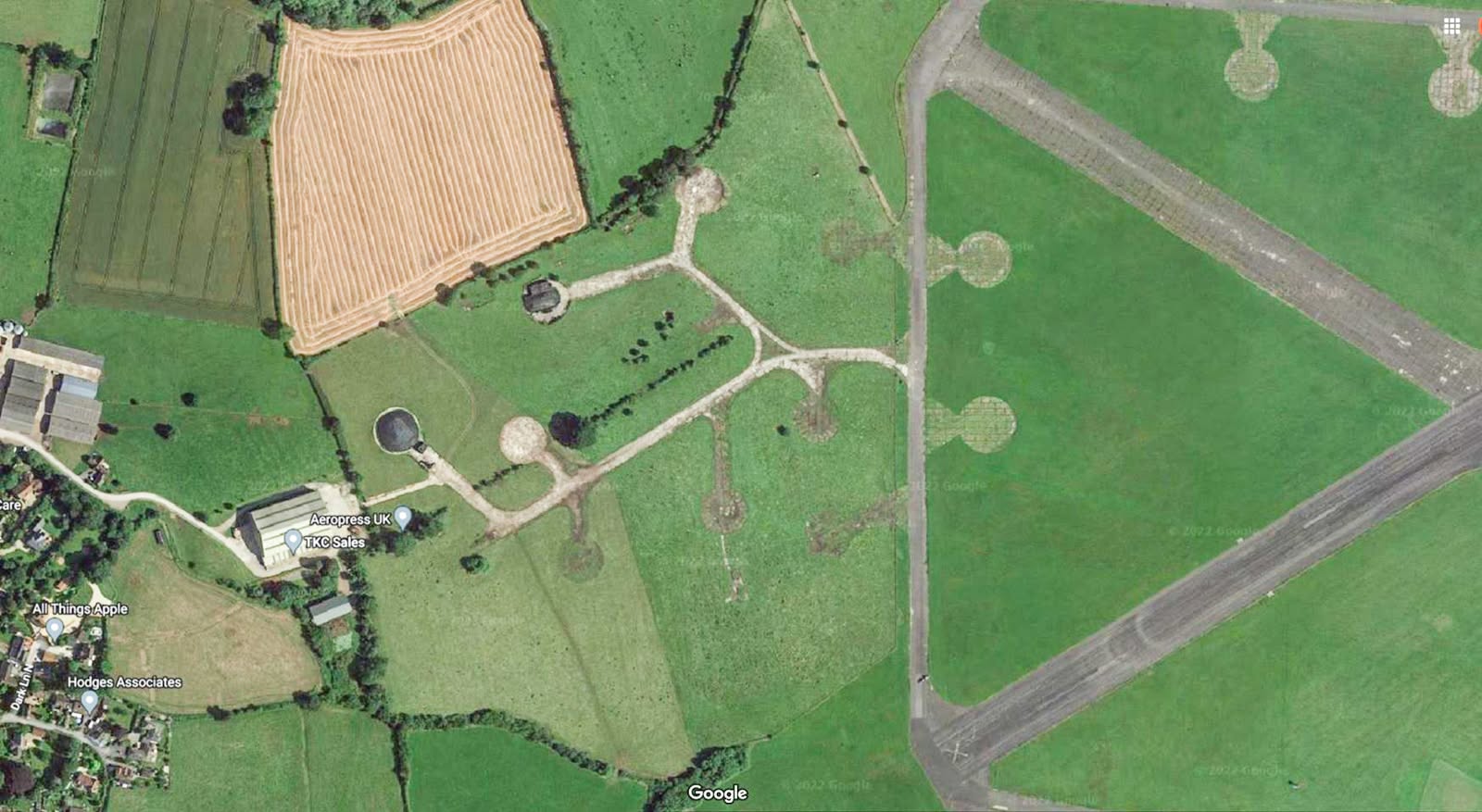
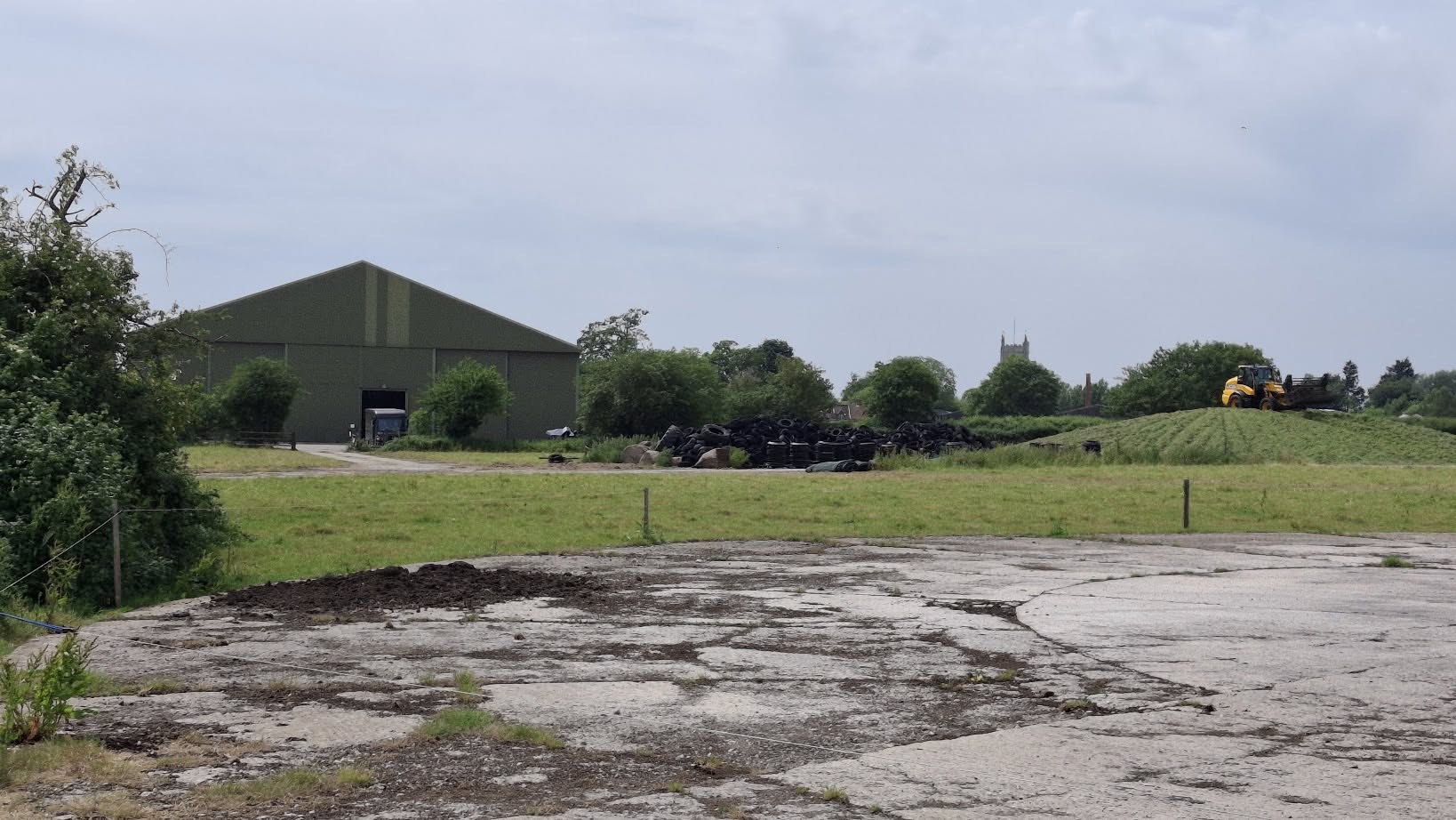
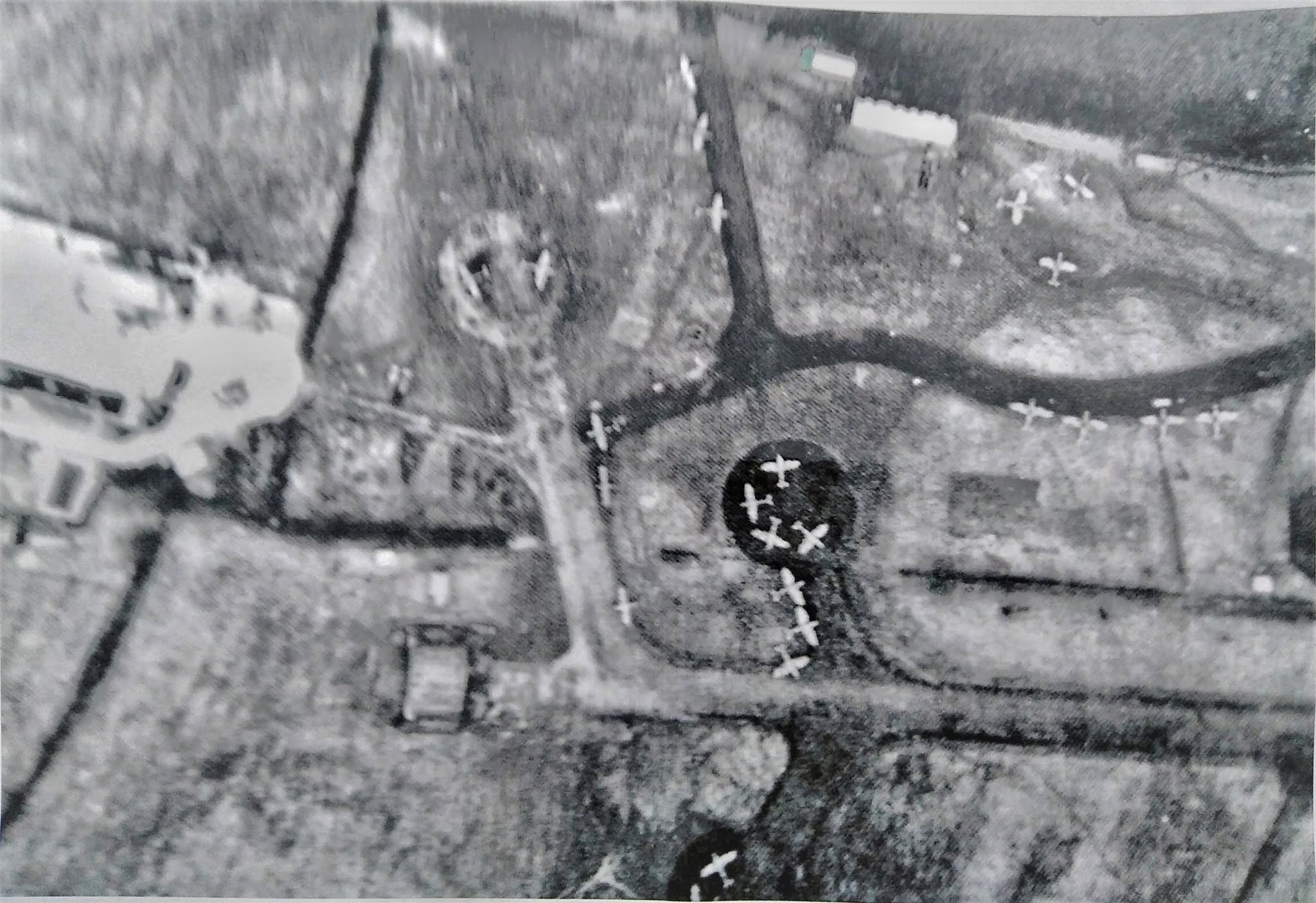
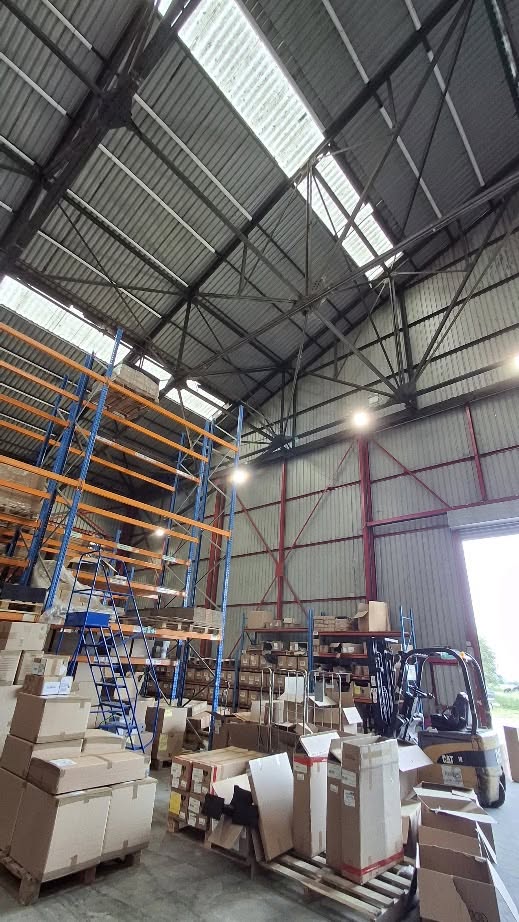
I visited Keevil Airfield only a couple of months ago. As part of Supermarine’s dispersal programme, it was the designated airfield for Trowbridge-built Spitfires to be assembled and tested.
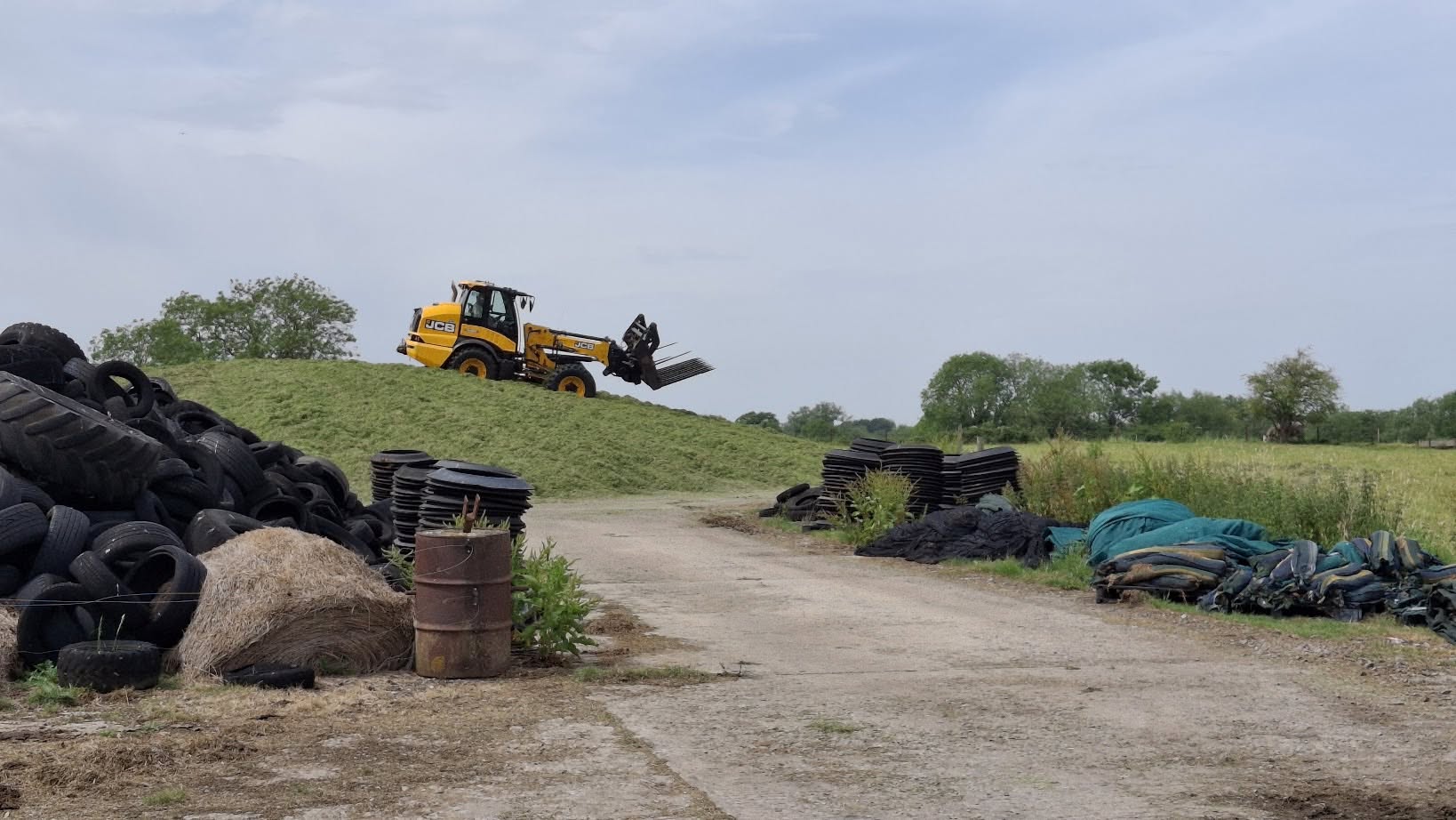
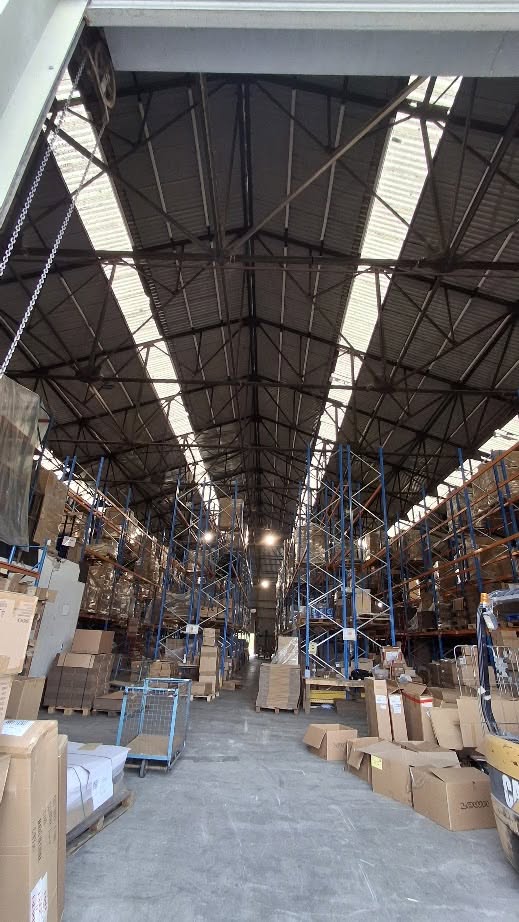
The original assembly hangar is still in use by a company selling coffee machines and kites, and the dispersal pens for the aircraft around the perimeter were being used by the local farmer, who told me his father had got some of the farm back after the war. It is still an active airfield for helicopter exercises, but the prominent white control tower building has now been removed along with another hangar that was once used by a gliding club.
https://www.gazetteandherald.co.uk/…/26522612.shock…/…