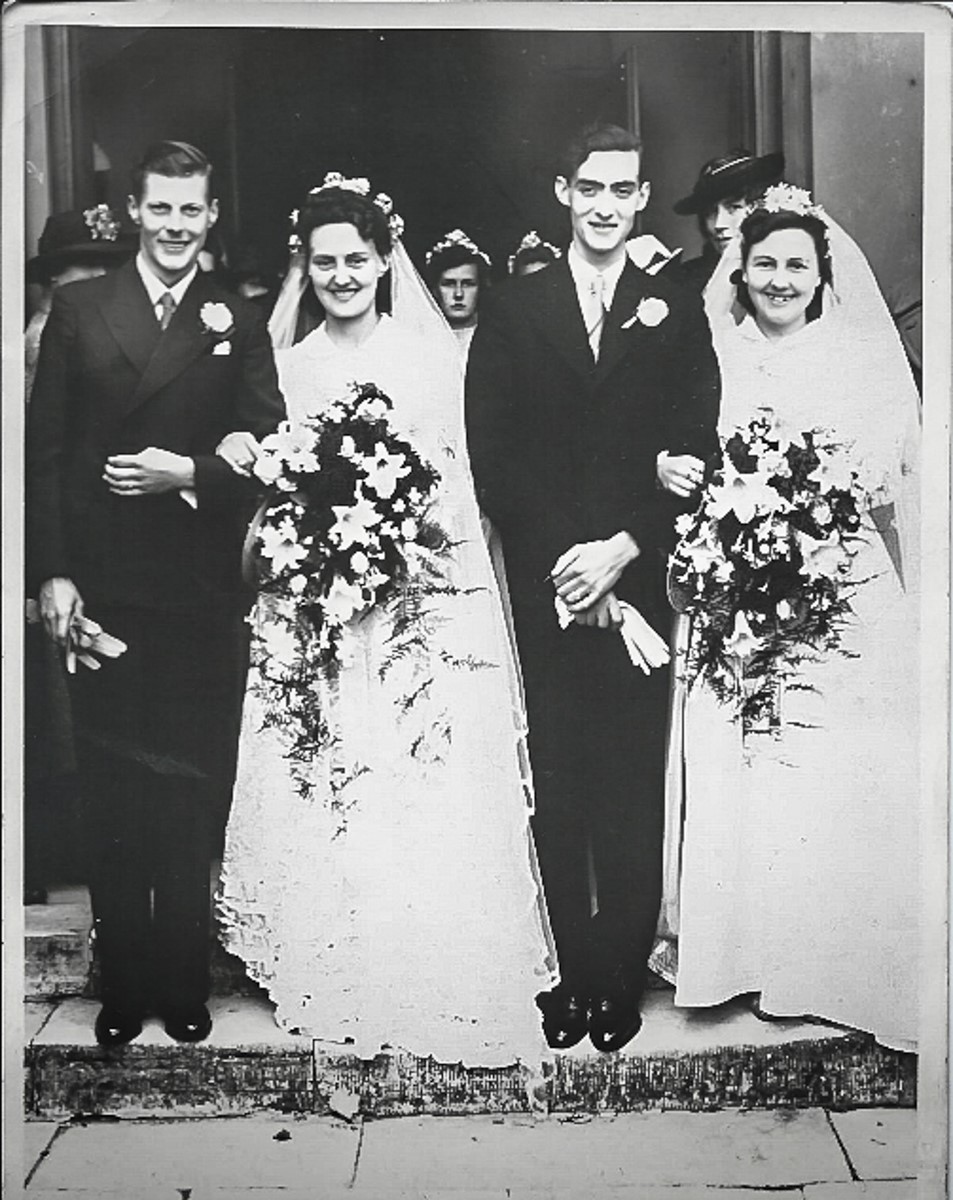
- Roy Jackman and Florrie Snelling
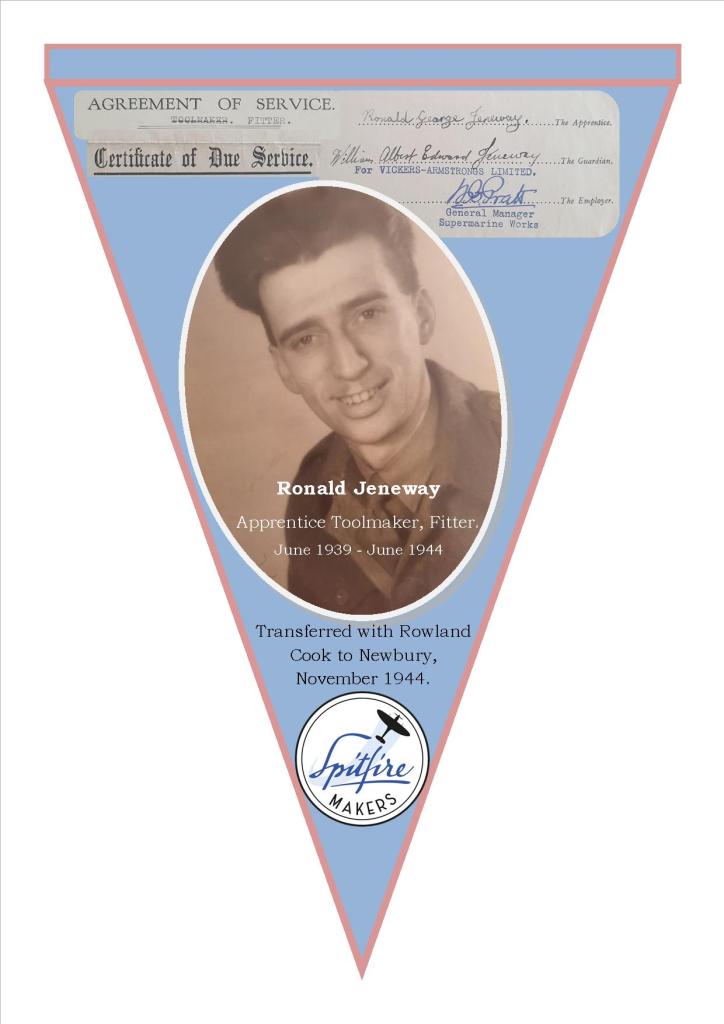
- Ronald Jeneway
- Charles Henry Johns (1917 – 2016)
- Charles Ward Johns (1890-1965)
- A E Johnson (d. 11 Sept 1940)
- Alfred Johnston (d. Sept 1940)
- Charles George Jupe
- E W Keale (d. 11 Sept 1940)
- Percival William Keene (d. Sept 1940)
- Frederick Kemish
- Gwendoline Muriel Kitchener née Hancock
- S Lander (d. 11 Sept 1940)
- B Landy (d. 11 Sept 1940)
- Ronald Frank Lawrence (d. Sept 1940)
- Florence Margaret (Flossie) Lee
- F W Lewis (d. 11 Sept 1940)
- Donald Maxwell Looker (d. Sept 1940)
- C E Lynch (d. 11 Sept 1940)
Roy Jackman and Florrie Snelling
What stopped the late afternoon traffic in St James’ Road, Shirley on 13th June, 1942?
After last week’s “Makeshift Factories”, this week’s programme, entitled “Makeshift Wedding” will include more fascinating detail about the wartime lives of Southampton’s Spitfire Makers. It’s available from Friday by following the link below.
https://www.bbc.co.uk/progra…/w13xtv79/broadcasts/upcoming
You are invited to a wedding… A double wedding… A ‘Spitfire Sweethearts’ wedding…



Ronald Jeneway
Charles Henry Johns (1917 – 2016)
Notes on his life by his daughter Diana Harte
My father left school at 16 and followed his father into the aircraft industry joining Supermarine in Southampton, in 1933. He attended night school as it was called in those days, several nights a week, and in a couple of years had gained his aeronautical qualifications, later becoming a Fellow of the Royal Aeronautical Society.
At the outbreak of war he joined the Army but, after six weeks on Salisbury Plain “playing cards and learning to drive an army lorry”, he was recalled to Supermarine when they realised that they had let too many draughtsmen go. He returned to work in the Woolston Drawing Office, and joined the Home Guard. (His father was an ARP Warden throughout the war).
My father worked mostly on the Spitfire during his time in Southampton, and left there in 1949 to join Handley Page in London, where he worked on the Victor bomber. I have a photo taken before the first test flight of the second prototype Victor in 1954 when he took over the test flight programme. He later worked for Hawker Siddeley and British Aerospace.
Like his father he was a competent sportsman playing rugby, hockey, cricket and badminton. Also like his father he was passionate about aircraft, both of them having encyclopaedic knowledge of aircraft which was obvious, and totally mysterious to me, when they got together! They were both reserved, courteous, considerate and kind men who worked hard and with great attention to detail (“measure twice, cut once” ) and both would be absolutely astounded to know that anyone would be interested in their lives and achievements all these years later. They were just doing their jobs and living their lives to the best of their abilities.
Having signed the Official Secrets Act my father said absolutely nothing about his work, so I knew nothing about it. In around 2009 we took him to the Aviation Museum at Duxford. He’d been having an animated conversation with one of the stewards who obviously knew a lot about the Spitfire that they were looking at. I said “So tell me about this plane – you must know something about it!” “Oh, yes, I worked on re-designing the tail on that one as the nose went down when they fitted the new Griffon engine into it.” That’s still all I know! He did know R J Mitchell but owing to Mr Mitchell’s untimely death he was far more familiar with his successor as Head of the Drawing Office, Joe Smith. He also knew the test pilots Alec Henshaw and Geoffrey Quill.
I am very thankful for the hugely significant decision that my father took on 24th September 1940 when the German bombers came. He and his parents lived in Radstock Road and he went home for lunch as many people did in those days. As he was walking home the air raid sirens sounded but he decided to keep walking instead of going into the shelter which was hit a few minutes later with such appalling and tragic loss of life. My parents married the following year and I was born in 1942. Very humbling.
I know that my father’s younger brother also worked at Supermarine, as I have a photo of him in front of a Supermarine Swift, but that was after the war. He went on to work for British Hovercraft.
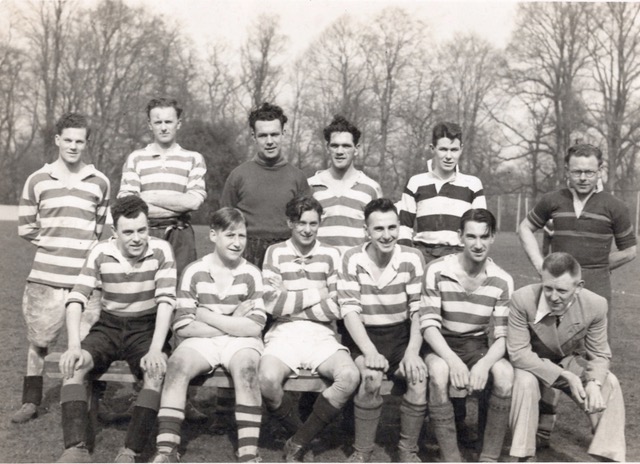

Images courtesy of Diana Harte
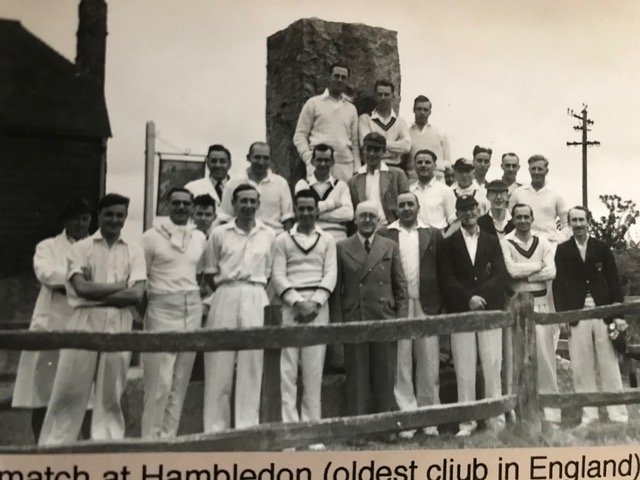
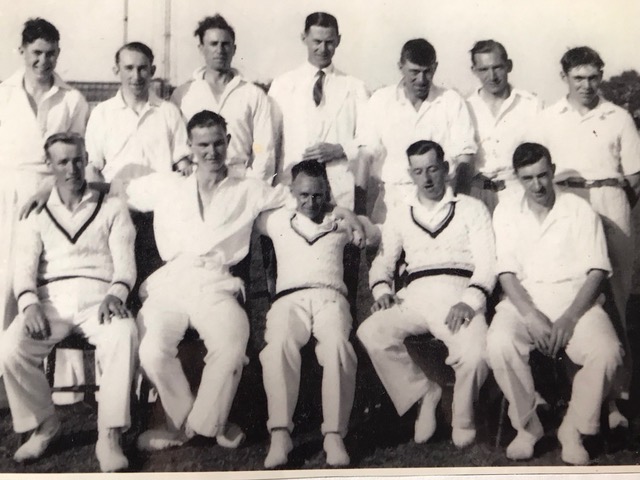
Top left image – A Supermarine management V staff football match in 1938. This is the Drawing Office team. CHJ is in back row 2nd from the right. Middle left image – Supermarine Sports & Social Club cricket team playing at Hambledon during the war. CHJ is in the bottom row 4th from the left peering through his colleagues’ shoulders. His father CWJ was captain and is in the top row 1st from the left. Bottom left image – Supermarine cricket team finalists 1939, a poignant time, CHJ is in the back row 1st on the left. CWJ, the Umpire, is in the back row 4th from the left. Right image – CHJ received a cartoon and a wonderful poem when he retired from British Aerospace, similar to the one that my grandfather CWJ received on his retirement from Supermarine.
Charles Ward Johns (1890-1965)
Notes on his life by his granddaughter Diana Harte
He was born in Sutton in Surrey in 1890, and was apprenticed to a cabinet maker. ( I have a trunk with his apprentice’s tools in it ). In his youth he used to spend a lot of his time at Brooklands, riding his motorbike round the circuit there, and getting to know some of the early aircraft pioneers – Thomas Sopwith, Harry Hawker (Harry was best man at his wedding in 1916), Sidney Camm, and he also knew T E Lawrence.
Unfortunately he had a serious disagreement and subsequent estrangement from his father when he said that he wanted to use his skills to build aeroplanes, not furniture. His father was furious and told him that he would be wasting his time as people would always need furniture whereas there was no future whatsoever in aircraft – just a silly fad! Sadly his father died not so long after that so didn’t live to see how well his son fared in the aircraft industry!
My grandfather started working for R L Howard – Flanders at Brooklands in 1909, joined the Martinsyde Company in 1912 as Flight Engineer and later Works Manager. They made both planes and, after WW1, motorbikes. He also worked on the BE2c at Vickers in Dartford. He was involved in the Larkhill Trials on Salisbury Plain where planes were chosen to join the Army’s Air Battalion. He joined Supermarine in 1922 as Assistant Chief Inspector, later being promoted to Chief Inspector. He was still at Supermarine during the War and gets a mention in Geffrey Quill’s book “Spitfire. A Test Pilot’s Story”. I know that he went to Singapore, Argentina, Japan (1928) and Ireland (1931), all of which must in those days have been very protracted business trips! Supermarine flying boats were apparently used by the Argentinian Navy, and bought by the Japanese as well. Round about 1947? 1948? he must have been involved in the development of the Cierva Air Horse.
As well as being devoted to the aircraft industry he was a good sportsman, doing well at golf and cricket and was obviously active in Supermaine’s Sports and Social Club being, at one time, their treasurer, and member of the General Council, and took part in a Supermarine Regatta.
In 1947 he was awarded an MBE for “services to aviation”.
One or two stories if they are of any interest…………….. My aunt ( daughter of CW Johns, and my father’s sister, wrote a memoir of her life until 1945. She was born in 1920. The following is a quote from her memoir which she completed in 2007 (she died in 2020 aged almost 101).
“The other main treat in summer was cricket. Father was captain of the Supermarine cricket team and every Saturday (and sometimes Sunday ) we would all troop by tram, ferry and bus” [my grandfather bought his first car in 1929 so maybe they went by car later on ] “to the firm’s sports ground at Barnfield, outside Southampton and close to Southampton Water. Because the ground backed onto a very attractive dell with a stream running through it Leslie and I would go exploring and picking wild flowers – at least I did and this is where I got to know and appreciate nature. I hated recreation grounds that had nothing of interest, but country villages and waterside grounds were perfect. Every other weekend there would be an away match and I got to know every ground intimately including the County Ground. Sunday matches would always be home games, and further up the lane from Barnfield was the little local church with its lovely peal of bells.”
I’ve included this because it may be of interest to someone who remembers Barnfield. I’ve looked on maps and can imagine where it was as there are a few streets with Barnfield in their names. It also makes it obvious that Supermarine Sports Club was a thriving enterprise.
I think my grandfather always had a passion for transport whether it be on the ground or in the air. According to my aunt he bought a motorcycle and sidecar in 1927 which was “a wickerwork affair” which transported the family of five – my grandfather on the bike, my father aged 10 riding pillion, grandmother in the sidecar with 4 year old on her lap and my 7 year old aunt in the “toe of the contraption”. They even survived an accident where some were trapped inside and some thrown off! Health and safety? My grandmother must have been so pleased when he bought a car!
The other direct quote may be interesting because it relates directly to the Spitfire:
My aunt writes “The S6 showed the lines of its successor the Spitfire, designed by Mr Mitchell, a land-based, single-seater fighter plane that first flew in 1936, a year before its designer’s death. I’m proud to record the fact that I was there to witness this event. Father having announced at breakfast that morning – a Saturday – that he must be present for the first flight of the Spitfire, I asked if I might accompany him. I think he was quite pleased at my request, and we stood in that cold strong wind watching this little plane take off, circle round and then back low over the airfield – it was a picture to thrill, most aircraft at that time being lumbering biplanes! We could never have imagined just how important that little plane would become five years later. Seventy years later the World Telegraph newspaper in Australia ran an item about the Spitfire’s birthday and I was thrilled and proud to be able to record my presence there in 1936”.
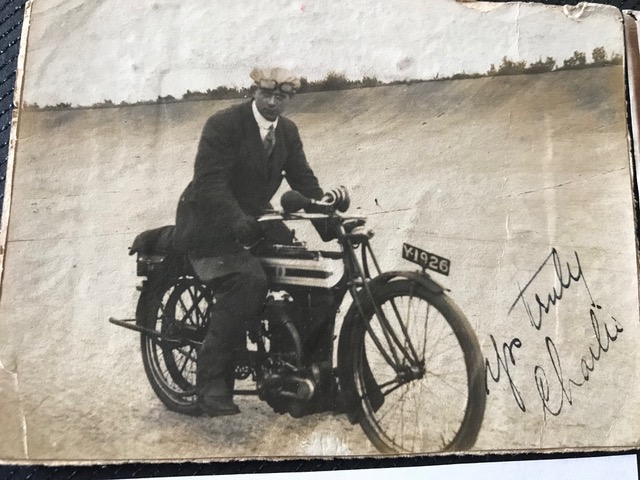
1.Where it all began! Racing at Brooklands July 1915 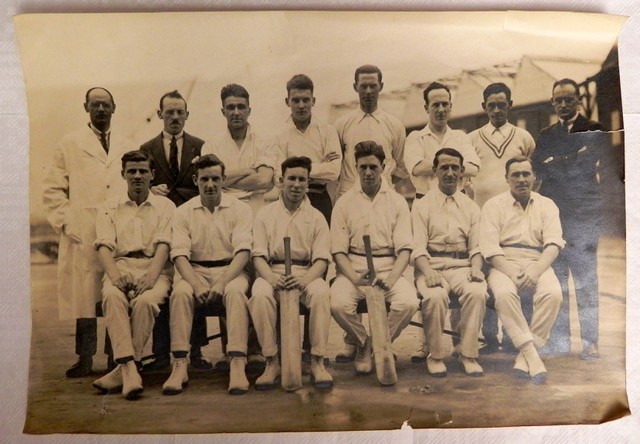
2.Supermarine sports and social club cricket team pre-war. CWJ is in the back row 5th from L. The umpire may have been a M White who also worked for Supermarine. 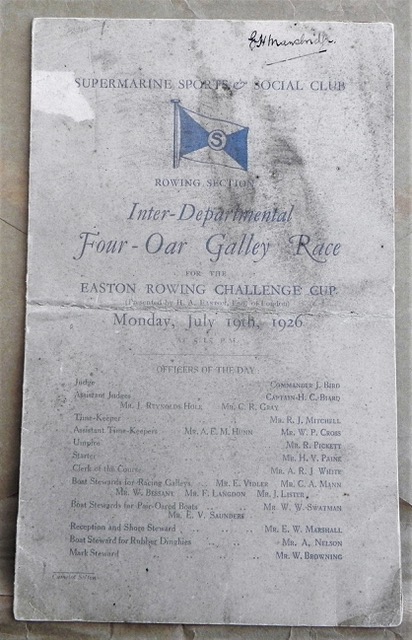
3.19th July 1926 Easton Rowing challenge. Title page of the Regatta programme. 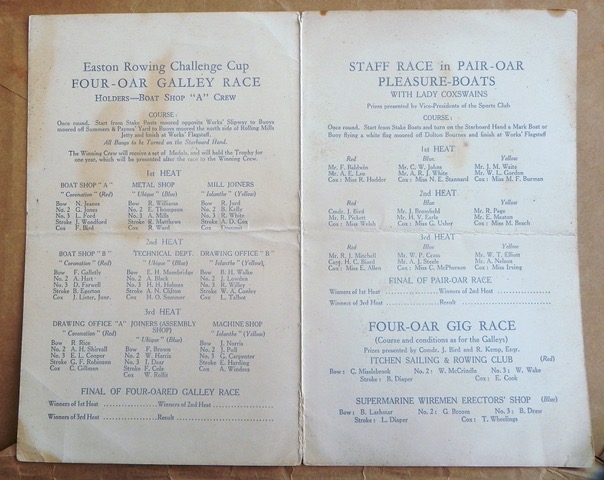
4.19th July 1926 Easton Rowing club Challenge Cup. CWJ took part in the pair oars pleasure boat race. 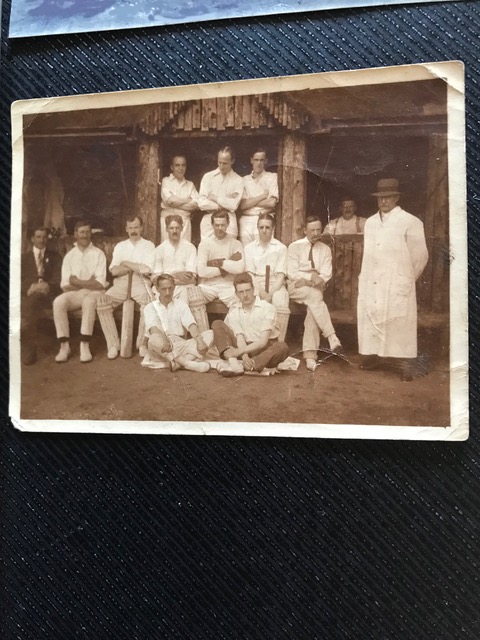
5.SSSC Cricket Team pre-war. CWJ captain, middle row 5th from left. 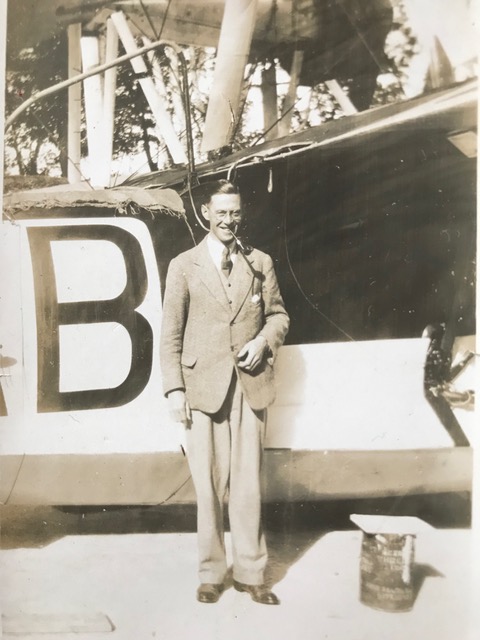
6.Ireland in 1931 – No further details 
7.1923 – 1926 Supermarine Sports and Social Club Membership of the General Council 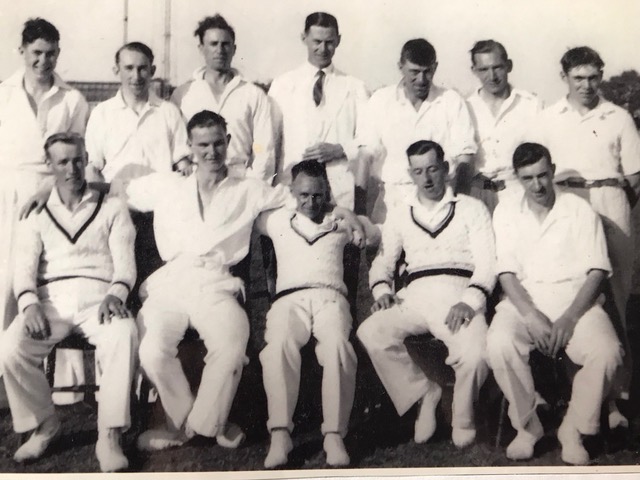
8.SSSC cricket team finalists in 1939. CWJ is the umpire and is in back row 4th from the left. His son CHJ is in the back row 1at from the left 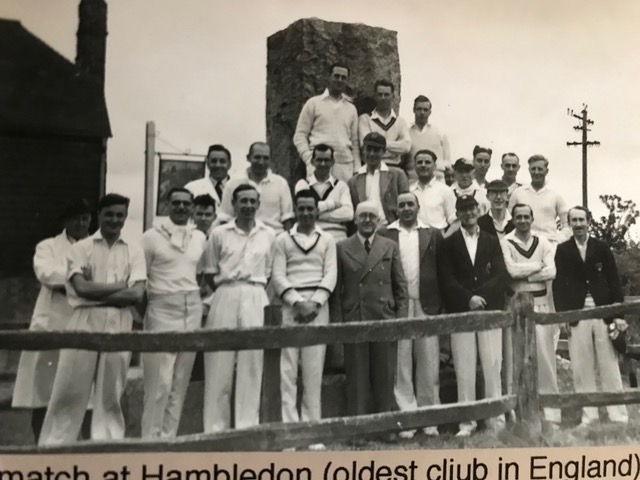
9.SSSC cricket team playing at Hambledon some time during the war. CWJ was captain and is in the top row 1st from the left. His son CHJ is in the bottom row 4th from left peering between the shoulders. 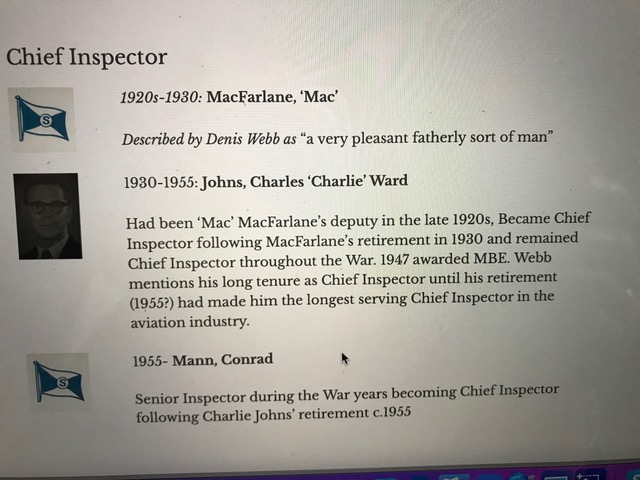
10.Origin unknown 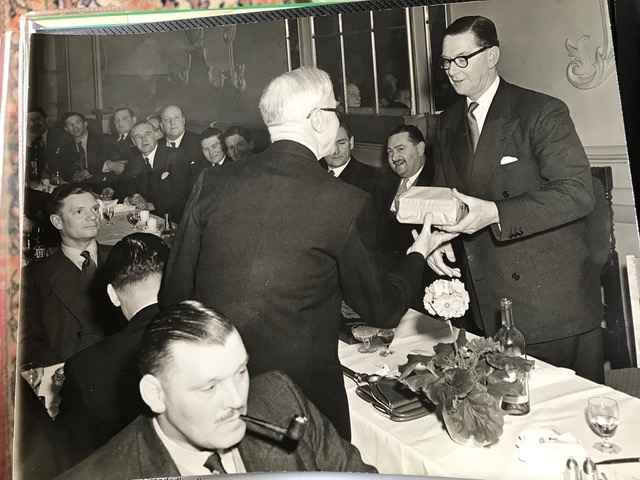
11.Retirement presentation 1956 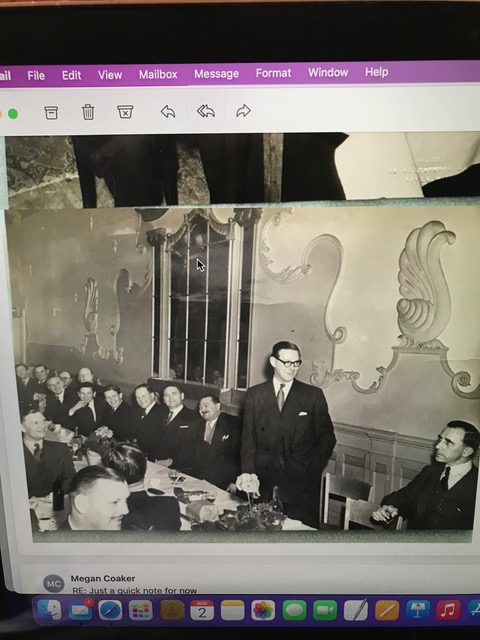
12.Retirement 1956 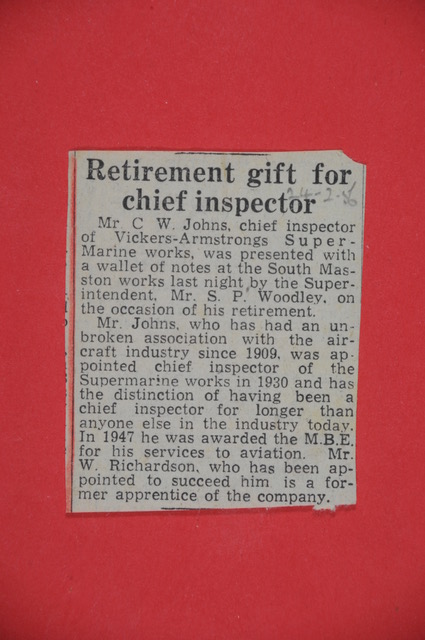
13.Retirement 1956 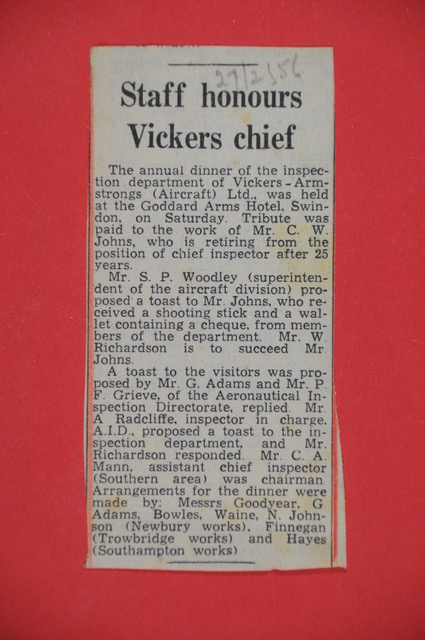
14.Retirement 1956 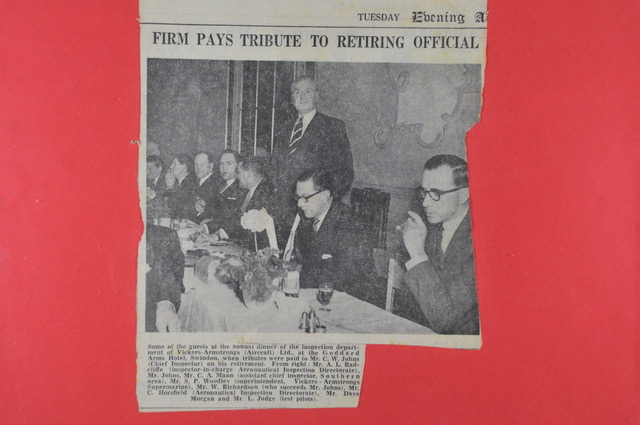
15.Retirement 1956 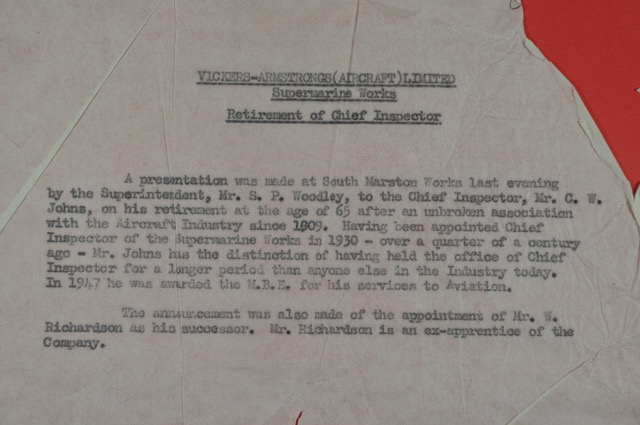
16.Retirement notice to Supermarine staff 1956 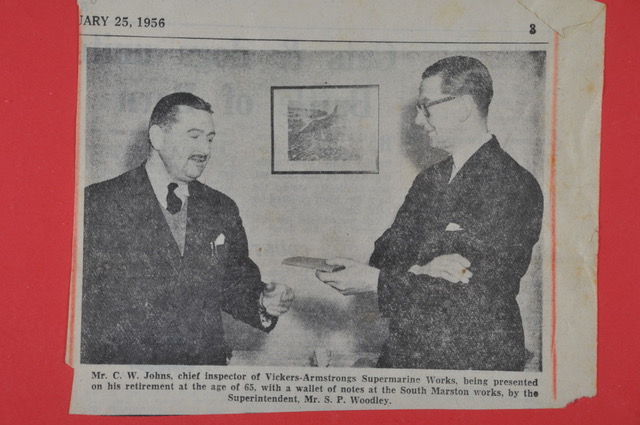
17.Retirement 1956 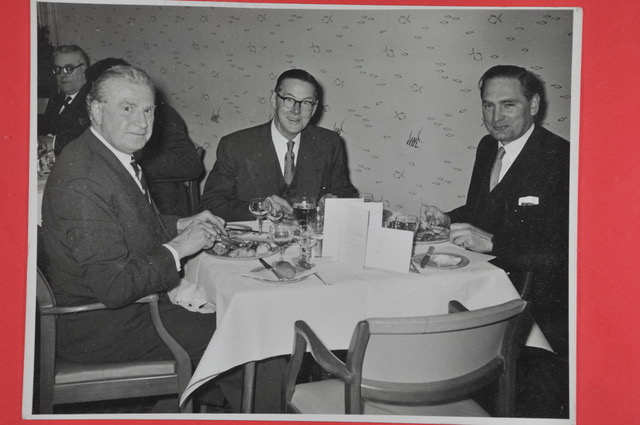
18.Unknown origin 
19.Retirement presentation 1956 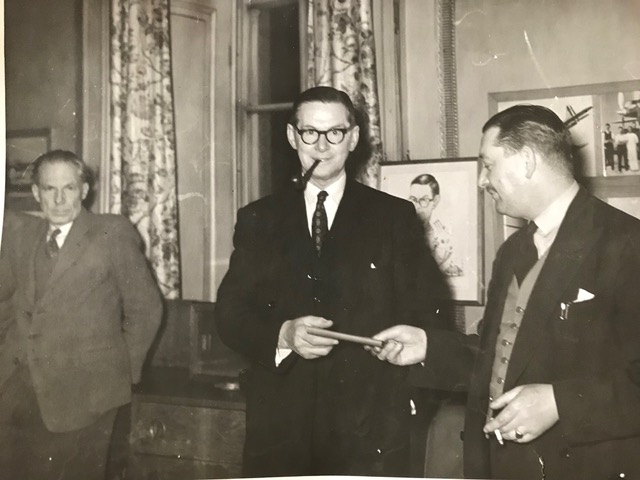
20.Retirement 1956 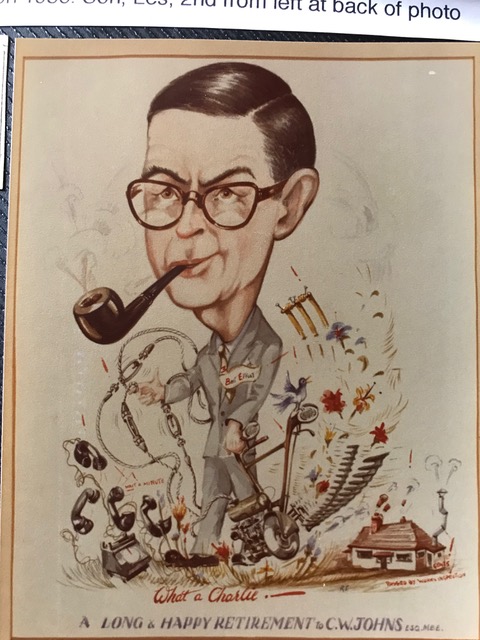
21.Cartoon of CWJ on his retirement in 1956. Drawn by a member of staff at Supermarine 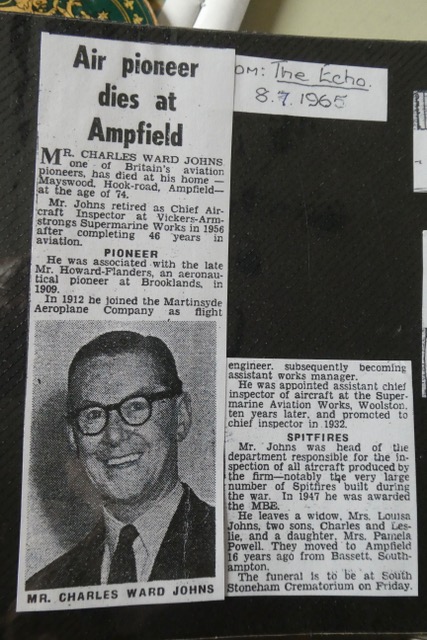
22.Obituary 1965
Images courtesy of Diana Harte & The Supermariners website
A E Johnson (d. 11 Sept 1940)
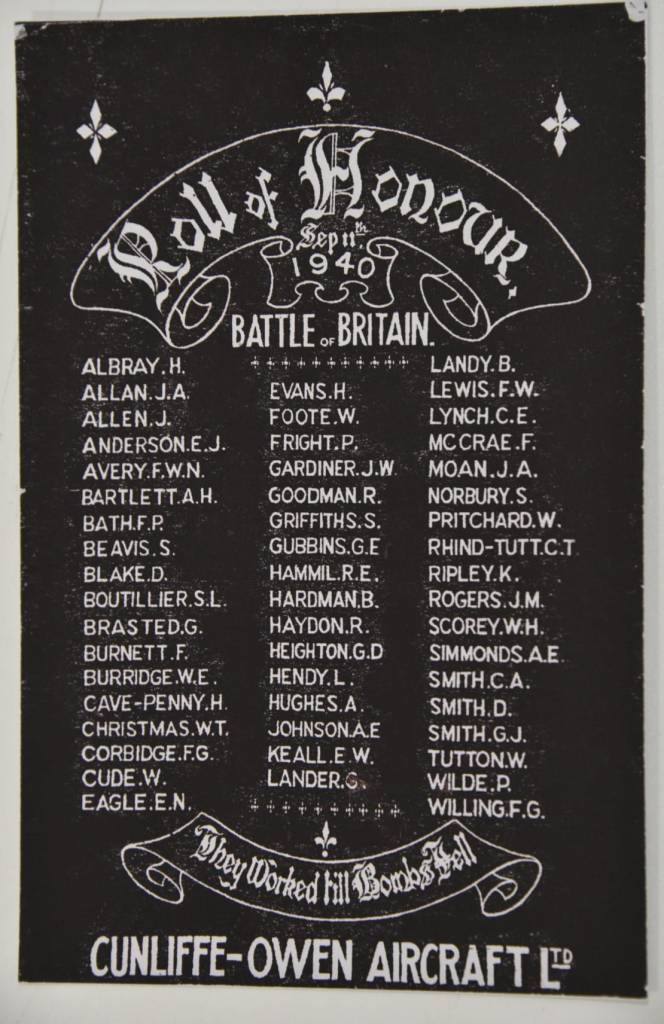
A E Johnson worked at the Cunliffe-Owen factory at Eastleigh Airport assembling Spitfires and was killed in the bombing raid on the factory on 11th September 1940.
Alfred Johnston (d. Sept 1940)

Image courtesy of The Supermariners and The Spitfire Makers Charitable Trust
Alfred Johnston was an Aircraft Holder-Up at Supermarine. He was 46 years of age when he was killed in the bombing raid on the 24th September 1940. As we have been unable to locate Alfred’s grave, floral tributes have been laid for him on the Commonwealth War Graves Memorial in Hollybrook Cemetery, Southampton.
Charles George Jupe
Educated at Ludlow School, Southampton, Charles George Jupe went on to become a skilled machinist and first aider at the Supermarine Woolston Works. After the bombing of the factory he was sent across town to work at what became the tool room and machine shop at Lowther’s Garage in Shirley.
The photos below are just a few from a wonderfully detailed autobiography of his whole life that Charles’ family have shared. We think that’s Charles in the middle of the front row of an infants class at Ludlow School. He’s pictured with his Hercules Roadster which “could be bought for 3 pounds 18 shillings and 6 pence”. He thought nothing of a day trip to Sandbanks and back. Again it’s Charles with the accordion in the middle of the front row on a Supermarine Works Outing in 1938.

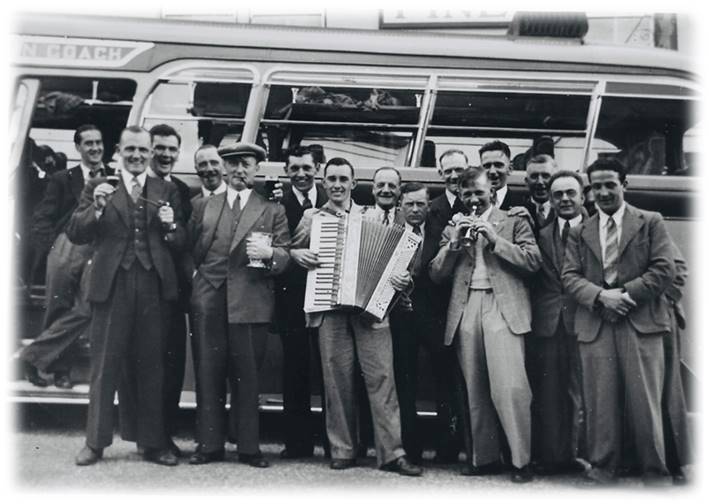

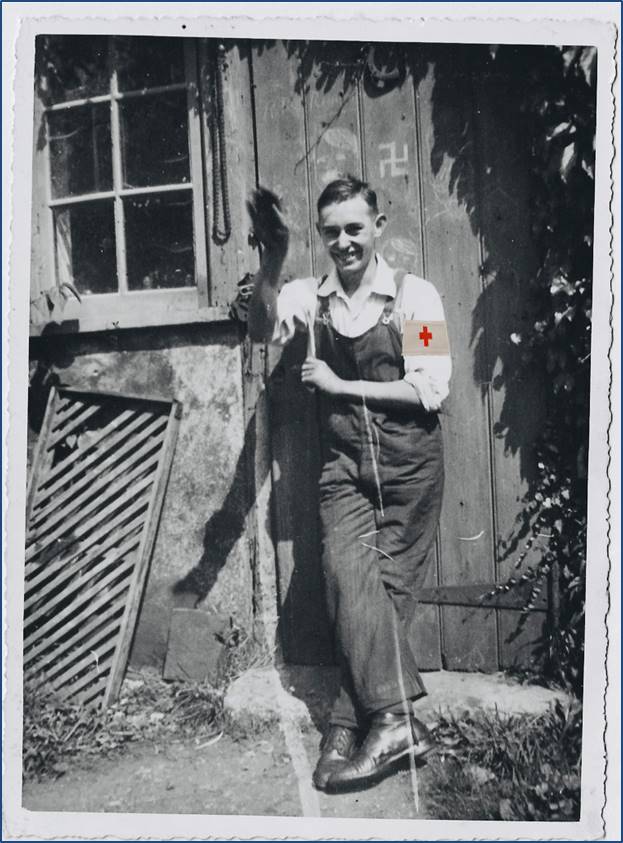

Charles as a First Aider at Supermarine and an early school photo. Images courtesy of the Jupe family
E W Keale (d. 11 Sept 1940)
E W Keale worked at the Cunliffe-Owen factory at Eastleigh Airport assembling Spitfires and was killed in the bombing raid on the factory on 11th September 1940.
Percival William Keene (d. Sept 1940)
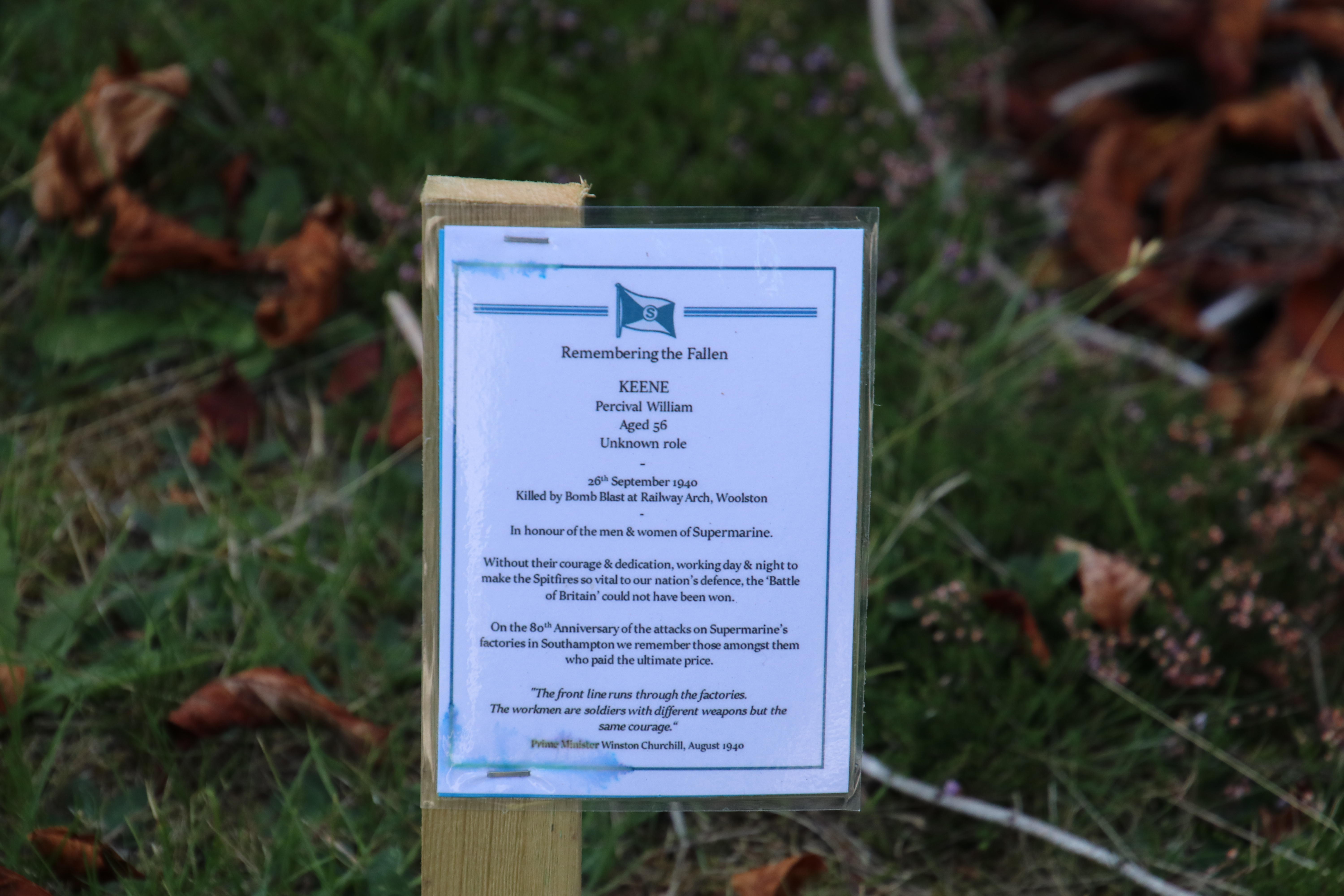
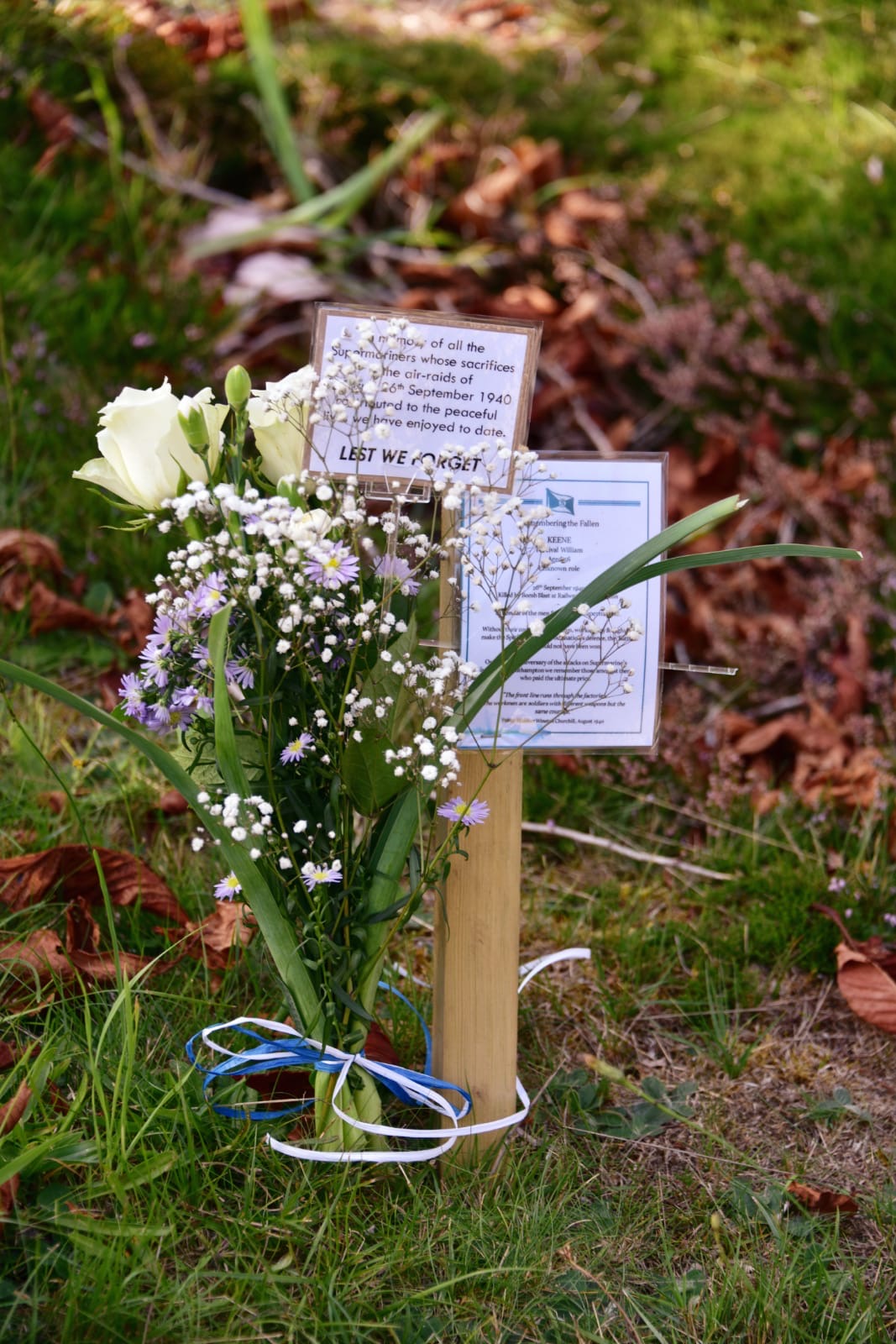
Image courtesy of The Supermariners and The Spitfire Makers Charitable Trust
Percival was employed by Supermarine in an unknown role. He was 56 years of age when he was killed in the bombing raid on the 26th September 1940. Percival is buried in Hollybrook Cemetery, Southampton.
Frederick Kemish
TOP SECRET SPITFIRE PRODUCTION in the back streets of Southampton
Massive privilege to interview Frederick (Walter/Wally/Walt) Kemish, 98, yesterday.
He told us how he’d joined Weir Precision Engineering Ltd in South Mill Road, Regents Park, Southampton as a 14-year-old apprentice in the late 30s and stayed with them all through WWII eventually retiring as Works Manager in the late 80s.
He and a workmate did sign up to join the RAF but were turned down when it was found out they were in a reserved occupation!
Weir Precision is listed as one of over 300 Supermarine subcontractors, and are described as making “Machined details”.
Walter explained how “the Weir” didn’t usually make parts but rather machine tools for lots of companies like Rolls Royce and the Admiralty. However, he believes he was involved in making a top-secret bespoke part for the Spitfire.
He had to tell his parents he wouldn’t be home for several days and was asked to work round the clock with two senior engineers behind closed doors. They made what he described as “a ball within a ball” and produced two of them which they took “to the bus garage on Winchester Road” (the Hants & Dorset Bus Garage which was making Spitfire wings and where we unveiled one of our Spitfire Makers plaques earlier this year!)
He remembers reading a report shortly afterwards which said that the first Spitfire fitted with cannons instead of machine guns had shot down an enemy plane and he believes that the parts he had helped to make were used to mount and adjust the cannons inside the wings.
For more than two hours Walter regaled us with a flow of amazing memories that we have recorded and look forward to following up.
The photo of the premises is from his collection and the map shows Weir Precision along with two other nearby Supermarine subcontractors: the Solent Carpet Co and British American Tobacco.
If you can add anything about what was happening in any of these companies please share it.


Photos courtesy of Frederick (Walter) Kemish and The Spitfire Makers Charitable Trust
Gwendoline Muriel Kitchener née Hancock
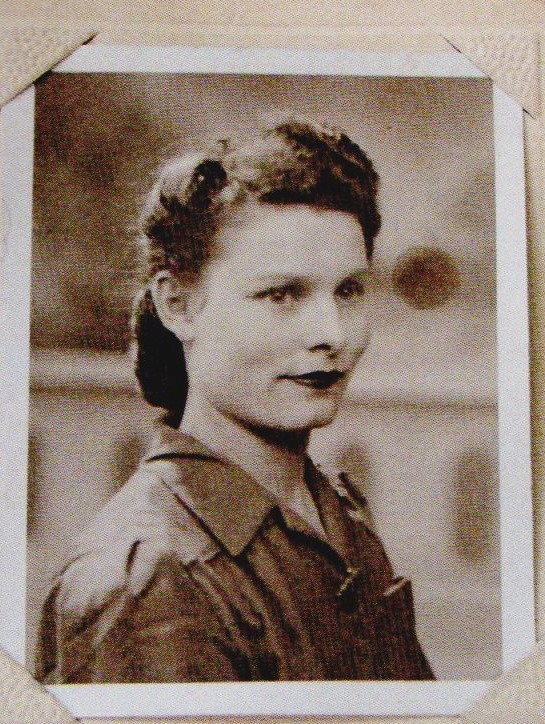
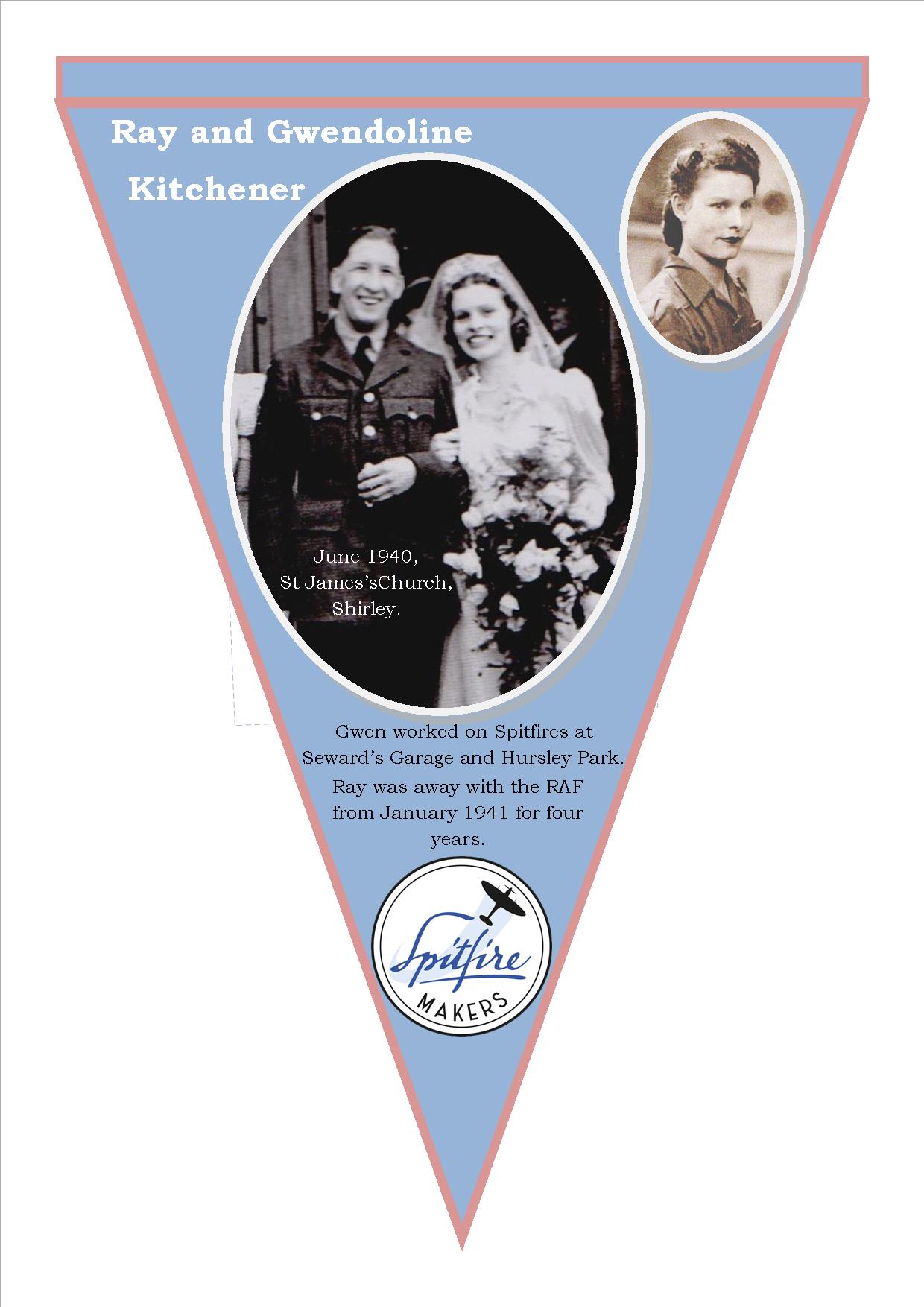
Gwendoline Muriel Kitchener née Hancock – 29th April 1915 – 7th July 2015
“Aunt Gwen”
Worked on Spitfires at Sewards Garage and Hursley Park
Information courtesy of her nephew Ray Hancock
Aunt Gwen was born at 39 Wilton Road, Upper Shirley, Southampton on 29th April 1915. One of 11 children and the sixth daughter of the family. The house, now demolished, was right next to Shirley School.
Uncle Ray, Raymond Alan Kitchener, was born in Biggleswade, Bedfordshire, on 29th April 1917. He was exactly two years younger than Gwen. He died on 8th July 1999.
In 1939 Ray was an Accounts Clerk RAF 543354-Calshot., and a Flight Lieutenant on retirement from the RAF. Gwen and Ray met at an airman’s dance at Calshot. They used to run a bus for the girls From Woolworths and all the shops. Initially her mother and eldest sister were reluctant to let her attend the dances but they relented in the end. After they married Gwen used to go to the dances at Calshot with Ray but didn’t get much of a dance as Ray played the drums in the orchestra.
Gwen worked at the tobacco factory then, because she couldn’t get a job anywhere else and her father was a foreman there. Gwen enjoyed the job as it was a “nice clean job” and paid well.

In this photo Gwen is probably around twenty years old
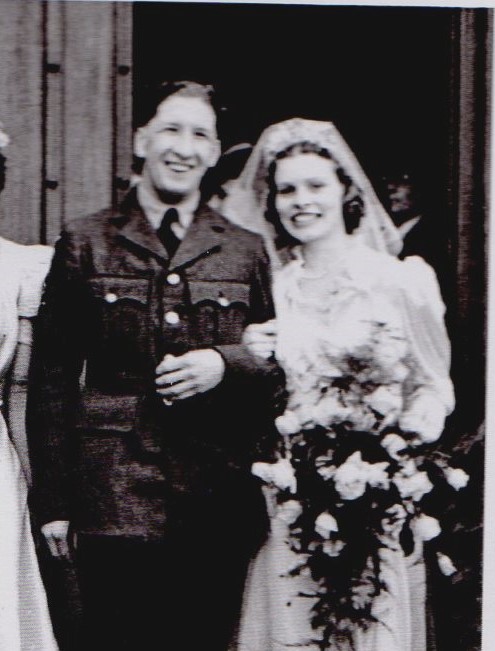
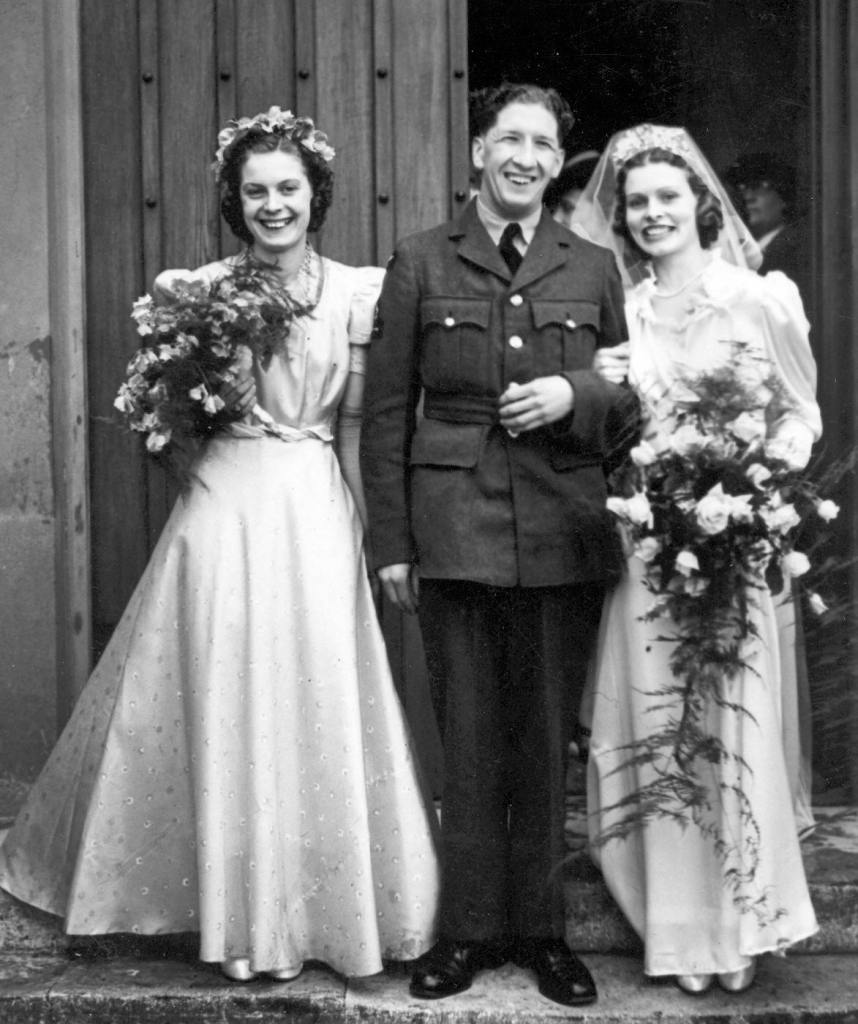
Photos courtesy of Ray Hancock
Gwen’s wedding at St James to Raymond Alan Kitchener in 1940.
Extract from an Oral History interview with Gwen in 2010. Published with permission…….
“I had only known him (Raymond) for about 8 months – I met him in the November and we were married in the April, I was married at St James Church. We went to live in Holbury near Calshot and we lodged with a man and a woman – the man worked in the Agri Oil Works as they were then – now its that great big place [Fawley Refinery]. Mr Macdonald [he was called] – he worked there and we have been married seven months when my husband was posted abroad and of course I went back to my mum. We didn’t know where he was going but we were lucky really because he ended up in Rhodesia – he could have gone to Singapore or anywhere like that.
My husband was away for four years during the war. I worked at Vickers, first of all at the top of Wilton Road – there was a big place there and then we went up to Hursley Park and Vickers were there [too]. The men used to make these big templates and we used to stamp them with the numbers on – Bottom Top Londron – parts of the aircraft.
I used to work at Vickers from 8am until 6pm at night – you would come home and have your tea and then go down in the shelter every night – I didn’t have much of a social life during the war because my husband was away. We went to the Guildhall and we had a dance – I used to like going to the Guildhall to the Policemen’s Balls because they were very nice”.
The bridesmaid on the left in the wedding photos was Rosina Lambert, who on 11th October 1941, married Gwen’s younger brother Owen Douglas Hancock (16th September 1919 – 1st August 1942). He was a Sergeant Royal Air Force Volunteer Reserve, a U/T Pilot and was killed in a plane crash in Lincolnshire. He was buried in West End Cemetery.
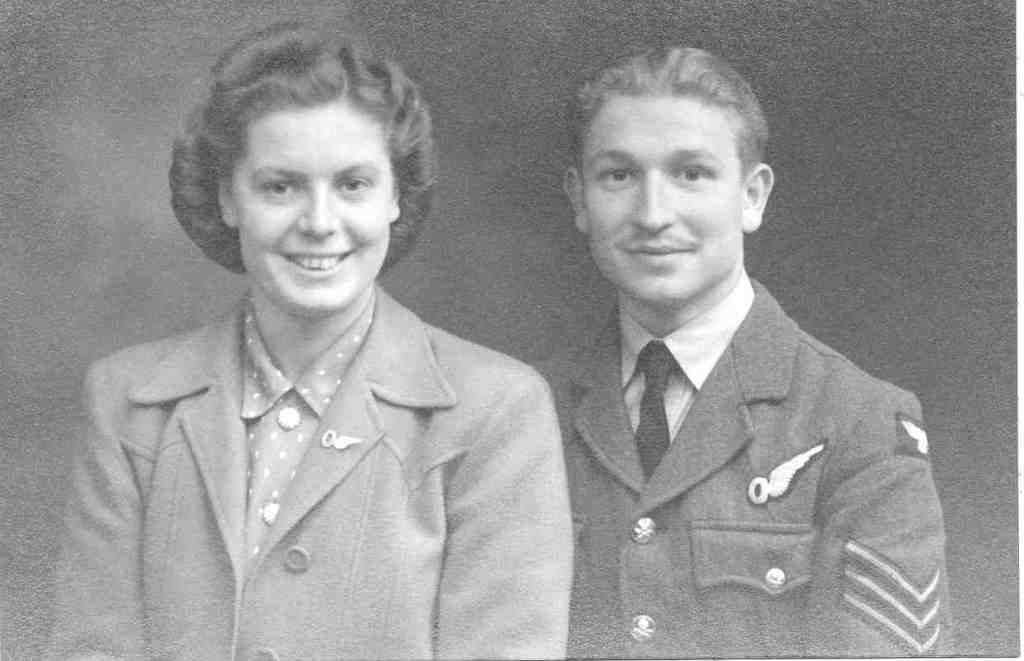
Owen and Rosina Hancock
Another of Gwen and my father’s older brothers, Ernest William Hancock, (16th January 1909 – 30th April 1945) was killed on active service in the Mediterranean area. Flying Officer RAFVR. Commemorated on Alamein Memorial, Egypt.
Therefore of the three Hancock brothers who joined the RAFVR, my father Wilfred Victor Hancock (11th April 1917 – 22nd June 1990) was the only one to survive.
Excerpts from “St James’ Park – From Shirley Rec to Renovation – 1907-2014” by Michaela A Lawler-Levene and the FoSJP History Team.
S Lander (d. 11 Sept 1940)
S Lander worked at the Cunliffe-Owen factory at Eastleigh Airport assembling Spitfires and was killed in the bombing raid on the factory on 11th September 1940.
B Landy (d. 11 Sept 1940)
B Landy worked at the Cunliffe-Owen factory at Eastleigh Airport assembling Spitfires and was killed in the bombing raid on the factory on 11th September 1940.
Ronald Frank Lawrence (d. Sept 1940)
Image courtesy of The Supermariners and The Spitfire Makers Charitable Trust
Ronald was an Aircraft Detail Fitter at Supermarine. He was 24 years of age when he was killed in the bombing raid on the 24th September 1940. As we have been unable to locate Ronald’s grave, floral tributes have been laid for him on the Commonwealth War Graves Memorial in Hollybrook Cemetery, Southampton.
Florence Margaret (Flossie) Lee
The memories of Florence, “Flossie” Lee were sent to us by her son, Rex Budd, and are now featured in one of our Spitfire Makers pennants.
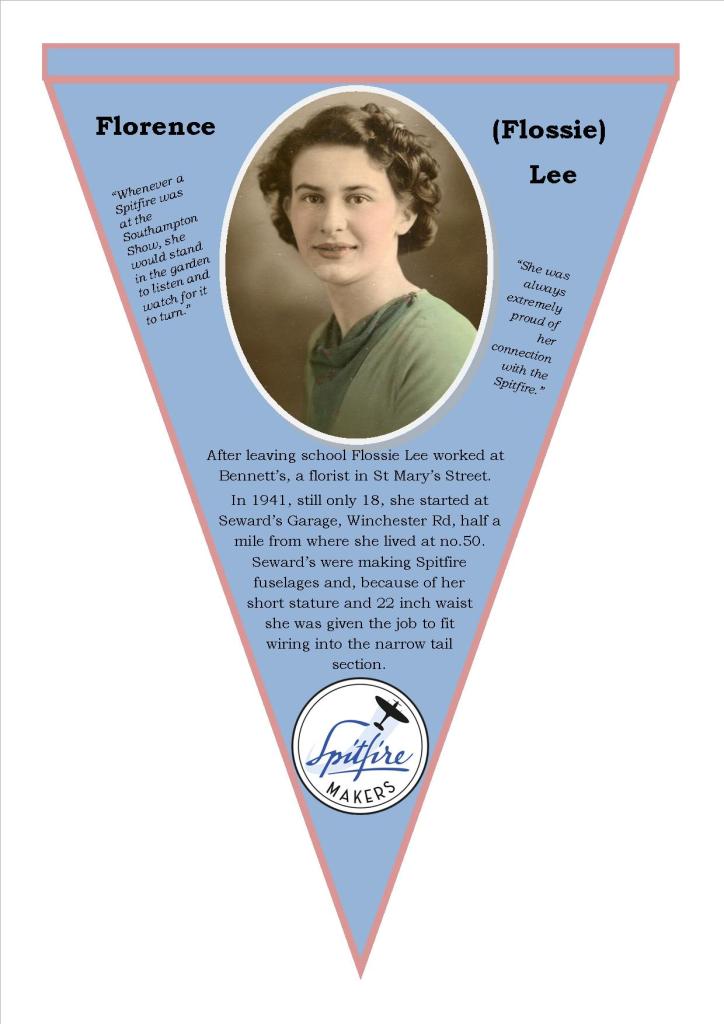
There is more information on Florence on The Supermariners website. Click here to view it
F W Lewis (d. 11 Sept 1940)
F W Lewis worked at the Cunliffe-Owen factory at Eastleigh Airport assembling Spitfires and was killed in the bombing raid on the factory on 11th September 1940.
Donald Maxwell Looker (d. Sept 1940)
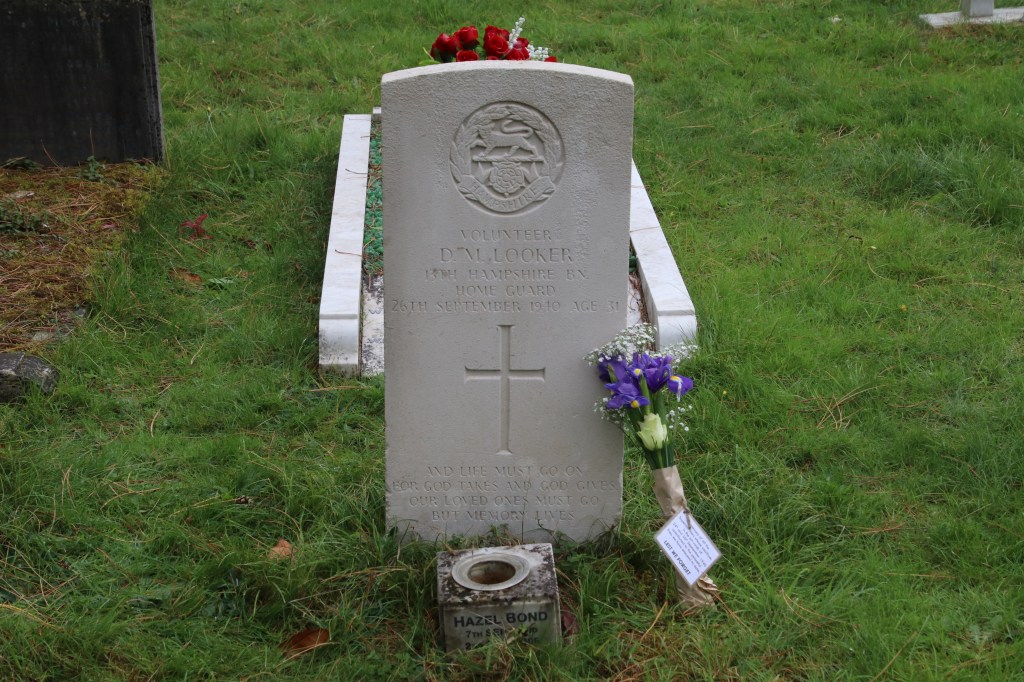
Image courtesy of The Supermariners and The Spitfire Makers Charitable Trust
Donald was an Aircraft Electrician at Supermarine and also a member of the 13th Hampshire Brigade of the Home Guard. He was 31 years of age when he was killed in the bombing raid on the 26th September 1940. Donald is buried in St Mary Extra Cemetery, Southampton.
C E Lynch (d. 11 Sept 1940)
C E Lynch worked at the Cunliffe-Owen factory at Eastleigh Airport assembling Spitfires and was killed in the bombing raid on the factory on 11th September 1940.
 The Spitfire Makers Charitable Trust